
Reel Beach: Remembering the real heroes of The Great Escape
By BERNIE FLETCHER
“Behind every uniform was a person, a life, and a story that must never be forgotten.”
The Royal Canadian Legion marking their 100th anniversary this year.
When I was growing up, The Great Escape (1963) was one of my favourite movies. Heroic lone wolf Steve McQueen jumped fences on a motorcycle. James Garner stole a plane with the half-blind forger Donald Pleasence.
It was terrific entertainment, but terrible history. None of that was true.
It’s been said that the first casualty of war is the truth.
The Hollywood history of the world is mostly “hit and myth”. No American servicemen escaped through the tunnel of The Great Escape that night of March 24/25, 1944.
There were 76 Commonwealth and Allied airmen who escaped into the deep snow and freezing cold. Fifty were murdered by the Gestapo between March 25 and April 13.
This was the most famous escape in military history, but do we know the real events?
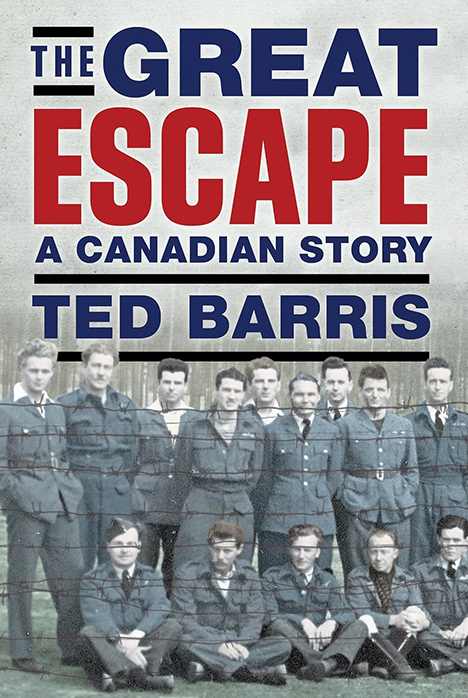
Read The Great Escape: A Canadian Story by author Ted Barris to learn that many of the key players were Canadian. About 150 of our airmen were involved in the preparations.
We remember the Hollywood stars, but who were the real heroes?
The prisoners of war at Stalag Luft 3 were downed air force officers, some barely out of their teens.
They were our neighbours like artist Robert Buckham who grew up on Balsam Avenue and Glen Manor Drive. He was lucky not to draw an escape number that fateful night.
Donald Lush grew up on Kingswood Road, Pine Crescent and Glen Manor Drive. George McGill and George Sweanor were school chums at St. Clair Public School in Toronto.
Sweanor had a newborn daughter he had never seen. John Weir met his fiancée at the Palais Royale.
Phil Marchildon was a big-league pitcher who lived on Glen Ames after the war.
Some P.O.W.’s had joined the R.C.A.F. right out of Malvern Collegiate. Hollywood portrayed them with thirty-something actors.
There was no Virgil Hiltz (Steve McQueen, 32 at the time of filming). The chief forger (played by Donald Pleasence at 42) was actually Tony Pengelly (age 24) from Oakwood Collegiate. He gave up his number on the escape list so the X Committee might carry on.
The intelligence officer played by Scotsman Gordon Jackson was based on Toronto journalist Kingsley Brown.
The “scrounger” was played by 34-year-old James Garner as an American in the R.A.F. That role of scrounging materials was performed by R.C.A.F. bomber pilot Barry Davidson, 28, of Calgary.
In 1962, Beach resident Wally Floody spent two months in Germany as the technical advisor to the filming of The Great Escape.
He made sure the tunnels and life in the camp were authentic and said: “I know you’re getting it right because I’m having nightmares.”
Floody would know because he was the actual “Tunnel King” played by 40-year-old Charles Bronson. Floody, 24, supervised the digging, but was moved out of Stalag 3 before the mass breakout.
The transfer probably saved the life of R.C.A.F. Spitfire pilot Floody who designed, excavated and protected the three tunnels, Tom, Dick and Harry. He received the Order of the British Empire.
Years later Floody said, “I can still see the faces, especially the six Canadians” among the 50 re-captured officers who were brutally executed by the Gestapo, shot in the back of the head.
The Great Escape film shows the officers being shot in a large group. In fact, the airmen were taken out in twos and threes over a period of time on orders of Hitler. They were not shot during any escape attempt as the Gestapo claimed.
There have been Hollywood films about the Nuremberg War Crimes Trials. Last year’s Nuremberg focused on Hermann Goring. The Oscar-winning Judgment at Nuremberg (1961) dealt with the Judges’ Trial.
On July 1, 1947, the first of two trials in the Stalag Luft 3 murders began at the War Crimes Court in Hamburg.
Remember the names of the six Canadians who were murdered in cold blood by the Gestapo:
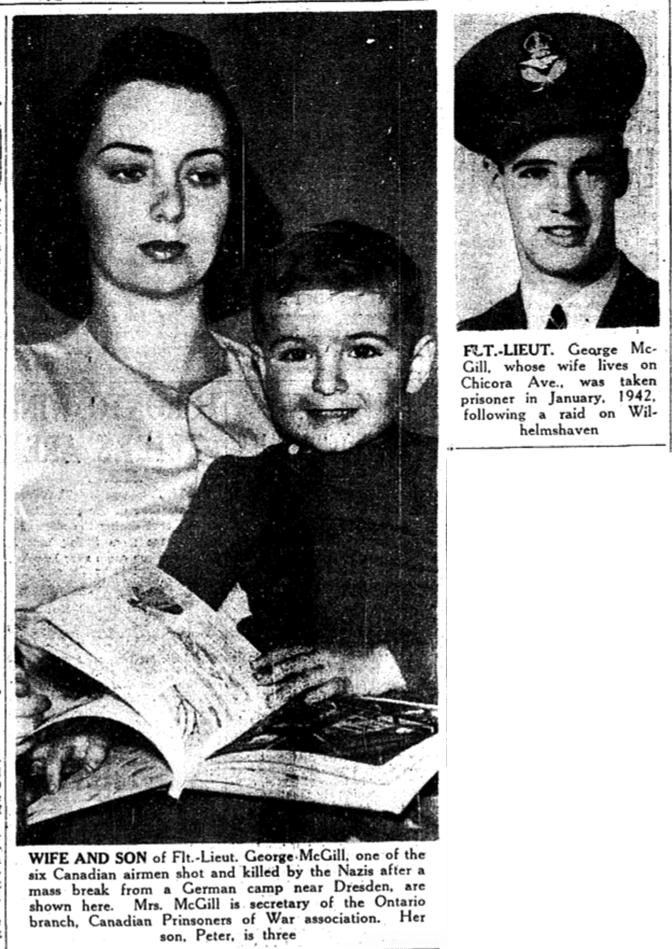
Flight Lieutenant pilot George Wiley of Windsor, digging partner of Wally Floody; F/L Hank Birkland of Manitoba; F/L James Wernham of Manitoba; F/L Patrick Langford from Edmonton; navigator and U. of T. grad Gordon Kidder of St. Catharines who taught German to the camp’s soon-to-be escapers; F/L navigator George McGill of Toronto.
Track star McGill was taken prisoner after bailing out of a burning Wellington bomber in January of 1942. His wife Elizabeth grew up near the Danforth. When McGill went overseas, his son, Peter, was only two months old. McGill was just 25 when he was murdered.
Next time you watch a Hollywood movie like Argo, ask yourself who the real heroes were.
On Remembrance Day, Nov. 11, keep the memory alive of the Canadians who gave their lives in service to their country.
On my copy of his book Ted Barris wrote, “Now you have the true story to go with the Hollywood myth.”



Comments (0)
There are no comments on this article.