Author Rafael Lugo Naranjo’s Gravity a story of love, loss, grief and arriving in a new land
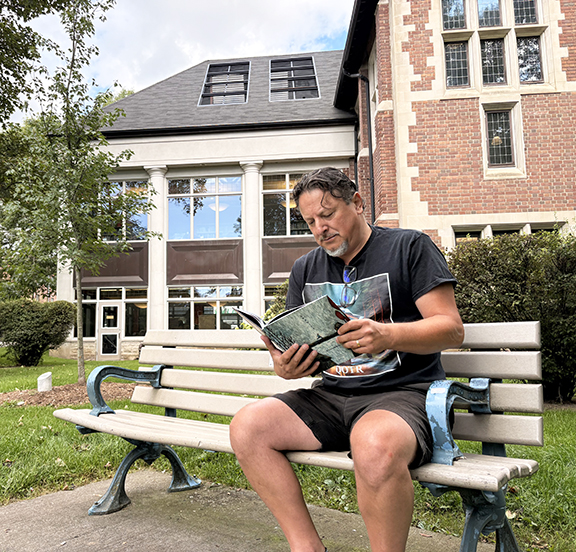
By MATTHEW STEPHENS
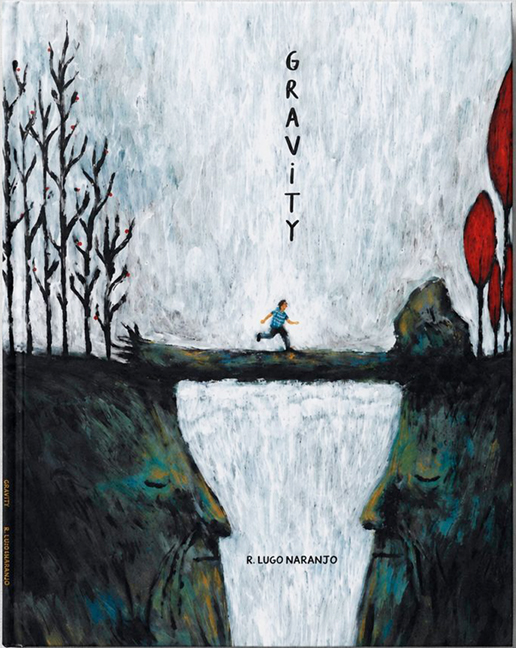
“Today I know roots could grow from grief. This root has been to lose you. This side of the abyss now has your ashes. This side of the abyss will never leave me,” reads an excerpt from local resident and author Rafael Lugo Naranjo’s latest book Gravity.
Not unlike a tree, the proverbial roots of our personal experiences shape the way we branch out into the world – and with our passing, the symbolic fallen tree bridges the gap between ourselves and the ones we leave behind.
Shortly after moving to Canada from Ecuador in 2022, Naranjo’s beloved dog Joaquina sadly passed on, evoking immense feelings of anguish and sorrow.
For the Naranjo family, she was more than just a pet – Joaquina was a kindred spirit; a familiar face they had become accustomed to greeting when they walked through the front door of their Ecuadorian and then East Toronto home.
“Last October, my beloved dog Joaquina died, and it was terrible for everybody in my family,” said Naranjo in a recent interview with Beach Metro Community News.
“She was very sweet. My wife rescued her as an abandoned puppy in the streets, and I loved her like my daughter. She was part of the family.”
At the time of her passing, Rafael was unaware that Joaquina’s death would breathe life into his longtime passion for a pastime once held dear to him; writing stories. He has published novels in Ecuador and Gravity is a 64-page hardcover book written in the Beach and reflecting on a number of themes.
“My wife went to visit her parents, and suddenly, I was in this lonely moment of being so reactive to the loss, and I just started writing,” said Naranjo.
He hadn’t written anything in years, and as a burdened business owner and father of three, inspiration for his next big story had long eluded him in the years following the family’s transition to a new country.
“I arrived in Canada four years ago with my family,” explained Naranjo. “I used to write in my previous life, but when I arrived here, I never found the time. All the settling, all the new experiences and developing a business; it was all overwhelming.”
But after the loss of a familial companion, Naranjo felt compelled to use Joaquina’s passing as a catalyst to share his heartfelt story of love, loss, grief, and the emotional resonance of migrating to an unfamiliar land.
“In the beginning, I was only thinking about her, but suddenly I found myself writing about all my experiences here, my fears, and life.”
Through powerful symbolic imagery, Naranjo’s story is also one which describes his upbringing, and the persistent challenges of the human condition.
“I started writing with no idea or plan, I was just writing to let go – and in that process I made a small inventory of all my past experiences, my wonders, my happiness, my sorrows, my deepest concerns. My dog’s passing got me talking about everything in my life,” said Naranjo.
Using a tree as symbolism for his own life, Naranjo’s story speaks to the universal passing of generational experience, establishing a symbiotic relationship between human nature and the evolution of our environment.
“But this one is ours, and it is the story of a tree that chose to fall and become a bridge. A tree that renounced giving shade. In order to provide a path,” reads a page from the book. “In our story, I am a chapter. The day will come when a grandchild decides to look back. They will find, on the past’s horizon, a yielded tree.”
Naranjo wrote much of the story while gazing onto Kew Gardens through the windows of the Beaches Branch Toronto Public Library on Queen Street East, which helped him to conceptualize the story and become acquainted with the ordeals of life in a new country.
“The weather here is so different. It’s a very cultural shift,” said Naranjo. “Before we came here, everyone back home was so concerned about weather, saying ‘Oh you’re going to freeze,’ because it’s very unusual for Ecuadorean people to come to a place with four seasons.”
Living first in a country with internal armed conflict and high rates of violent crime, Naranjo quoted an excerpt from his book when describing his decision to move from Ecuador, noting that “it is easier to guard against weather than guard against people.”
As he and his family made the transition to his new life in Canada, Naranjo found himself particularly fascinated by the area’s local gardeners, who would spend their summers cultivating lush plantings only for them to die off when winter arrived.
“I love how people in this neighbourhood plant gardens knowing that they’re going to be gone in a few months, but still, they do it. It’s this appreciation for the ephemeral; I find it beautiful,” said Naranjo.
Delving deeper into this country’s historic resilience to below freezing temperatures, he expressed a sense of admiration for the Canadian ancestors who spent years adapting to the conditions of winter.
“I understand why Canada got to be one of the biggest nations in the world, because the first thing they defeated is weather,” explained Naranjo. “When you compare how we face it now to 200 years ago: imagine struggling to navigate below 30-degree weather with no technology and fewer resources. I’ve come to understand that a place like this also develop strong people.”
Naranjo’s story is bolstered by ethereal dream-like illustrations by Ecuadorian artist Roger Ycaza, who blends earthy tones with bold colouring to draw the eye to distinct objects in each image, such as a red barn spotted from a passing train; or monarch butterflies travelling south for the winter.
“We had a friend who is an amazing artist in Ecuador, and I asked him if he would mind illustrating the book, and he developed some beautiful illustrations,” said Naranjo.
Following early showings of Gravity, Naranjo said the story has resonated deeply with second-generation immigrants who have shared their own personal experiences of life in a new country.
“People who have read the book, especially second-generation immigrants, have told me that the story made them think about their parents and grandparents; what they were feeling when they first moved to Canada,” said Naranjo. “Despite this story being so personal, at the same time, it’s the story of millions of people who have experienced immigration.”
For more information about Rafael Lugo Naranjo and his works, head to https://www.ecuadorianliterature.com/rafael-lugo/
For more on Gravity, please go to https://thegravitybook.com/