
In My Opinion: The stories that keep a place alive – local journalism as the first draft of community memory
By FRANK NIXON
Every community has a story. The challenge is whether anyone is still writing it.
During my years as a community journalist, I came to understand that history rarely announces itself. More often, it arrives quietly: in the minutes of a town council meeting, at a church supper, on the sidelines of a high-school hockey game, or in the obituary of someone whose name everyone recognizes. These moments seldom make national headlines, yet together they tell us who we are.
Week after week, small-town newspapers quietly chronicle community life. They record municipal debates, school concerts, church suppers, volunteer fundraisers, business openings, sports victories, births, marriages, and obituaries. They celebrate achievements, document hardships, and preserve the experiences of generations.
In doing so, they create a collective memory that extends far beyond the day’s headlines.
As a journalist, I came to appreciate that reporting was never simply about covering events. It was about listening carefully. Every assignment offered an opportunity to understand what mattered to people—whether they were elected officials, farmers, teachers, artists, business owners, or lifelong volunteers. The stories themselves varied enormously, but they shared one characteristic: they reflected the character of a community at a particular moment in time.
Long before I began writing fiction, I spent years reporting on the people and places that make up small-town life throughout Quebec’s Eastern Townships. Working for publications including the Brome County News, Tempo and The Sherbrooke Record, I learned that newspapers do more than report what happens. They preserve the voices, personalities, and conversations that define a place.
Some of the most memorable stories were not necessarily the happiest ones. I still remember covering a murder that occurred outside a local establishment in Knowlton. For a brief time, a quiet community found itself the focus of regional attention. But after the television cameras left, the local newspaper remained.
We reported not only on the investigation but also on the community’s efforts to understand what had happened and to move forward. Looking back, I realize the story became part of the town’s memory, preserved not by dramatic headlines alone, but through careful, sustained reporting.
Another memorable story was the campaign to save the Paul Holland Knowlton House. It was about far more than preserving an old building. It became a conversation about what a community chooses to remember and what it is prepared to lose. Week after week, the newspaper documented public meetings, fundraising efforts, setbacks, and small victories until the preservation effort itself became part of the building’s history.
There was also the multi-year discussion over the proposed linear path connecting Knowlton and Foster. One evening, I attended what appeared to be a routine municipal council meeting, expecting little more than discussions about roads and budgets. Instead, I witnessed a debate that revealed something much larger about the community—its competing visions of growth, heritage, and identity.
The next morning, that meeting became a newspaper story. Years later, I realized it had also become part of the historical record. Residents disagreed about transportation, property, heritage, and the future character of their town. On the surface, it was a municipal issue. Beneath it lay a conversation about identity. Those are precisely the kinds of discussions community newspapers preserve for future generations.
These stories rarely become part of national conversations. Yet they are the details that allow communities to understand themselves. For generations, the local newspaper has been one of the places where those stories have been collected and preserved.
In many communities, local newspapers carry an even greater responsibility. Often serving relatively small populations spread across large geographic regions, they become more than sources of information. They become repositories of identity, preserving the voices, traditions, and experiences of communities whose stories might otherwise disappear.
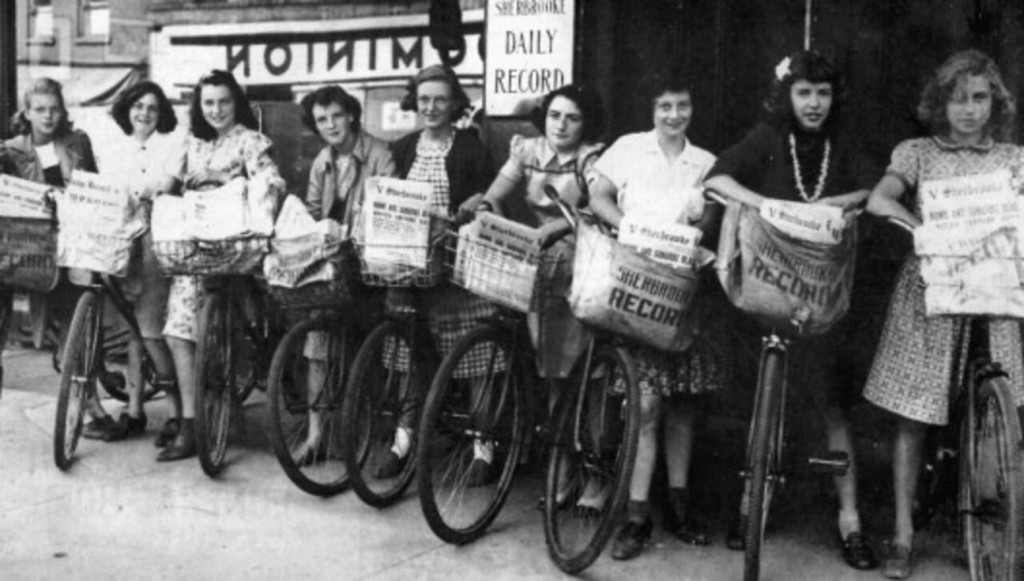
Local journalism today faces extraordinary challenges. Financial pressures, shrinking newsrooms, and changing media habits have forced many community newspapers across Canada to close or reduce their coverage. Even where newspapers continue to publish, they often do so with fewer resources and smaller staffs than ever before.
The consequences extend far beyond the newsroom.
When local journalism diminishes, communities lose more than news. They lose part of their institutional memory.
Future historians may still find government records and official documents, but those rarely capture the texture of everyday life. They do not preserve the conversations in coffee shops, the determination of volunteers, the quiet generosity of neighbours helping neighbours, or the sense of place that emerges through countless ordinary moments faithfully recorded over time.
As our media landscape continues to evolve, the challenge is not simply to preserve newspapers, important as they are. It is to preserve the habit of telling local stories—to continue recording the everyday lives, achievements, struggles, and shared experiences that give communities their identity.
In many ways, the local newspaper has always been a form of literature—not because it invents stories, but because it preserves them. Its pages contain the raw material of narrative: memorable characters, conflicts, triumphs, disappointments, acts of kindness, and lives unfolding over decades.
Novelists transform experience into fiction. Community journalists bear witness to the real lives from which those stories ultimately grow.
Long after the headlines have been forgotten, those stories remain. They remind us not only where we came from, but how a community slowly becomes itself—through ordinary lives carefully observed and faithfully recorded.
Every community needs storytellers. For generations, local newspapers have been among the most important of them.
- Frank Nixon is a former community journalist whose reporting appeared in the Brome County News, The Record and Tempo. His literary noir novella, Wayward Voices, draws on his years covering communities in Quebec’s Eastern Townships. This column first appeared in the Sherbrooke Record, and Frank sent it to Beach Metro Community News for consideration to be shared with our readers. More information on Frank is available at www.franknixon.com.



Comments (0)
There are no comments on this article.