
On The Wild Side: How you can help an injured or orphaned animal
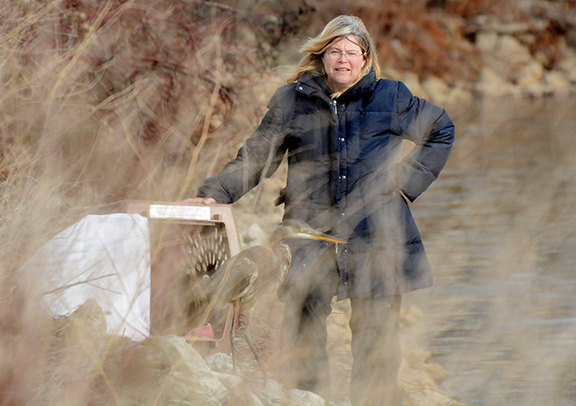
By ANN and ERIK BROKELMAN
As much as I enjoy taking photographs of animals, what I have really come to love is helping those that are in distress. Over the years, which has included everything from a fox with mange, a turtle hit by a car, a Red-tailed hawk with a damaged wing, a songbird that had struck a window, and a nest of bunnies whose mom never returned.
Many years ago, during an owl-watching expedition, I met a volunteer with the Toronto Wildlife Centre who became my animal-rescue mentor. She invited me to accompany her on a few rescues and releases and introduced me to the Wildlife Centre itself.
It completely changed my life! Before we met, I would have had no idea what to do if I saw something like a fishing line tangled on a swan’s wing. Now, I am prepared and feel confident I could even handle the situation myself. And there are certainly many rescue situations I come across where my first action is to call for professional backup.
You might wonder: what exactly does a wildlife helper keep in her car? Just the usual: two rolls of duct tape, rope, scissors, pliers, a hammer, cable ties, two large nets, tarps, latex gloves, heavy work gloves, a flashlight, ice cleats, various boxes, towels, hiking boots, and a few garbage bags. It is all pretty standard stuff from my point of view, but it did make it awkward to explain to a police officer who must have thought I was a serial killer!
Why do I keep all of these items in my car? Well, a good Girl Scout is always prepared. In all the time I have spent volunteering, I can promise you that every single one of those items can be, and has been, incredibly important when dealing with injured animals. You probably do not need to keep all those things in your own car, but it’s not the worst idea to have a small box with gloves and a towel, just in case.
So, what should you do if you encounter an injured or potentially orphaned animal?
The best thing for you to do, is to call for backup.
If you find an animal in distress in the Greater Toronto Area, the best first step is to visit the Toronto Wildlife Centre website (see the link below) and fill out their online wildlife reporting form. If you manage to take a photo of the animal, you can attach it to the form, which helps them assess the situation quickly. Their team will review the information and call you back as soon as possible.
In a low-risk situation, the very first thing I do is put on latex gloves and a mask. Once protected, I place the animal, (assuming it was safe for me to catch it/pick it up) in a cardboard box or crate with a towel lining the bottom. Assuming this is a relatively small animal, like a bird or a bunny, make sure to poke a few air holes in the box, secure the lid, and place it in a dark, quiet space. The primary goal here is to keep the animal safe, and dramatically reduce its stress, until next steps can be taken.
After that, if you haven’t done so already, your next step should be to call the nearest wildlife rehabilitation centre. Please take a moment to add their numbers to your phone or print them out to keep in your wallet or purse. You never know when you might need them!
Toronto Wildlife Centre TWC has the only dedicated wildlife rescue team in Ontario, and they truly are amazing at what they do, but please keep in mind that they do not accept baby birds, or baby cottontails and squirrels whose eyes are still closed.
Shades of Hope Wildlife Refuge phone number is 705-437-4654. If the lines are busy, please leave a detailed message and they will call you back as soon as possible. Shades of Hope accepts baby birds, animals with their eyes still closed, and all other types of wildlife.
Both of these wildlife centres have an amazing “What to Do” section on their websites. I highly encourage you to look them both up and review their guides on what to do if you find a baby bird or a cottontail nest in your yard.
Remember, not every animal or bird you encounter needs to be rescued! Sometimes they just need to be left alone. That is why it is so important that your very first step is always to contact one of these centres for guidance before you intervene.


Thanks Ann for all the great advice.
Keep up all the wonderful work that you do for animals who need help 👍
Thanks Lynda
Well-written, Ann, and very informative. I always enjoy your articles!
Thank you Katheryn
Thanks, Ann, for the important information.
Thank you Karin. I meet a lot of amazing people out watching and helping wildlife. Your rescue and release will always be an incredible memory.