In My Opinion: When it comes to public education, the village still matters
By LORI ANN COMEAU
As parents, we are often told it takes a village to raise a child. The older I get, the more I appreciate how true that is.
I grew up attending Toronto public schools. Like many families in the east end, school was more than a place where children learned mathematics and reading. It was a community. Teachers knew students. Families knew one another. Schools were places where children felt known.
I still remember the literacy support I received at Duke of Connaught Public School. Educators identified a need, provided support, monitored progress, and celebrated growth. The intervention was not complicated. It was simply a group of caring adults working together to help a child succeed.
Most importantly, I knew people were invested in my future.
As a parent, I hoped my children would experience the same sense of belonging. In many ways, they did.
At Earl Beatty Public School, we experienced a strong sense of community. Families volunteered. Educators knew students. Relationships mattered. The school felt connected to the neighbourhood it served.
But over the years, I also began to see something changing.
Increasingly, families found themselves navigating larger systems, more formal processes, and growing challenges obtaining support when concerns arose.
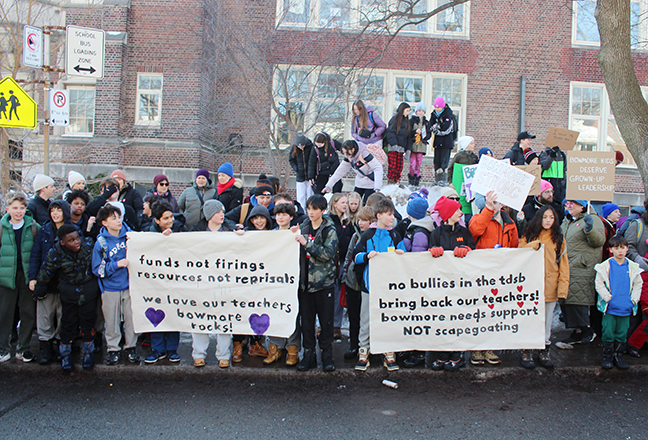
At Bowmore Road Junior and Senior Public School, many families experienced periods of instability, staffing changes, safety concerns, and uncertainty. My own children experienced some of those challenges. Like many parents, I spent less time discussing learning and more time trying to understand systems.
That shift matters. Because when schools become focused on managing challenges rather than building relationships, everyone feels the impact.
Students feel it. Families feel it. Educators feel it. Administrators feel it.
Today, both the Toronto District School Board and the Toronto Catholic District School Board are facing increasingly complex realities. Student needs have grown. Mental-health concerns have increased. Families are navigating learning, attention, anxiety, belonging, and engagement challenges that were often less visible a generation ago.
Educators are being asked to do more. Administrators are being asked to do more. Families are being asked to do more.
Yet many people feel less connected than ever. That should concern all of us.
Because schools are not simply buildings.
They are communities. And communities are built through relationships.
My family eventually transitioned to the Toronto Catholic District School Board. At St. John’s and now through the transition to Notre Dame and Neil McNeil, I have again experienced the value of collaboration, communication, and clearly defined roles between students, families, educators, and administrators.
Not perfection. Partnership. And there is a difference.
What students need most has not changed.
They need to feel safe. They need to feel supported. They need to feel capable. They need to know that the adults around them are working together.
Research continues to demonstrate the connection between belonging, confidence, mental health, engagement, and educational success.
Families see those connections every day.
When students feel connected, they participate. When students feel successful, they engage. When students feel supported, they grow.
The question for our community is not whether our schools are working hard. They are.
The question is whether we are investing enough in the relationships that make schools successful in the first place.
Because long before education became a policy discussion, it was a community responsibility.
Perhaps the real challenge facing education today is not finding new solutions. Perhaps it is remembering what worked in the first place.
The village still matters. The question is whether we are willing to rebuild it.
Lori Ann Comeau is a Toronto parent, educator, community advocate, and proud hockey mom. She believes that strong neighbourhood schools, community athletics, and meaningful relationships help children develop confidence, resilience, leadership, and connection. She is the Founder and Executive Director of Advocates for Access & Accountability (AAA).