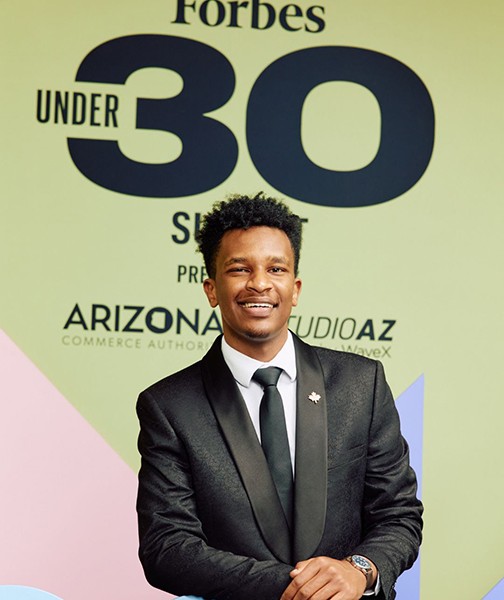
Federal Election 2025: Beaches-East York Green Party candidate Jack Pennings answers our questions

(EDITOR’S NOTE: Beach Metro Community News sent these questions to the federal candidates in Beaches-East York. Not all candidates responded by our deadline. Candidates were asked to keep their responses to approximately 300 words. Please visit our website at www.beachmetro.com for more information on the candidates.)
QUESTION 1: Please tell our readers a little bit about yourself and why you are running in this election?
I have been a resident of the riding, living near Michael Garron Hospital, for 22 years. My wife and I raised our family here and feel like we chose one of the best parts of the city to live in. I grew up in Scarborough and have lived in Alberta and in Toronto’s west end before coming to live here.
My academic training was in social work (Master’s) and most of my working life has been spent in IT and software development. For the past 18 years I have worked in mobile device security. These may seem like divergent paths but as a result I bring technical knowledge and social insights to my candidacy. Earlier, I worked in the addictions field, landlord-tenant advocacy, and in disability rights advocacy.
I am relatively new to the Green Party of Canada (GPC). If any one thing made me go Green, it is the various failures around carbon pricing by the main federal parties. It is (or was) a completely rational and sensible approach to carbon reduction – at least the Liberals made the attempt. But politics has prevailed over responsibility, and I’m afraid a similar fate awaits other equally sensible initiatives in the future. I find this very concerning, and had to turn to the only party that has the environment in its DNA.
In the face of developments in the US, I see this election as the most important one for Canada since the 1988 Free Trade Election. At such a time it is a privilege to run as a candidate in our riding. It’s great to engage with neighbours, discuss our common concerns, and learn what people are thinking in relation to the challenges we face.
QUESTION 2: Why is your party and your party leader the best one to deal with the threats from U.S. President Donald Trump, and how will your party support Canadians impacted by tariffs and other American policies towards Canada?
In the face of a hostile America, our next set of parliamentarians should put their differences aside and put the country first. Voters need to consider what party and leader will follow this course.
Cross-party co-operation has always been the M.O. of the Green Party, which is centrist in its outlook. Of the party’s two co-leaders, Elizabeth May is the better-known and has earned formal recognition by fellow parliamentarians as: most knowledgeable, hardest working, best orator, and parliamentarian of the year. She is well-suited to set the tone for a country-first parliament and be a leader within it.
The 2025 GPC platform will be available before the national leaders’ debates. So far in the campaign, no specific policies have been announced along the lines of supporting affected workers or economic sectors, but please watch for them.
In advance of the full platform release, the GPC has released a document called Protecting Canada with many ideas for national defense. Expect more of the same in our final platform.
A recent policy announcement outlined GPC plans for a 120,000-member paid civil defence corps to strengthen Canada’s resilience and sovereignty.
It would address multiple threats: to infrastructure, the arctic, security including cyber threats, and natural disasters. In addition the Protecting Canada document proposes improving public awareness about emergency preparedness.
Another recent announcement lays out GPC plans for a Federal Strategic Reserve of key raw resources in order to safeguard jobs, stabilize prices, support housing construction, and more.
We support the notion of an East-West energy corridor, but with the aim of accelerating electrification for true energy independence, rather than continuing fossil fuel reliance. Excess power production can provide affordable electricity to communities and for manufacturing activity.
QUESTION 3: Beyond Canada’s relationship with the United States, what do you see as the next most important issue in this election and how will you and your party address it?
I would say the next most important issue is that of generational fairness. This is the “long term” part of the national conversation we need on building a more resilient and distinct country. Let’s give younger Canadians a stake: in a Canada they want to live in and can be proud of; that is distinct from the US and the MAGA outlook; and that is worth defending. All points below relate to this.
Affordable housing is critical and the progressive parties are in broad agreement on this. Excessive regulations need to be reduced and government needs to get back in the housing business. Greens will insist on sustainability and accessibility, gentle density, and avoiding sprawl by building within existing city and town boundaries.
We can fight the move toward authoritarianism with more democracy at home. Primarily this means moving toward a proportional system of representation, which the GPC has long advocated for. Our current FPP system bakes in partisanship and promotes cynicism and apathy.
It is essential to support the arts. Canadian artistic content reflects Canadian life. Supporting our own artists is a key way to keep a distinct Canadian mindset alive and well. I have a concern that modern electronic media has eroded our sense of distinctiveness, especially among the younger people who have grown up with it.
On spending and deficits the GPC is fully conscious of the need to live within our means and routinely releases costing along with its platform. If we are going to build Canadian resilience, the tax cuts other parties are promising are an odd place to begin.
On climate change, let’s be responsible: the GPC supports sustainable power over the new pipeline mania, which is fraught with economic risk. If we sign international climate agreements, we need to live up to them.