
Toronto-Danforth trustee says more urgency needed on funding school nutrition programs for hungry students
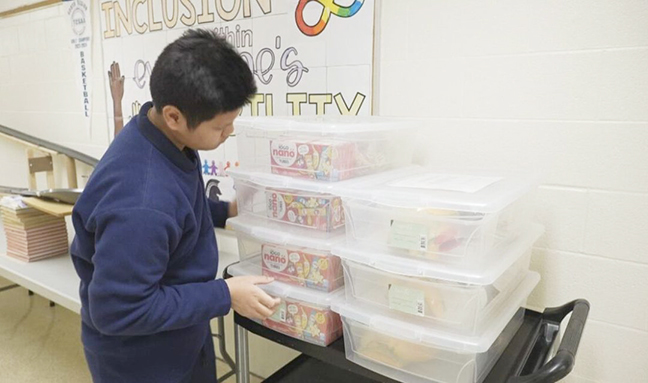
By AMARACHI AMADIKE
Following the COVID-19 pandemic, many Torontonians grappled with a heightened sense of food insecurity. As cost of living sky-rocketed, standards of living declined due to residents’ inability to keep up with bills.
According to Daily Bread’s Who’s Hungry Report, one out of 10 people are now relying on food banks to support their needs. This, the report said, is a 50 per cent increase from last year’s data.
One area that this issue has been felt the hardest is within the classrooms of Ontario schools where many students are forced to go to school without a nutritious meal – a vital element in educational performance.
The 2023-2024 Census revealed that 14 per cent of students indicated that they “sometimes, often, or always” feel hungry due to a lack of food at home.
With an increasing number of parents now relying on school nutrition programs to help alleviate some of their financial pressures, parents and teachers have been advocating for a National Food Program.
Toronto Foundation for Student Success (TFSS), one of 14 Provincial Lead Agencies across Ontario, supported more than 30,000,000 meals in 826 Student Nutrition Programs in the 2022-2023 school year.
In the 2021-2022 school year, the program supported 218,202 kids, compared to the 221,000 supported in 2022-2023 school year.
With demand for student support increasing post-pandemic, financing for programs have been stretched thin.
“If I had a wish, I’d wish the federal and provincial conversations would conclude really quickly and the funding starts to flow to these programs,” said Toronto Foundation for Student Success (TFSS) Executive Director Catherine Parsonage. “It’s getting cold. Kids need the calories.”
In the last budget process, the federal government committed $1 billion over five years to a National School Food Program – 40 per cent of which is designated to Indigenous communities.
However, funding has not flowed to school districts in Ontario yet as conversations are still ongoing between the federal and provincial governments about the rules surrounding receiving the province’s portion of the funding.
It is currently unclear what is behind the delays in fund distributions.
“The content of the conversations have not been made public so I don’t know,” said Parsonage. “But even if the conversations ended tomorrow, while a fantastic start, it’s not going to solve the problem of funding for student nutrition programs.”
With just 6.9 per cent of Toronto’s food programs being funded by the province (which commits $28 million for 5,000 programs across Ontario), while the City of Toronto covers about 17 per cent with its $20 million investment, it appears that the current federal investment will not be enough to cover programs which currently rely heavily on donations from community members.
Although Toronto-Danforth is ranked lowest amongst all wards when it comes to reported food insecurity among students, Toronto-Danforth Toronto District School Board (TDSB) Trustee Sara Ehrhardt. said she is just as passionate to fight for students as “there is no community where children are untouched by hunger” in Toronto.
“I’m very hopeful that the provincial government will work collaboratively for the sake of hungry children across the province,” said Ehrhardt. “This is not an election platform. This is a ‘lets do it now’ issue.”
TDSB supports 580 nutrition programs across 420 schools, providing food to more than 150,000 students daily in collaboration with TFSS.
“The need and costs of funding the programs at those specific schools have gone up,” said Ehrhardt. “It’s costing more to deliver the same programs for the same number of kids. There’s now also gaps to expand the programs to more schools”
Funding constraints have resulted in many students from the more than 35 TDSB schools that were deemed eligible for food programs being denied access to nutritious meals.
“I don’t believe the funding that (governments) are proposing could give everyone a meal,” said Ehrhardt. “But every step we make gets us closer to the dream of so many people who have been planning this for decades.”
Although Ontario has sporadically invested in the food programs over the years – outside its $28 million investment – advocates believe that more consistency is required to build a program that meets the needs of the students and enhances academic performance province-wide.
Conversations surrounding the relationship between a healthy meal and education are foggy due to other variables that may affect a student. However, data strongly suggests that there is a correlation between nutritious meals and academic performance.
“It’s something I hear about all the time,” said Ehrhardt.
According to TDSB’s Student Nutrition Needs Assessment Report, students who ate a healthy breakfast exceeded provincial reading standards 10 per cent higher than those who skipped the meal.
The same report suggests that 78 per cent of students who ate nutritious meals are on track to graduate while students who experience a lack of stable meals lag behind with 61 per cent on track to graduate.
Students who don’t have to worry about sustenance are also 50 per cent less likely to miss or skip classes, according to the report.
“This is something we can all work on together for the good of children,” said Ehrhardt.
“I spend so much time being critical of the province. I don’t want to be critical of the province. I want them to join in. This is something we can all do. We can come together on this. This is one where it matters. We can come together for our children.”