
Reel Beach: Billie Eilish to star in Sarah Polley’s adaptation of The Bell Jar
By BERNIE FLETCHER
“To the person in the bell jar…the world itself is the bad dream.”
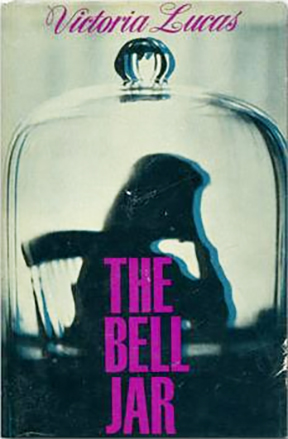
Strong female voices came together this summer in Toronto to adapt Sylvia Plath’s semi-autobiographical 1963 novel The Bell Jar for the big screen.
Sarah Polley wrote the screenplay and directed Billie Eilish as Esther Greenwood, the narrator of the story about a college student’s descent into mental illness.
The setting is 1953 New York City and suburban Boston, but the theme of alienation and depression is timely today.
Growing up as a child star, Sarah Polley faced her own personal and family issues which she documented in Stories We Tell (2012).
She has made the choice to stay and direct films in her hometown of Toronto. Polley won the Academy Award for Best Adapted Screenplay for Women Talking (2022). Her films have dealt with the social pressures that shape women’s lives and she has the sensitivity to direct such a painful story as The Bell Jar.
I used to float, now I just fall down
I used to know but I’m not sure now
What was I made for?
What was I made for?
(Oscar-winning Billie Eilish song.)
Billie Eilish was made for this, her feature film acting debut. Her introspective and soulful lyrics speak to a young generation that can feel adrift in uncertain times.
Her search for personal identity and rebellion against conventional female roles mirrors Sylvia Plath’s inner turmoil.
Plath describes Esther’s depression as a feeling of being trapped under a bell jar, struggling to breathe. Wherever she was, she’d be “sitting under the same glass bell jar, stewing in my own sour air”.
The bell jar is Plath’s symbol of what it feels like to be trapped in one’s own mind.
“How did I know that someday, at college, in Europe, somewhere, the bell jar with its stifling distortions wouldn’t descend again?”
The first-person narration is set in the hot, sultry summer of 1953. Esther is a bright, 19-year-old college student who wins a one-month internship at a women’s magazine in New York City, but “I knew something was wrong with me that summer…I was supposed to be having the time of my life…All I could see were question marks.”
“The lawn was white
with doctors.”
When she comes back home she attempts to take her own life and is sent to a psychiatric institution. Esther looks back on her life and relationship with her hometown first love Buddy who asks her, “How would you like to be Mrs. Buddy Willard?” No thanks!
She does not want to define herself in terms of a man. She wants her own identity not the 1950s ideal of happy housewife: “I am. I am. I am.”
Back in the 1950s and ’60s there was even more stigma around mental illness. I remember hearing on the car radio about the death of Marilyn Monroe. Suicide was a taboo subject unless it was a celebrity.
A number of acclaimed films have dealt with mental illness, including The Snake Pit (1948), Splendor in the Grass (1961), One Flew over the Cuckoo’s Nest (1975) and Girl, Interrupted (1999) which told about events in the same facility where Plath was hospitalized.
Stepping back in time
For the filming, Bay Street below Queen Street was transformed into Madison Avenue in New York City with 1950s period vehicles, fashions and signs.
Other locations were vintage storefronts on Augusta Avenue in Kensington Market, University of Toronto, McMaster University, the Tamahaac Club in Ancaster and the Parkwood Estate in Oshawa.
Watch for The Bell Jar on the film festival circuit next summer.
World Suicide Prevention Week in Canada
Sadly, Sylvia Plath took her own life in 1963 only one month after The Bell Jar was first published.
This week (Sept. 9-15) is World Suicide Prevention Week in Canada. If you or someone you know needs help, the Suicide Crisis Help Line is available (9-8-8) or the 24/7 Kids Help Line (1-800-668-6868 or text 686868); No one should have to face a mental health crisis alone (United Way call or text 2-1-1); or Toronto Community Crisis Service (2-1-1).
Losing a parent at a young age can be traumatic for a child, leaving deep emotional scars. Plath’s father died when she was eight and her character Esther recalls, “I was only purely happy until I was 9 years old.”
The father of acclaimed Norwegian actress Liv Ullman died from his injuries a few years after being struck by a propeller while working as an aircraft engineer at the Royal Norwegian Air Force Training Camp (1940-1943) on Toronto Island during the Second World War. Liv Ullman came to Little Norway with her family at age two.
Little Norway Park is dedicated to the memory of those brave souls who fought and sacrificed for freedom.
Save our waterfront!



Comments (0)
There are no comments on this article.