
On The Wild Side: Sharing some deer memories and facts
By ANN AND ERIK BROKELMAN
I was walking through the woods on an autumn morning, the kind where every step stirs a small rustle underfoot. The trees had already let go of most of their leaves, and the ground was a soft, occasionally crunchy, carpet of red, yellow, and orange.
I paused every so often to breathe it all in, listen to the sounds of the forest, and to maybe see something new. That’s when I noticed the faintest movement to my right.
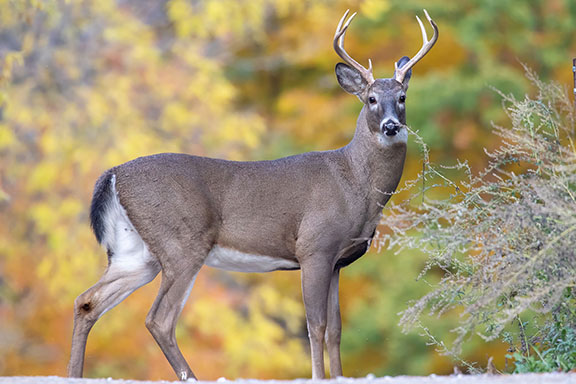
I could just see the antlers at first, peeking over the top of the bushes. I hoped it might be a large buck, but I couldn’t be sure. So, I stayed still and waited. Then, just like that, he stepped forward. A beautiful buck, walking right toward me.
He stopped, looked straight at me, and we just stood there together, for a moment, making eye contact. Then he turned and made his way back toward the trees. I couldn’t move. I just watched as he walked away and headed down toward the creek.
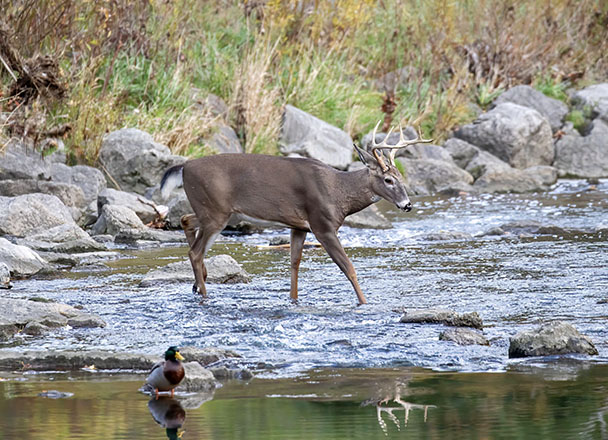
He walked as though he had all the time in the world. I didn’t think I would be lucky enough to see him cross the water. But sometimes you get those moments you don’t expect.
He stepped into the creek and moved through it slowly, the reflection just barely visible around him, as a duck perched on a nearby rock and seemed to watch as well. And then, as quietly as he had come, he was gone.
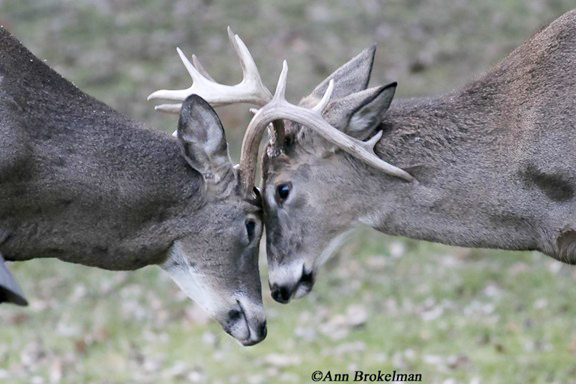
Seeing that deer brought back another memory. A few years ago, I watched two bucks fighting in a parking lot during the rut.
I stayed in my car and watched as their heads crashed together, their antlers locked, and they fought. It felt like something out of one of those old Wild Kingdom shows. I remember feeling like I was witnessing something rare. The fight was over almost as quickly as it began, and for a moment, I wondered if I had really seen it at all.
If you’ve never heard of the rut before: bucks fight during the mating season, (usually November) to establish dominance and to earn breeding rights.
Have you ever noticed that baby deer tend to appear in the spring? It’s because the rutting season usually runs from October to December, and deer gestate for around seven months.
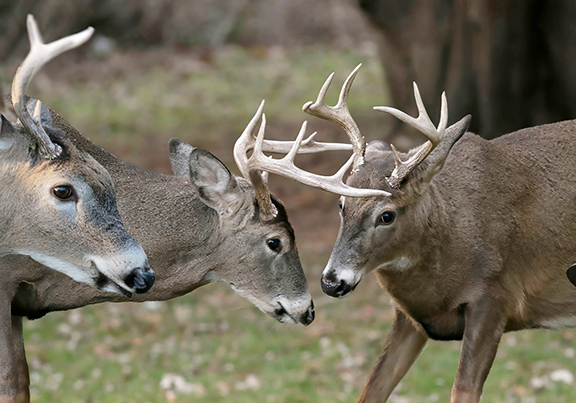
Battles between the males usually only last for a few minutes, though they can go on for much longer, and injuries are common. Deer can hurt their legs, their feet, and even their eyes. In some rare cases, the antlers become locked together, and neither buck can break free. When that happens, both can perish.
What I found especially interesting was how the younger bucks behave at this time of year. They often stand off to the side, studying every move of the older males. Sometimes they will even step forward and try to take part. It is not a true fight for them, but more of a practice round. It is how they learn what they will need in the years to come.
Some more deer facts I’ve learned over the years: White-tailed deer are the most common hoofed wild animals in North America, which is why we see them so often around fields, roadsides, and wooded trails. They are easier to spot early in the morning or later in the day when they tend to move around more. When they sense danger, they lift their white tail to alert the others nearby and are very quick to run away.
In the wild, a deer can live for up to 20 years if conditions are good. White-tailed deer are part of the ungulate family, which simply means that they are animals with hoofs.

Comments (0)
There are no comments on this article.