Erosion control work on Ashbridges Bay Park shoreline set to begin later this year
By MATTHEW STEPHENS
As the Toronto Region and Conservation Authority (TRCA) prepares to begin work on the eastern shore of Ashbridges Bay Park, some local conservationists are hoping to inform the public about the plans and ascertain key details surrounding the project to protect the park’s shoreline against the hazards of erosion.
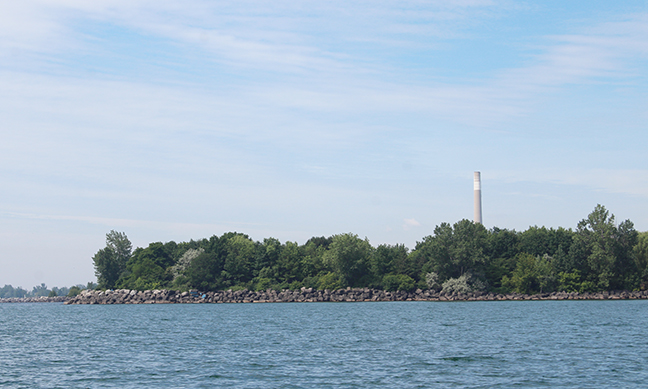
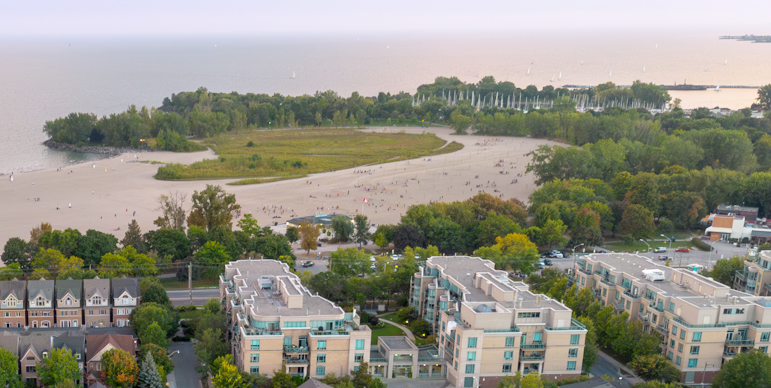
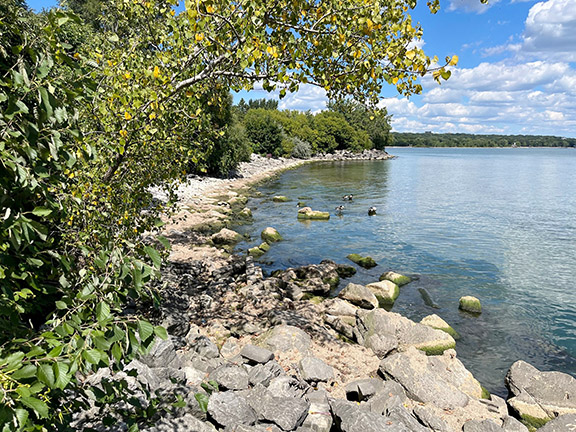
Part of the Ashbridges Bay Park East Headlands Shoreline Maintenance Project, work to fortify the eastern shoreline is a partnership between the TRCA and the City of Toronto to conduct maintenance work on three existing shoreline erosion control structures (two headlands and a beach) located at the eastern limit of the park, southwest of Woodbine Beach.
A headland is an area of hard rock that sticks out into a large body of water. Headlands are formed in areas consisting of hard and soft rock. To repair a headland erosion control structure, a new layer of armourstone is placed over the existing structure, which helps to absorb more wave energy. Armourstone is a large, heavy, and durable natural stone (often limestone or granite), quarried and shaped for construction, landscaping, and erosion control.
In the case of Ashbridges Bay, the new layer of armourstone will require the removal of all vegetation along the shoreline.
Since its construction in 1977, Ashbridges Bay Park has been subjected to constant wave action, ice effects and flooding from Lake Ontario. In 2006, the TRCA’s Erosion Risk Management Program (ERMP) sought to monitor the park’s erosion control structures on a yearly basis.
In 2017, Lake Ontario experienced record high water levels, causing significant concerns related to erosion issues along the entire Toronto shoreline. The following year, a severe ice storm caused high wave conditions, resulting in further damage to the park’s shoreline erosion control structures.
According to TRCA, by 2019, after sustaining damage from two severe weather events, the ERMP conducted a detailed inspection and determined the shoreline was in “failing condition.”
Structures within the project area were listed as a “high priority” for major maintenance due to proximity of backshore erosion to the park trail, which poses a significant risk to public safety.
Currently, the TRCA is in the process of developing detailed designs to reinforce the existing shoreline erosion control structures. The TRCA is also working to acquire the necessary permits and approvals before they begin construction in December 2025-January 2026 – assuming all permits and approvals are granted.
According to the TRCA’s website, the project area will remain closed during construction to ensure public safety.
Clyde Robinson of Toronto Nature Stewards (TNS) said he had hoped more information surrounding the project could have been made apparent to the public sooner. “The communications are flowing although sometimes there’s quite a wait in between,” he said.
With a start date as early as December, and an estimated timeline of two to three years, Robinson is concerned the public has been left in the dark about the details surrounding the project.
“This is how TRCA and many city activities are done nowadays. They’ll put up a sign a couple of weeks before starting the work, thereby not leaving the public time to react,” said Robinson. “The reason for me providing this information is to only make the public aware of the future of this park for the next three years.”
Robinson and supporting members of TNS are hoping there will be no impact on the Woodbine Beach Dunes Ecosystem. Information on the Woodbine Beach Dunes Ecosystem can be found on INaturalist at https://www.inaturalist.org/observations?project_id=123927, which currently records 1,038 observed species.
Despite concerns regarding a lack of currently accessible public information, Robinson said he and the TNS are happy to hear the project will include the total removal of all invasive vegetation back from the boulders along the shoreline, including the non-native invasive ailanthus tree. Robinson said although all vegetation will be removed up to five metres back, he is relieved to know that the removal will also include all non-native invasive plants.
TNS have also been granted permission by the TRCA to transplant any native plants (mostly Golden Rod and Asters) before all vegetation is removed from the erosion control site.
“TRCA will be removing all vegetation four to five metres back from the existing boulders at park level,” said Robinson. “All new plantings will be native. TRCA will maintain the new plantings for the initial stage (yet to be determined, a couple of years), then the City of Toronto Parks will take over. We must see this through as time and time again new plantings are ignored, not maintained and many eventually die.”
In an email to Beach Metro Community News, the TRCA confirmed it is in the final planning stages of the project, and that a “public information session” will be held this fall to provide project details.
“Toronto and Region Conservation Authority (TRCA) is in the final stages of planning the Ashbridges Bay Park East Shoreline Maintenance Project. This initiative will help safeguard the park against long-term erosion,” said Afiya Jilani, Communications specialist for TRCA.
“TRCA is committed to carrying out this work with minimal disruption to the park and its users. A public information session will be held later this fall to share project details, construction timelines, and work areas. Community members are encouraged to attend to learn more about what to expect during construction.”
According to the information Robinson has obtained, the construction project will place a temporary fenced off road along the length of Ashbridges Bay Park, dividing it into two halves with access to either side at the end of the fencing.
Robinson said a request to implement “animal pass-throughs to allow for escape from all the off-leash dogs in the park,” was not granted by the TRCA. Robinson and TNS also submitted a request for a “mid-way access along the road” to allow for easy access to the public washrooms, which will be located on one side of the fenced off park. This request was also denied, he said.
“I unfortunately foresee many people using the bush to ‘relieve themselves’ as the nearby washroom will be so difficult to access. People will have to walk the entire length of the park and back again. A request for a mid-way access along the road to get to the washrooms has been turned down,” said Robinson.
In response, the TRCA told Beach Metro Community News that implementing any pass throughs along the fencing would pose risk to public safety. “Construction vehicles will use a section of the park trail to access the site. For safety, this route will be fully fenced off to protect both park users and workers. Adding pass-throughs to the fencing would reduce site security and create safety risks,” said Jilani.
The TRCA also mentioned plans to include “crossing points open at key locations” to allow for movement between both sides of the park and access to public washrooms.
Robinson said these “key locations” are at either side of the park. If you are in the middle of the park by the washrooms “level or latitude” you will have to walk back to the parking lot or down close to Lake Ontario, then walk all the way back to the washroom, then retrace your steps upon returning.
In the next steps of the project, the TRCA will begin establishing staging/stockpile areas, which will include tree removals, installation of Erosion and Sediment Control measures and construction fencing, and tree protection.
Erosion structures will then be prepared for maintenance, and the armourstone headlands and cobble erosion control beach will be reinforced.
Habitat stones will also be installed to ensure aquatic habitat development. Habitat stones (also known as stepping-stone habitats) are small, isolated patches of suitable habitat that allow wildlife to move between larger, more fragmented areas.
For more information regarding the Ashbridges Bay Park East Headlands Shoreline Maintenance Project, head to TRCA’s website.
For more information on the Toronto Nature Stewards, please go to https://torontonaturestewards.org