Friends of Glen Davis lose development fight
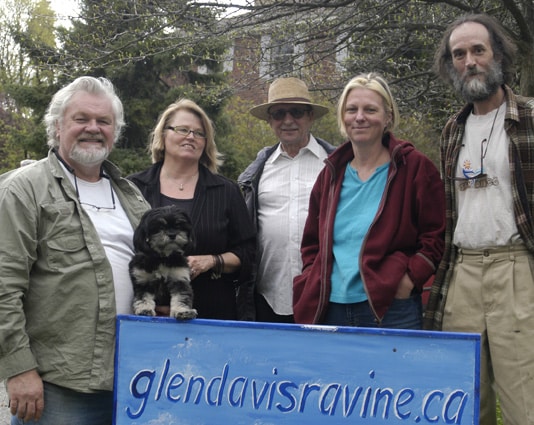
The Friends of Glen Davis Ravine organized to fight a Kingston Road development in the spring of 2010.
They found expert testimony, one person published a book, they organized and fought the good fight, they even got naked to raise funds for their cause, but in the end, the Ontario Municipal Board’s Vice Chair Steven Stefanko ruled in favour of the Kingston Road Development Corporation, leaving the Friends of Glen Davis Ravine with nothing but bills to pay.
Friends of Glen Davis member Martin Gladstone said the group is disappointed with Stefanko’s ruling, which essentially ignores every issue raised by the group.
“This group really lost everything. They argued about loss of light, loss of privacy, loss of the ravine, noise, and every concern they advanced was fundamentally ignored, so we’re very disappointed,” he said.
The property in question includes 580, 590 and 592 Kingston Rd, several addresses west of the northwest corner of Kingston and Main Street. The six-storey development will sit at the top of a small section of ravine that leads to the backyards of several houses on Glen Davis Crescent, and is two storeys taller than zoning allows.
The case was sent to the OMB after numerous delays. The city originally recommended the development go ahead, after a slew of conditions and changes were attached to the original proposal, but the Friends, with the support first of then-councillor Sandra Bussin, followed by councillor Mary-Margaret McMahon, believe the ravine should be protected.
In his decision, Stefanko wrote that four distinct areas were disputed by the Friends, including shadowing and light, stormwater and groundwater, compatibility with the area, and natural features.
In regards to shadowing and light, he wrote that “it is readily apparent that the proposed six storey building makes only an extremely modest impact on the rear yards of only a few homes along Glen Davis Crescent.” He also stated that setbacks on the top two storeys, opaque balcony materials and the retention of several key trees would minimize the impact on privacy.
Stefanko’s decision also states his satisfaction with the developer’s measures to deal with water runoff, and that the proposed project won’t exacerbate the existing situation. Regarding compatibility in the area, Stefanko cites neighbouring buildings ranging from three to eight storeys in height, as well as the fact Kingston Road is a major arterial road with a much different character than Glen Davis Crescent, and that the proposed building should be compared to Kingston Road rather than Glen Davis.
The issue of the ravine itself was the major issue, according to Gladstone. However, the city supported the development, with the blessing of a certified arborist as well as an urban forestry planner. A Ravine Stewardship Plan (RSP) would see 15 of the current 17 trees replaced with 27 new trees, as well as 2008 shrubs. Stefanko concluded that the proposed development conforms with the intent and purpose of the city’s Official Plan.
“This conclusion is further reinforced when I take into account the degree of scrutiny which has been and will be applied to the proposal,” he wrote. “The 43 conditions, the RSP, the MOE certificate required in relation to stormwater, the Ravine Bylaw and the site plan process yet to be finalized are all factors which safeguard the appropriate development of the site.”
Gladstone said the OMB decision has multiple consequences, not just for the Glen Davis residents, but for concerned citizens across Toronto.
“It does three things. First of all it throws the community under the bus, in terms of protecting the ravines. Number two, it just establishes that the OMB is just a clearing house for developers. And number three is that it sets the worst possible precedent for all ravines in the city of Toronto,” he said.
He said despite the ruling, the Friends are preparing to fight to have the city’s ravine bylaw strengthened. He believes this decision sets a precedent that will be cited from now on in any development that nears a ravine in Toronto.
“The protection should preclude development. There has to be a really high threshold to come in and truck a ravine away,” he said.