Continued basement flooding after storms has Beach residents desperate for help from city
By MATTHEW STEPHENS
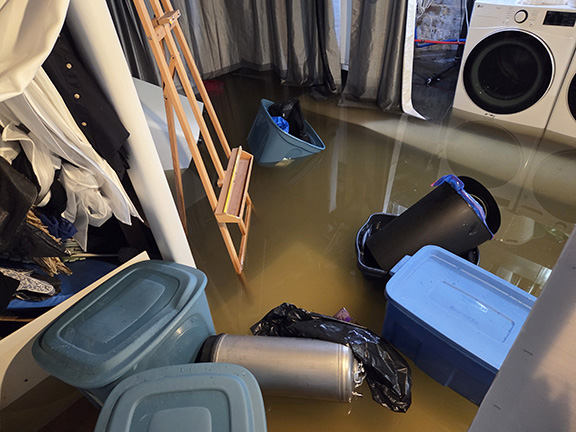
For decades, residents living in the Kew Beach neighbourhood have been reporting severe basement flooding resulting from drainage and sewage systems running underground.
And following one of the worst rainstorms the city has ever seen on Sept. 2, those residents are still reporting flooding concerns in the area and are still desperately hoping city officials will take the necessary steps to address the issue.
“The water that gets into our homes is a combination of sewage and flooding – we call it ‘flewage.’ It stays in our homes for days before we’re actually able to get it all out,” said Kew Beach resident Joanne Dicaire in an interview with Beach Metro Community News.
According to a 1997 technical paper from the city’s former director of quality control and system planning Wayne Green, Toronto’s older combined sewers carry both wastewater and stormwater to the Ashbridges Bay Treatment Plant. As Toronto expanded during the 20th century, sewer capacity exceeded the area’s drainage infrastructure, resulting in recurring basement flooding that has increased in recent years as the city continues to increase density.
“This place is very old and has very old drains that don’t separate storm water and sewage water, it’s a combined system,” said Steve Roberts, another Kew Beach resident.
“They keep allowing new developments. Between the Woodbine racetrack, all the new housing going up around there, all the new condos along Queen Street, everything up on Danforth. All that water has to run to the plant, and everything comes through all that piping and pools up down here.”
According to a City of Toronto document from 1998 a storm detention tank was constructed in the park at the foot of Kenilworth Avenue. The tank went into operation in July 1990 and was designed to intercept the flows from CSO (combined sewer overflow), as well as capture and detain the storm runoff from the majority of rainfall events.
The document notes that on average, “the capacity of this detention tank will be exceeded once per swimming season resulting in the discharge of the excess flows to the nearshore beach area via the overflow outfall.”
“During the remaining runoff events, the captured flows are detained until there is adequate capacity in the Lakefront Interceptor, at which time they are released at a controlled rate to the interceptor for conveyance to the Main Treatment Plant,” reads the document.
In 1995, another detention tank was constructed on the beach opposite Maclean Avenue to intercept the flows from the Glen Manor Road and Balsam Avenue storm sewers as well as the Maclean Avenue CSO.
Dicaire and other residents said that the current equipment was unable to prevent significant flooding caused by last month’s intense rainstorm on the evening of Sept. 2.
“Last month was really a huge resounding ‘enough is enough’ from all of us. We can’t take it anymore, so we’ve rallied together because we have issues with this. Some of them require long term solutions, but some are also immediate,” said Dicaire.
In an email to Beach Metro Community News, she called on the city to maintain the tanks more frequently and suggested that installing another tank could help alleviate the issue.
“We are asking the city to step up on this particular issue and manage the tank like a pumping station when we have severe events. If they can’t do it with the Kenilworth tank, then put in another one with a direct pipe to the treatment plant,” said Dicaire.
Roberts said the City of Toronto’s response to their concerns has been “dismissive,” and that many of his 311 calls have yielded few results.
“They’re completely dismissive about the issue,” he said of his communications with city services.
“You go to 311, wait a long time, you register complaints – and then three days later they say, ‘This ticket is cleared, there’s no flooding there,’ when there has been.”
With the municipal election on Oct. 26 approaching, the residents are making the flooding a campaign issue for candidates seeking to become the new city councillor in Ward 19, Beaches-East York.
A strong stance on making the city take action to address the underlying issue of outdated drainage infrastructure and flooding in the community is what the residents want from the new councillor.
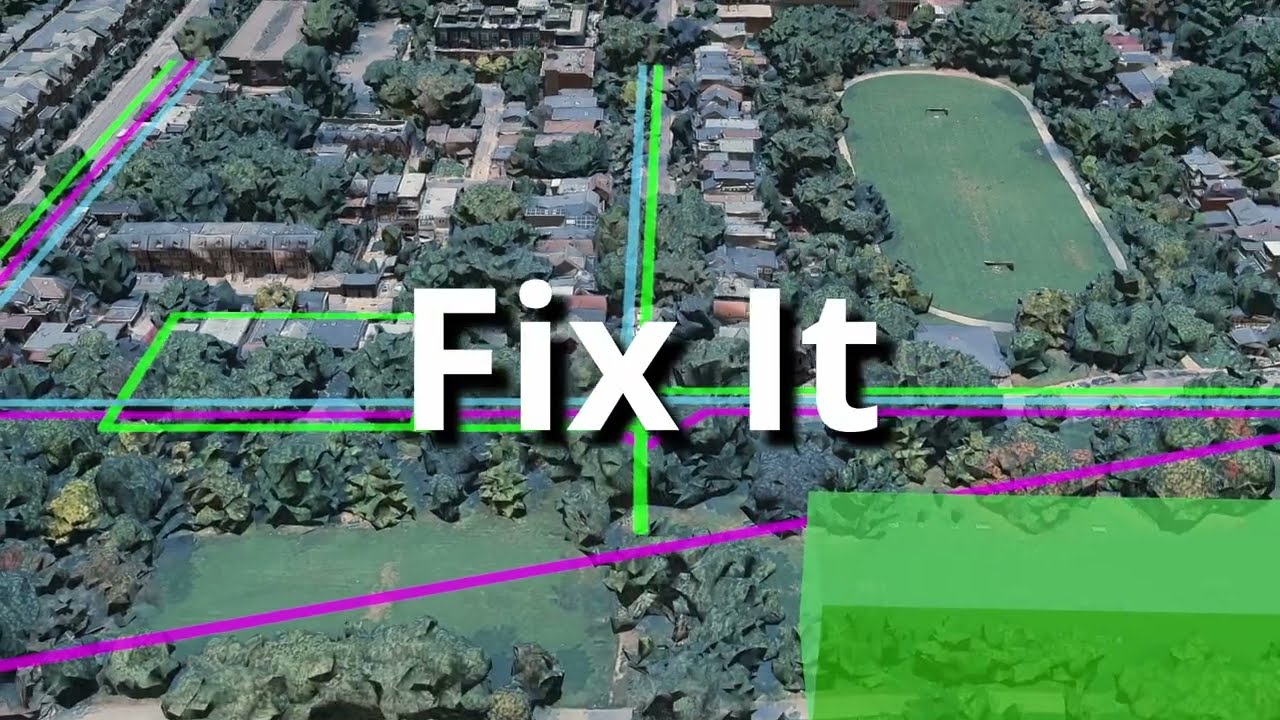
To help shed light on the issue, Dicaire compiled a YouTube video highlighting the “Historical Media Coverage” of the neighbourhood flooding.
The video features a snippet from a 2006 Global News broadcast that suggested the flooding issue could be addressed by “a new massive network of storm drainage pipes,” but the cost didn’t “warrant that level” of infrastructure.
However, in the years since, Roberts argued that many of East Toronto’s infrastructure projects have far exceeded the potential cost to address the flooding issue for homes in the Beach area.
“On the foreshore of Woodbine Park point there, they’re bringing in trucks of rock and they’re building out the land into the lake there for parkland. The city has it in their budget for that, but we’re ignored,” said Roberts.
“If that water is not clean enough to go straight into the lake, then why do we have to store it in our basement?”
In a statement to Beach Metro Community News, Lou Di Gironimo, General Manager of Toronto Water, said the city is currently working to update a “long-term study” to assess possible mitigation measures to basement flooding.
“We understand the frustration of Kew Beach residents who want action on flooding. The City of Toronto is updating a long-term study to assess potential options to reduce flood risk, including their effectiveness, feasibility and resource requirements. Residents will have an opportunity to learn more about the findings and provide feedback in early 2027,” said Di Gironimo in his statement.
He added that basement flooding is a “city-wide priority,” and said city initiatives such as the Basement Flooding Protection Program, alongside more than $1 billion investment in “flood protection projects” since 2006 have helped address flood risk for approximately 33,000 homes across Toronto.
“We remain committed to advancing this work, while also balancing the significant cost and complexity of large-scale projects, and the need to address flood risks in communities across Toronto,” said Di Gironimo.
The city said it plans to provide more than $2 billion to bolster the Basement Flooding Protection Program, and conduct “further assessment” of the Beach area for improved mitigation measures made possible through the program.
According to the city’s email, studies in the Beach have been ongoing for “several years” to ensure it “reflects current conditions and incorporates new information,” such as the significant Lake Ontario flooding from 2019.
Residents will have an opportunity to learn more about the study and provide feedback in early 2027.
On May 1, 2026, the city introduced the Basement Flooding Protection Subsidy Program, which doubled the financial support available to assist with the prevention of basement flooding.
The expanded program offers increased access to the maximum subsidy per property from up to $3,400 to a maximum of $6,650 to help provide access to backwater valve and sump pumps, second backwater valve for homes with multiple sewer connections, and a new Home Plumbing Assessment subsidy to help identify internal plumbing issues that contribute to basement flooding.
“The city prioritizes flood protection investments based on risk, infrastructure needs, and where the projects can have the greatest impact. Any future projects would be subject to funding and Council approval,” reads the city’s email.
Following the Oct. 5 open house meeting with the candidates for the Beaches-East York councillor, Moutry said it’s important for the ward’s next councillor to hold the city accountable and address the basement flooding issue in the community.
“We will continue to follow up with whoever is representing us next to make sure they make the city accountable,” said Gale Moutry. “Thirty years is a long time to have sewage in your life.”