Toronto Votes 2026: Beaches-East York council candidate Adam Smith answers our questions
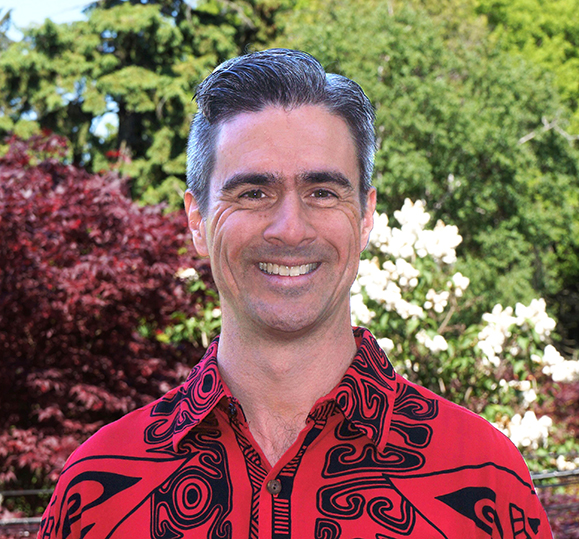
(EDITOR’S NOTE: Beaches–East York voters will cast their ballots on Monday, Oct. 26, in Toronto’s municipal election. Along with voting for mayor and school trustee, local voters will be looking to elect a new councillor for Ward 19 Beaches-East York.
There are 13 candidates running for the council seat in Beaches-East York. The seat is open as incumbent councillor Brad Bradford is now running for mayor in this municipal election. For this Question and Answer feature below, Beach Metro Community News reached out to the candidates who we could find contact information for and asked them to send their answers in by a set deadline. We are only printing the answers of the 11 candidates who responded by the deadline. Please note the candidates’ answers to the first two questions in this feature are also appearing in the Sept. 22 print edition of Beach Metro Community News.)
QUESTION 1: Tell us a bit about yourself and why your are running for city councillor in Ward 19 Beaches-East York?
I’ve lived in the ward for 18 years, and there’s no place I’d rather be. I’m the co-parent of a wonderful nine year old, and I have a great job in visual effects for film and TV, but my true passion was ignited when I started volunteering in the ward.
I’ve been delivering Meals on Wheels across the ward for 14 years, I’ve been running the Beach Community Edible Garden growing produce for our local foodbank for 11 years, and I spent six years on the board of the Beach BIA where I was responsible for bringing back our flower baskets and painting our tree planters. I’ve also deputed at city hall many times about the overdevelopment threatening our neighbourhoods.
I am running for city council because I want the best for my family, residents, and our neighbourhoods, and I don’t see Toronto moving in a good direction. The powers that be are focused solely on growth to feed corporate profits, and their decisions are worsening our resiliency and the degradation of the environment.
Residents no longer have a voice; whether politicians or city staff, residents are now seen as a nuisance, an obstacle, or just a box to be checked.
As councillor I promise to be available and responsive to residents, and to regularly seek public input on the decisions I make while ensuring meaningful public consultations on any work to be done in our ward.
QUESTION 2: What changes, if any, would you advocate for at city hall to balance the need for more housing while preserving neighbourhood character?
The only housing we need more of is seniors’ housing. The notion that housing is unaffordable because we don’t have enough supply is a self-serving myth propagated by the housing industry to justify more building, a myth that has been debunked.
The real culprit affecting affordability is the commodification of housing by investors, especially real estate investment trusts, who are enabled by the provincial government removing rent controls and allowing above guideline rent increases for facade improvements while the insides of apartments crumble in the hopes tenants will move out and they can increase rent without limit.
For homeowners with mortgages the biggest problem is the failure of ineffective obsolete monetary policy punishing them with interest rate hikes to supposedly control inflation, despite the fact we have half a century of evidence that monetary policy has little to no effect on inflation.
We have over 476,000 seniors 65 and over in Toronto, and under 30,000 (including under construction) retirement home and long-term care beds. But seniors’ housing doesn’t make enough money for developers to want to build, and because of changes in provincial planning laws we now have a glut in the crashing condo market and a dearth of seniors’ housing just when we’re going to need it most.
We need to build more publicly-owned seniors’ housing (or convert existing buildings), and do so respecting our urban design guidelines and creating beautiful buildings complementing their neighbourhood that we will be proud to look at into the next century.
QUESTION 3: As city councillor, what specific actions would take during your term to make Beaches-East York affordable for all residents?
Unfortunately, the city has little influence on most of the factors affecting affordability. We don’t control food prices, we don’t control rents, we don’t control interest rates, and we don’t control income taxes. And what we do control, like property taxes, are barely covering our budget.
That said, the budget is allocating spending to the wrong priorities. For example, we are spending millions on redoing the curbs of quiet side streets while dangerous major avenues see no change, and public housing, like Parma Court, is crumbling in disrepair. We also spend far too much facilitating unsustainable growth instead of on resiliency. With better priorities guided by increased public input we can do more with the existing budget.
There is also a lot of waste in the city, especially from numerous small things that add up. For example the TTC: despite it being against policy, buses illegally idle almost every time they are in bus bays. Multiply that by 1,500 buses all day long and ask yourself how much we would save yearly on gas and carbon emissions if operators properly shut their buses down?
To keep things affordable we need to freeze TTC fares, contain property tax hikes to inflation, maintain public housing, and build more public seniors’ housing. We also need to look at the ever-ballooning police budget. We need as many officers as we can afford, but things like the mounted unit are an obsolete anachronism of animal cruelty.
QUESTION 4: As city councillor for Beaches-East York, how would you ensure infrastructure near Main and Danforth/Dawes can support the area’s major residential growth while minimizing pressure on transit and community services?
The overdevelopment of Main and Danforth is going to be a case study in how not to plan a city.
Other than supporting the addition of a pedestrian walkway to the Danforth GO on the west side of Main St, there is little that can be done to mitigate the effects of overdensity on transportation at this intersection. The subway isn’t getting any larger and trains at rush hour are already as frequent as they’re going to get until we build more subway trains. I would support the province increasing service at the Danforth GO, but it’s up to them to make it happen.
As councillor I would ensure no more extra density strains this neighbourhood. I do not support eliminating Main Square to add another building, I do not support the density planned for Dawes Road, and I do not support the density planned for Main and Gerrard. I would resist these developments with every fibre of my being.
As new residents start to fill the new buildings we must do a proper ongoing census to gauge what services are lacking, like schools and community centres and grocery stores, and then find how we can build more of what we need.
Beaches-East York council candidates’ open house slated for Monday, Oct. 5
A public meet-and-greet with candidates running for council in the Ward 19 Beaches–East York municipal election will take place on Monday, Oct. 5, at Beach United Church.
The Beaches–East York Municipal Candidate Meet and Greet is being co-hosted by Beach Metro Community News and the Balmy Beach Resident’s Association. It will run from 6:30 to 9 p.m. at the church, 140 Wineva Ave., in the fully accessible Main Hall.
There are 13 candidates seeking the Ward 19 city council seat in the Oct. 26 municipal election.
Eleven candidates have confirmed they will participate in the Oct. 5 event: Syeda Janna Ali, James Dann, Nathaniel Erskine-Smith, Natalie Johnson, Kevin Morrison, Karsten Riedel, Adam Smith, Austin Vieira, Jeff Wahl, Devin Wilkins and Jennie Worden.
The event will be a meet-and-greet, with candidates at individual tables, allowing residents to circulate and speak with them directly.