
In My Opinion: Who are the custodians of the Beach?
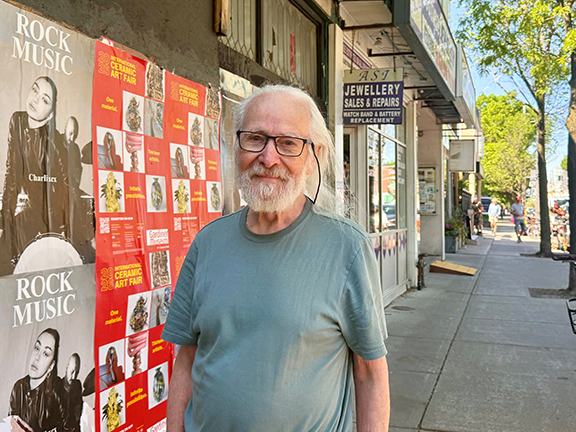
By BRUCE POPE
Since 1958 I’ve moved three times into The Beach from elsewhere.
I’ve thought of the place as one nice to idle in, and one nice to settle and grow into. A satisfactory place.
But are my neighbours satisfied with either its price or ambience?
Settled places may be supposed to be static, but I suggest they’re all dynamic; suiting us better at sometimes than at others.
A place seems to be a system receiving inputs from a local environment, into some internal transformative process, which delivers outputs back into the local environment, though perhaps in a different location, when the place is a bus, or a theatre of lively art, or of surgery, where exits are not entries.
Things or people that transit a place are in some way changed. That’s dynamism!
Street corners are places. People and their vehicles change direction there. Obstructions are skirted or overcome. And loiterers alter pose.
Is a place a living system?
Or is it a material system affecting living entities?
Are places alive? Endowed? Fulfilling some potential? Created persons?
Places are artefacts of design, whose designers may have answers to these questions. Not me.Material transformations occur in places.
This is partly the effect of the place, but partly the effect of reaction to the place, which is due to qualities of its custodian, servers, visitors, and passers-through.
We react to both the design and the dynamic.\
Some folk may think of a place as a three-or-four-dimensional space where things happen; things that are desired by people passing through the space and things desired by people assembling in the space, or loitering there.
Every place has custodians who present the place, for transit or assembly or service, and the attitudes of custodians may affect the efficacy of the space for anyone passing through or idling there.
An inspection of a place may reveal the attitudes of its custodian, or designer.
Inspection may reveal tensions.
Commercial and institutional places are occupied by servers who are distinguished, from either their custodians or their customers: by their activities.
Servers cater to immediate needs of visitors in the space, and of each other.
Custodians organize their space to enable servers to effectually respond to customers’ requests.
A place may be comprised of smaller places of comparatively narrow scope. Such composites might be thought of as zones or as neighbourhoods.
It might be interesting to consider the interdependence of individual places within a defined composite; such as, a business improvement area, a school district, hospital zone, parish or neighbourhood.
If The Beach is a satisfactory place to settle, why are so many of its homes not content to be merely occupied and decorated and repaired, rather than ambitiously bought and sold, razed or renovated; while keepers of neighbouring, often idle enterprises, are frantic or fleeing?
Who are the custodians of The Beach; if not its inhabitants and landlords?
Are their attitudes mutually opposed and disharmonious: with one driven by a vision of private settlement, the other by a vision of servicing continual traffic?
Could the cycles of disharmony be better resolved?
By consultation? Facilitated by whom?