Local hospital, local newspaper combine to HELP keep older patients engaged in the community
By JESSICA SHACKLETON
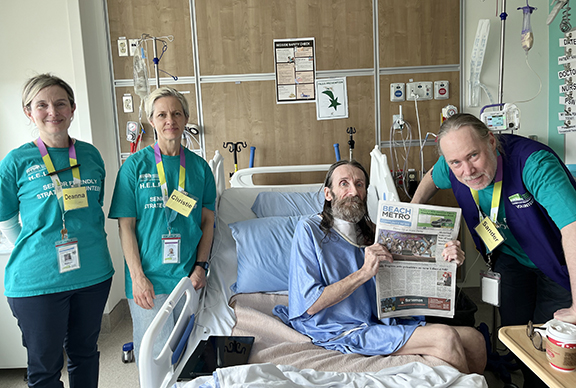
Along with books and games, copies of Beach Metro Community News are being used by a local hospital program aimed at keeping senior patients active and engaged.
The Hospital Elder Life Program (HELP) runs out of the Complex Continuing Care Unit at Michael Garron Hospital in East York.
Deanna Rosolen is the activation coordinator for HELP, and she said the use of Beach Metro Community News papers began when a volunteer from the neighbourhood started bringing them in.
“He would pick up a few every time he came for his shift and we discovered they were popular. A lot of our patients are from the East End and recognize the Beach Metro and they would enjoy reading it,” she said.
The combination of the local hospital and local newspaper is a nice fit for patients with long connections to the community.
“These are patients that probably don’t drive but walk their neighbourhoods and see ads for local stores, they see the news that’s happening at Riverdale Collegiate, their MPs, the local news, the local scenes, and the activities that happen,” said Rosolen. “Local hospital and the local news, I think they fit really well together.”
HELP is about bringing interesting activities to older patients in order to keep them engaged in community life and the outside world while they are in hospital. The goal is for them to leave the hospital with the same cognitive and physical abilities they arrived with.
“One of the ways is reading. So, we do have books and other newspapers, but this newspaper is popular among the locals. It’s current, you’ve got the date and the year, and it’s almost like a reality orientation for them,” said Rosolen. “We either read to them or they can keep it for themselves to read, especially in the evenings when there aren’t as many visits and it’s pretty quiet. It helps pass the time.”
Rosolen started the program alone but has since recruited volunteers, students, and occupational therapists as part of the team.
“We were stationed on one unit at the start and would visit patients who fit the older adult age category, but also mostly patients who were at risk of delirium. Those patients benefit very much from being engaged while they’re here,” she said.
Delirium is a serious change in mental abilities that causes people to become confused and unaware of their surroundings.
Jennifer Sampson, Director of Seniors and Elder Life at Michael Garron Hospital, said feedback on HELP has been positive from patients and their families and participation has increased.
“What we have found is that older adults are coming to the hospital without a very large social network, especially those who are living alone. Some of the feedback we’ve received from volunteers and staff indicate that the program does bring joy to them, helps them to connect with people, sit and chat and read a newspaper, and having those simple conversations go a long way to ease loneliness,” she said.
Sampson said one of the participants in HELP was an artist and was part of a water art class. The patient ended up becoming the teacher of the class and was able to share her art expertise with others.
Lying in a hospital bed all day can easily cause boredom and loneliness, so patients appreciate the reading materials and activities that are part of HELP, said Rosolen.
“Instead of sitting alone in their rooms, they have company. We bring them activities we can either do together or they can have to do on their own when they’re bored or feeling lonely. The feedback has been very positive in that sense,” she said.
The program has also helped reduce the number of falls among patients who are part of it, said Rosolen.
“Sometimes patients come in with delirium or they’re in certain stages of dementia, so they come in and they’re already confused. Lying in bed all day is not the best thing for them. They’re antsy, they want to get up and that leads to falls,” she said. “Our volunteers visiting them keep them busy and tire them out in a way so they’re not as antsy, so they’re not trying to get out of bed, and suddenly you’ve got the risk of falls dropping.”
HELP was launched as a pilot program in September 2024, and is now evolving into permanent hospital-wide care.
“We’re going to take a whole hospital-wide approach to seniors’ care and preventing delirium. HELP does senior strategy work and aligns with the work of Delirium Aware Safer Healthcare (DASH), which is a provincial initiative. The program ties into our own hospital strategy and provincial work as well,” said Sampson.
For more information about HELP at Michael Garron Hospital, please visit https://www.tehn.ca/programs-services/complex-continuing-care/hospital-elder-life-program-help