East Toronto residents near Lakeshore East train line call on Metrolinx to implement noise and vibration mitigation measures
By MATTHEW STEPHENS
On their website, Metrolinx says the Lakeshore East GO Line Expansion will bring Torontonians faster and more convenient transit, giving customers “more flexibility to schedule what is most important and everything else in between. Relief.”
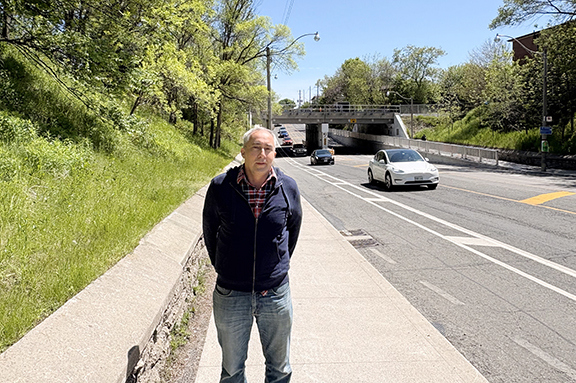
However, “relief” isn’t how local resident Rafael Pascual-Leone would describe anticipation for the addition of a fourth track along the railway directly behind his East Toronto home.
He said the sounds from frequently passing trains can be heard from blocks away, and that he and other neighbours want sound and vibration mitigation measures to be part of the Metrolinx work in the area between Main Street and Woodbine Avenue.
“For us right now, it’s a bother and it’s inconvenient. But when it’s a sevenfold, cumulative increase in vibration – at that point it’s not just inconvenient, it kind of makes the area unlivable,” said Pascual-Leone, an Oakcrest Avenue resident and member of advocacy group Neighbours for a Noise-Smart Railway (NNSR).
Lakeshore East GO Line work part of broader expansion project
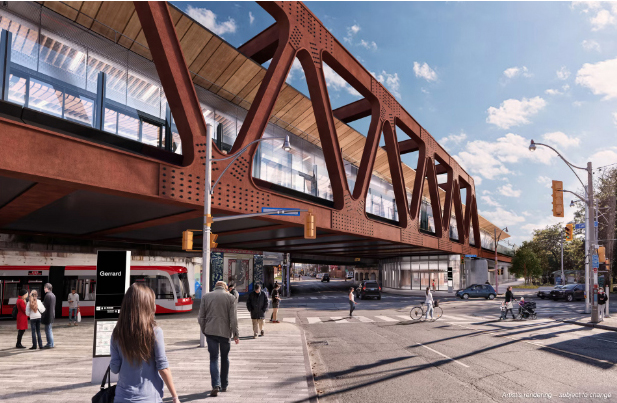
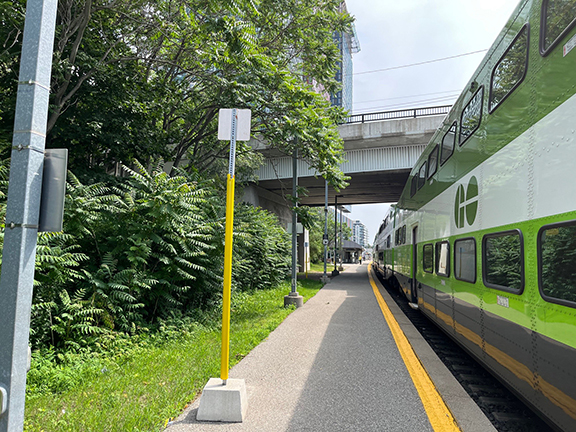
The Lakeshore East GO Line, which extends from Union Station in Toronto to Oshawa GO in Durham Region, is one of seven GO Transit rail lines in the Greater Toronto Area (GTA), passing through East Toronto at several major intersections between Danforth Avenue and Gerrard Street East.
Expansion of the Lakeshore rail is part of Ontario crown corporation Metrolinx’s broader GO Expansion program, which encompasses more than 600 kilometres of existing track and over 200 kilometres of new track to increase capacity. The expansion will also see improvements to major rail corridors such as Lakeshore, Kitchener, Barrie, and Stouffville.
While capacity increases may be advantageous for GO train riders, local residents living near the railway fear the fourth track will mean more noise and empty promises.
“It’s a shedding of responsibility that they signed up to when they started this project,” said Pascual-Leone. “They said ‘based on this impact and increase in cumulative vibration, mitigation is necessary,’ there’s no doubt about it. They didn’t specify precisely how they would achieve the mitigation, because this was a decade ago.”
However, Metrolinx media relations told Beach Metro Community News that “no promises were made” regarding noise and vibration mitigation measures along that section of track.
“Metrolinx follows regulatory requirements on noise mitigation and continues to explore all options to help mitigate these factors with our maintenance teams on new projects,” said Metrolinx media relations. “While no promises were made to stop noise and vibration with our operations, we continue to explore options to help mitigate these factors with our maintenance teams – as we do with all projects.”
According to NNSR, Metrolinx’s 2017 Environmental Project Report (the latest available data) found that vibration levels at homes along the railway will reach 300 to 650 per cent “above objective.”
“Metrolinx’s own environmental assessment found that vibration levels at homes along the railway are projected to reach 300 to 650 per cent above acceptable objectives. Freight trains are the worst offenders, but GO and VIA trains also exceed safe levels,” reads an excerpt from NNSR’s petition website.
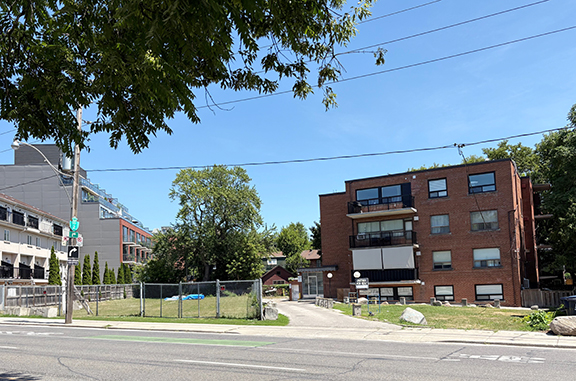
Pascual-Leone said noise levels are even higher for residents living in close proximity of the Woodbine/Main railway block, where many of the Lakeshore East line’s track switches are positioned. Oakcrest Avenue runs east-west directly north of the tracks with backyards on the railway line.
“Along the whole line, this is like the ground zero for switches, we currently have eight. At least four more will be added, and the switches are where the vibrations come from,” said Pascual-Leone.
He said Metrolinx is failing to follow through on the mitigation commitments from the 2017 report and taking “advantage of that ambiguity” from almost 10 years ago,
“It’s almost embarrassing to be working from a document that’s nine years old,” said Pascual-Leone. “Now they’re saying ‘Oh, we never promised anything, so we’re not going to do anything.’ So, it really feels like they have stopped caring – or maybe they never did.”
NNSR’s petition calling for proper management of the Lakeshore East railway expansion has already amassed more than 400 signatures, and was recently read by Beaches-East York MPP Mary-Margaret McMahon on the floor of the Provincial Legislature in March.
“Although we all see the need for transit, we should have been building more a long time ago – but we need to do it right when we build it,” said McMahon at Queen’s Park on March 31.
In the petition, residents are urging the province to direct Metrolinx to enhance noise and vibration mitigation measures, assess all existing rail switches, electrify railways, modulate train speeds, and consider planting green buffers.
Segments of railway block remained unchanged since the mid 1800s
According to the NNSR petition, the railway block between Woodbine Avenue and Main Street was first opened as the Grand Trunk Railway in 1856, alongside large freight yards at Main, giving rise to the emerging town of East Toronto by 1888.
In 1908, the railway was amalgamated into the growing City of Toronto, and a streetcar line extension was established by 1913, sparking rapid development of the neighbourhood through to the 1920s.
With the city taking shape into what it is today, Woodbine Avenue would be rerouted into a new underpass in the 1950s, allowing trains to pass overhead along a bridge without slowing down. This process to transform Woodbine Avenue saw many homes lost to construction, leaving Oakcrest Park and its steps down to Woodbine Avenue as a testament to the legacy of the area’s urbanization, said the petition.
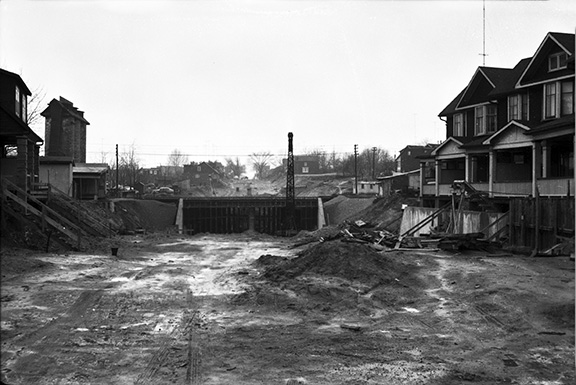
A third track was added to the corridor around 2008, further increasing train frequency and sounds from rail switches, many of which Pascual-Leone said have remained unchanged since the track’s inception.
“One of the things we’re pushing for is an audit of the existing switches to make sure they’re all needed, because this railway was originally built in the 1800s.”
Pascual-Leone and other East Toronto residents share McMahon’s feeling towards the expansion project, noting that increased transit is welcomed as long as it’s “done right,” to ensure longevity well after construction.
“Their (Metrolinx’s) own report says that the intensity with another track will cause structural problems to masonry buildings,” said Pascual-Leone. “So, from a maintenance point of view, from a spirit of proactive modernization, it’s not only a nice thing to do by updating the infrastructure, it’s a wise thing to do.”