
Local food banks facing challenges as demand increases and donations decline
By MATTHEW STEPHENS
As the cost-of-living crisis continues to put pressure on residents across Toronto, local food banks and charitable organizations say they’re struggling to keep up with the rising demand.
“The food insecurity in our city has been worsening,” said Neil Hetherington, CEO of Daily Bread Food Bank in a recent interview with Beach Metro Community News.
“Hunger has become a chronic crisis affecting our neighbours, co workers and classmates, many of whom are working, educated and still struggling to put food on the table.”
Daily Bread Food Bank provides support to community centres and food banks across the city, including several in East Toronto.
Last year, food bank visits hit a new record in Toronto, with a report from the North York Harvest Food Bank finding that 4.1 million visits were made between March 2024 and April 2025, and that one in 10 Torontonians now rely on food banks for their next meal.
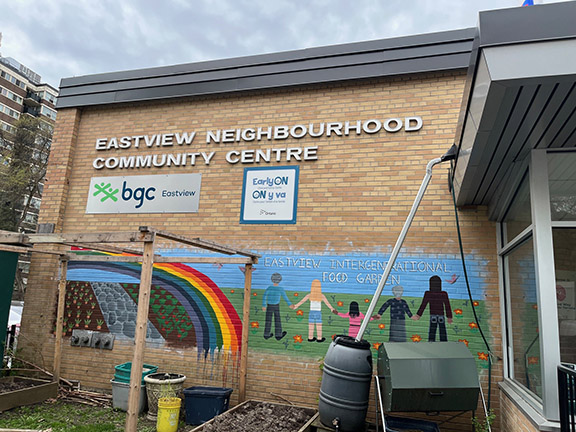
For Andrew Oliphant, food security worker at Eastview Neighbourhood Community Centre, donations are now being rationed out to ensure their longevity.
“We do our best to ration out our donations each week, but there are times that we are short on the essentials, like milk, eggs, and proteins,” said Oliphant.
Food banks like Eastview aren’t the only ones rationing their supply. According to Oliphant, the rising cost of groceries means the community centre has also experienced a sharp decline in donations.
“We have been seeing fewer food items being donated. The rising cost of food prices means we are getting busier and people are less inclined to donate the essentials as they need it themselves,” he said.
With the North York Harvest report also noting that 88 per cent of food bank visitors live in unaffordable housing, Hetherington said food bank shortages are emblematic of deeper systemic issues across the city.
“It’s important to remember that food insecurity isn’t fundamentally about food; it’s largely driven by inadequate income and unaffordable housing,” he said. “Ninety per cent of our clients live in unaffordable housing or homelessness, and one in five spend their entire income on rent.”
According to a late 2024 report from the Government of Canada, nearly half (45 per cent) of Canadians reported that rising prices were “greatly affecting their ability to meet day-to-day expenses.”
The report also noted that housing concerns impacted nearly four in 10 Canadians (38 per cent), an eight per cent increase from 2022.
Despite a strong reliance on donations, the City of Toronto also plays an indirect role in supporting food bank organizations through grants, infrastructure, and broader anti-poverty programs.
An email from the city’s media relations team highlighted a slew of initiatives aimed at addressing food insecurity, including student nutrition programs, food bank hosting at local Toronto Public Library locations, and Community Services Partnership grants, which provided more than $2 million in funding in 2025 to food security initiatives.
“The City of Toronto supports emergency food access programs like food banks through funding and collaboration with community partners on policies and programs,” said Sarah Austin, senior communications advisor for the city. “This support includes grants, as well as engaging and consulting with community partners to inform and improve program and policy changes to reduce food insecurity.”
Austin also referenced Toronto Public Health’s measures to monitor and prevent food insecurity, including their annual Nutritious Food Basket survey, collaborations with city divisions and organizations, and funding for the provision of low-cost produce and food skills training to “equity-deserving” communities.
However, Hetherington said the City of Toronto needs to increase affordable housing supply and bolster its support for tenants, which could help to alleviate pressure on food banks.
“If we want to reduce line ups at food banks, the city should scale up affordable housing, including expanding the city’s successful Multi Unit Residential Acquisition (MURA) program, to continue preserving affordable homes at scale,” said Hetherington. “It’s also critical to ensure that we have adequate tenant supports to prevent arbitrary evictions and homelessness.”
He said municipalities could also provide support by renting out city-owned spaces to food organizations at lower costs, which could allow them to host more charity-based events.
“One practical, cost-effective step is making underused city-owned spaces available to community food programs,” said Hetherington.
“Right now, about one-third of programs in our network pay rent, and many are struggling to expand to meet rising demand. Providing city spaces at low or no cost would allow them to grow quickly and reach more communities in need.”
In the city’s statement, Austin acknowledged the “root causes” of food insecurity, noting that addressing the issue will require “long-term” solutions and action from all levels of government.
“Torontonians need long-term solutions focused on the root causes of food insecurity and affordability – as well as action from all orders of government – to ensure people can access the nutritious food they need when they need it,” said Austin.
With the city and its residents waiting on higher levels of government to step up, Hetherington said Daily Bread continues to advocate for improved support to alleviate pressure on food banks operating across Toronto.
“We engage with elected officials at all levels of government to share what we’re seeing on the ground and advance policy solutions that address the root causes of poverty and food insecurity—such as access to affordable housing and adequate income supports,” he said.
“By tackling these systemic issues, we can alleviate pressure on community food programs, move beyond crisis response and work toward a Toronto where no one goes hungry.”