
Distinctive bent limb of giant red oak in Kew Gardens removed after cracking
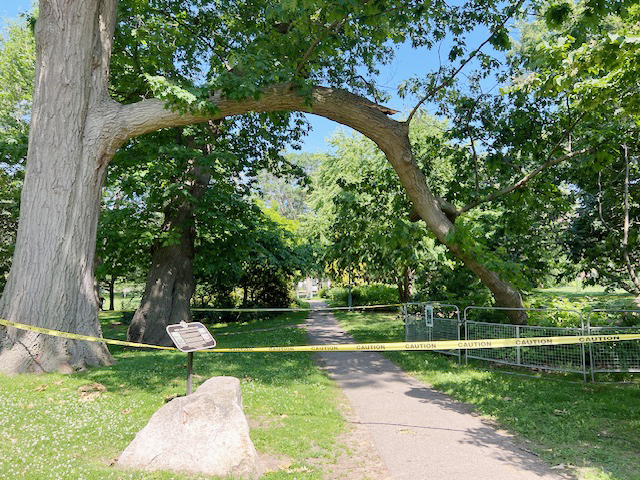
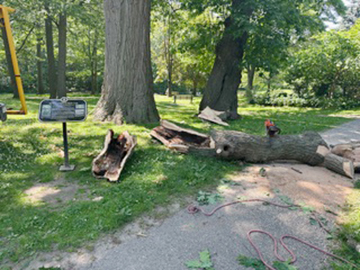
A huge and distinctively bent limb of a giant red oak tree in Kew Gardens park broke off earlier this week.
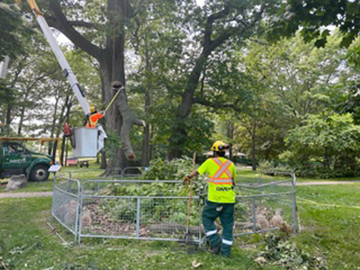
No one was injured in the cracking of the tree’s limb, but many residents were saddened to learn that the branch had broken. The limb has now been cut off and removed from the area.
Just over two years ago, the tree was celebrated with the unveiling of a plaque in front of it at Kew Gardens, near Lee Avenue.
“No question, I am very sad to see this incredible oak limb crack and give way suddenly, but mostly, I am really grateful that it has existed and touched so many of us,” said Birgit Siber in note to Beach Metro Community News this week.
The distinctively curved limb that cracked bent and nearly touched the ground and was a favourite photo spot for many park visitors.
“I feel like the great oak was greeting us here on the ground and that the limb was very much like ET’s finger,” said Siber.
“It is amazing how, over such a short time, this limb has affected so many people. Over just a decade, the limb gradually dropped to human height. It became a destination. Initially we could reach up and touch it and then in 2018 some people could climb onto it with a bit of help from their friends, or parents. Year by year, this limb continued to descend and by 2021 it was easily climbable and a major draw for children and adults alike.
“It has been sweet to discover that so many people are attracted to trees. This limb drew us close and invited us to be awed by this immense old oak. The limb absolutely inspired me to submit for the Heritage Toronto plaque that now stands at the base this tree.”
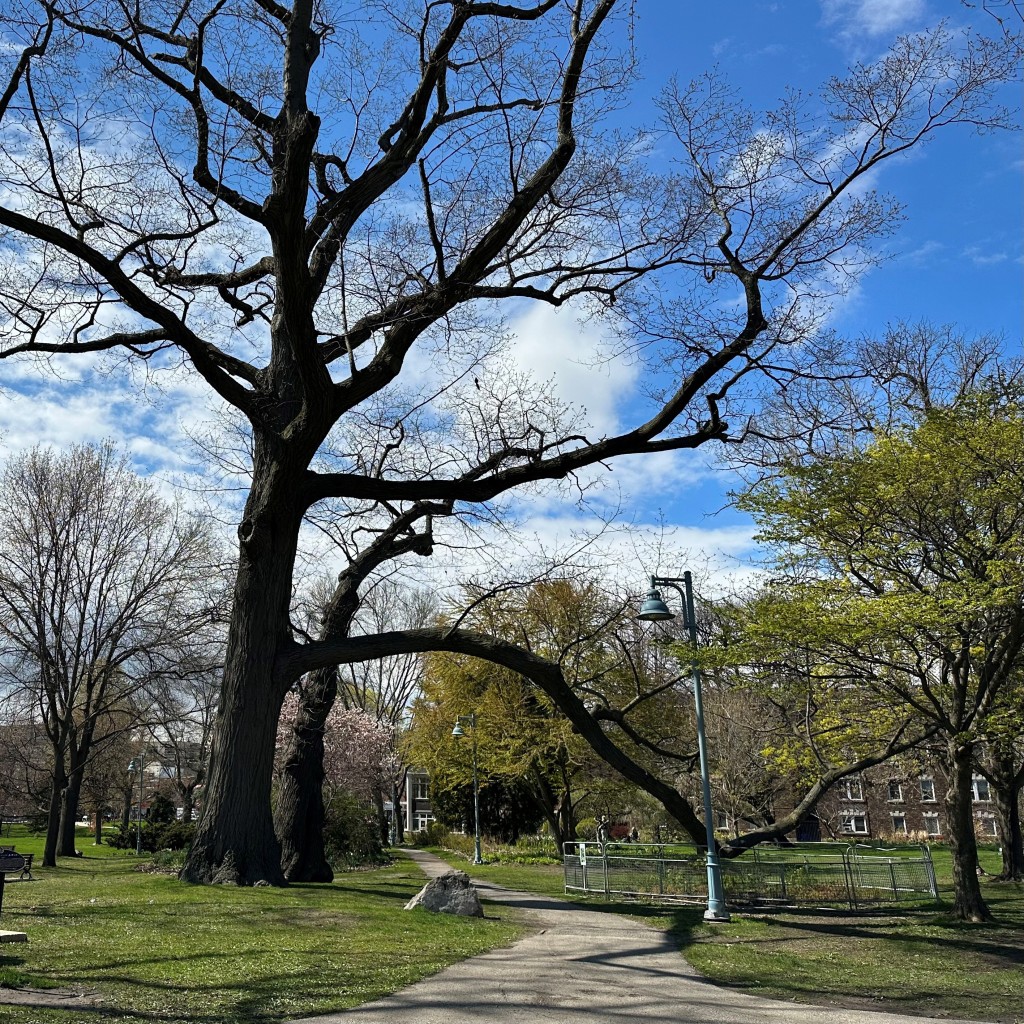
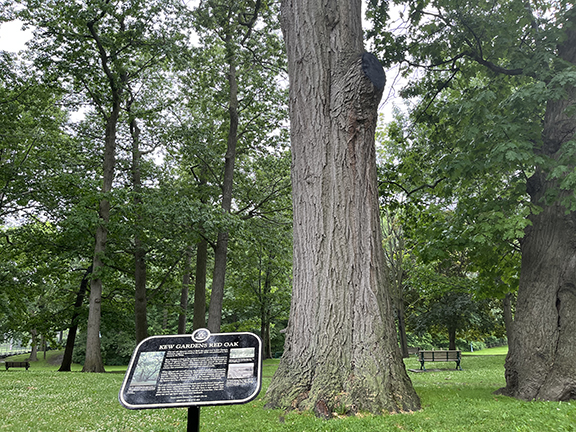
The tree and its distinct limb were celebrated with the unveiling of Heritage Toronto plaque in May of 2024.
The plaque reads:
“This red oak (Quercus rubra) is likely the oldest tree in Kew Gardens. Estimates suggest it sprouted in the early 1800s and produced its first acorns in the 1850s.
“Kew Gardens is close to the eastern boundary of the land covered by Treaty 13 signed in 1805 by the British Crown and Mississaugas at the head of Lake Ontario. The tree took root around the time the treaty was created. Before colonization, this part of the waterfront was a forest that contained many red oaks and natural creeks.
“When this red oak was still young, the neighbouring land was farmed by Joseph Williams and Jane Henry. In 1879 the family turned this property into the Canadian Kew Gardens, which offered camping, picnicking, and amusements for tourists attracted by the beaches. The family sold the land to the City of Toronto in 1907 and it became a public park.
“Red oaks are native to Southern Ontario and can be found throughout the city. Under optimal conditions, they can live to around 500 years old. Like many other tree species, red oaks have root system that often extends two to three times the extent of its branches. This oak’s great size and age have made it a local landmark.”
Siber said that other than the limb cracking, the tree still appears to be in good health. She said the limb appeared to have been weakened by nesting birds and squirrels.
“The limb cracked just above a hole that had once been a screech owl nesting site until 2018. After they left, the squirrels moved in,” she said.
“When it cracked it touched down in the woodland garden with a rumble that sounded like the loudest lawn mower I have ever heard. It was just before 8 a.m. The break was due to internal rot at the nesting site location, but the good news is that the limb was otherwise healthy and so is the tree.”



Comments (0)
There are no comments on this article.