On The Wild Side: Opossums are unique and useful neighbours
By ANN BROKELMAN
I have always loved opossums, but until recently I’d only seen a handful in the wild.
I think, sadly, that I’d seen more laying by the side of the road than up and walking around. Once I got my night camera, however, I found that they were regularly visiting my front yard. I think they are one of the animals that, while we rarely if ever see them, actually exist in the tens of thousands in our city.
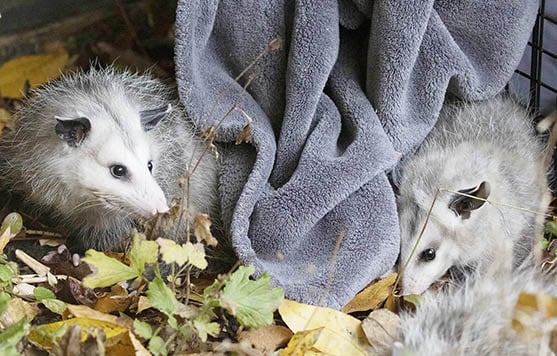
I’ve also helped out with opossum rescues a few times, over the years. Just recently, actually, Shades of Hope allowed me to do a soft release of three of the little critters. The little ones were found, after their mother had died, and were only the size of baby squirrels when they made it to the centre.
A short time later, when we guessed they were about five months old, they were ready to be released. They just looked so small in the crate, I wanted to keep them longer at home; it was hard to believe they could make it on their own, but nature works in amazing ways.
What was really neat about this experience for me was that we organized a ‘soft release’ for them. In a normal release, the animal has to leave the crate before we leave. A soft release gives the animal as long as it wants to go out on its own. In some cases, the animal will venture out but then return to the cage for days until it feels safe enough to find a new home.
The crate that held them had straw, blankets, a tarp overtop to keep everything dry, and was set up in as perfect a place as I could find: near both the Scarborough Bluffs and a ravine, with fallen trees, branches, and tons of bugs in all directions. Paradise for an opossum, really.
When I came back for the crate a week later, all three were gone. I would have loved to have seen them leave, and it could have happened five minutes after I left, but I know it’s best to leave them be.
So, what are “O”possums? (While you can call our animal a possum, Australia has a whole other type of critter with the same name.) Did you know that about 30 per cent of marsupial species live in the Americas, but opossums are the only one in North America?
Our opossums are often referred to as nature’s cleanup crew, since they eat everything and almost never get sick. They aren’t actually native to Ontario but have been slowly coming north from the states. This might actually be a boon to us, as they love to eat the same ticks you’re probably hearing about more and more. There’s a good chance the whole reason there are so many opossums now is connected to the growing tick population.
Another lucky thing for us: opossums don’t like to build dens inside our homes. They prefer the nests that other animals have already built.
More fun facts? Sure: they do not carry rabies or other common animal diseases, and are even immune to rattlesnake bites. Yes, I know rattlesnakes are not a common problem around here, but it’s still a fun fact!
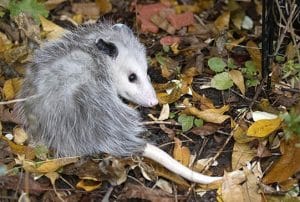
Opossums have distinct prehensile tail. Show is one of the opossums recently released back into the wild. Photo by Ann Brokelman.
Among their more notable physical features, opossums have 50 teeth and a prehensile tail. They use the tail to carry leaves or sticks to help augment their nests, not to mention to scoop up a baby that may be trying to wander off. They are not considered predators, but rather scavengers and opportunistic feeders. They play dead when they sense danger , complete with actually being unconscious and emitting horrible odours.
After the ‘incredibly lengthy’ 12-13 days of pregnancy, an opossum can give birth to over 20 jelly bean sized babies. The mother, however, only has 13 nipples (one of the only mammals to have an odd number of nipples) and since the joeys will latch onto a nipple continuously for 60, or more, days, the largest litter an opossum can support is 13.
Once they pass that 60ish day mark, the babies will regularly spend their days clinging to their mother’s back, making for some truly adorable sightings.
Despite their amazing abilities, opossums only live for two to three years and are notably susceptible to frostbite during our coldest winter days. If you find one, and suspect it is in duress, please don’t hesitate to call a wildlife centre for help. If you see one that you think has been hit by a car, and it’s safe to pull over, maybe take a look to see if there are any babies that are in pouch or wandering around in the vicinity.
If you actually see one wandering around in the wild, enjoy the rare sighting! They are one of our most unique, and useful, wild neighbours.