
On The Wild Side: Eastern cottontail rabbit spotted playing in the snow
By ANN and ERIK BROKELMAN
Have you ever looked out the window and seen something so unexpectedly adorable that it instantly made you smile? That’s exactly how the following moment felt… like a children’s story unfolding in real life.
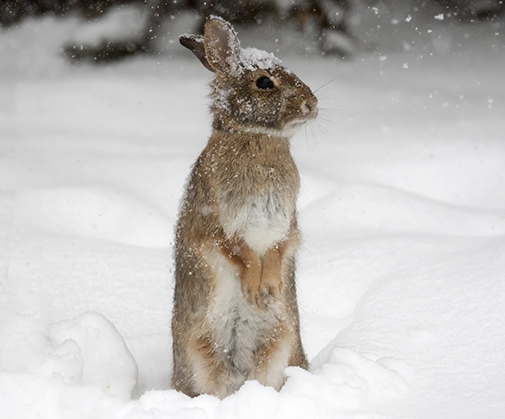
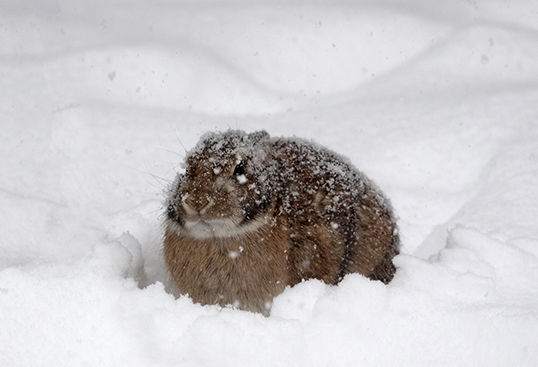
During one of the bigger snowfalls this year, my husband Erle and I looked outside and spotted an eastern cottontail with her head buried deep in the snow. It was still falling and blowing across the yard as she moved beneath the surface, completely unfazed by the weather.
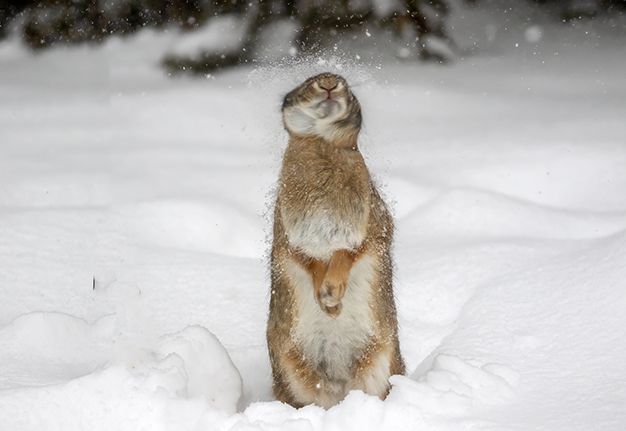
I’ve seen wild bunnies out in winter before, but never one as busy and determined as this little one. She would push the snow forward with her nose, then suddenly sit up on her haunches and shake it from her head. She repeated this routine again and again, as if happily playing in her own winter wonderland.
Although I have seen many cottontails this year despite the cold, this one stood out, as I had never watched a bunny behave this way for so long. With the snow falling and the cottontail busy at work right in our front yard, the whole scene felt like it belonged on a Christmas card or in one of my husband’s winter-themed puzzles.
Rabbits belong to a group of mammals known as lagomorphs, which also includes hares and pikas (which are on my list of animals I hope to see one day). Here in Toronto, the lagomorph we encounter most often is the eastern cottontail, while farther north other species of hares are more common, especially the snowshoe.
The origin of the name “cottontail” isn’t much of a mystery for anyone who has noticed the soft ball of white fluff on their backside. Adult eastern cottontails are typically about 15 to 20 centimetres long, yet they can jump up to three metres in a single bound.
Their coat colour also changes with the seasons, shifting from a reddish brown in summer to a greyer brown in winter, helping them blend into their surroundings and stay well camouflaged. You can tell from the colour of the rabbit in my photograph that it was early in the winter season, as her fur had not yet changed.
I’ve learned many other fascinating biology and behaviour facts about these animals over the years. A single female can have up to seven litters of kits in one year, with each litter containing as many as twelve kits, though four to eight is more common. This high number is necessary, as most young rabbits will not survive to adulthood in the wild.
Kits are born altricial, meaning they arrive helpless, blind, and without fur. They remain in a nest, usually a shallow depression lined with grass and fur, for several weeks while relying entirely on their mother. At around three weeks of age, the kits begin venturing out on their own. Eastern Cottontails are crepuscular animals, (most active at dawn and dusk), and play an important role in our local ecosystem. Watching one so busily going about her winter work in our own front yard was a quiet reminder of how much life continues around us, even in the coldest months.
Eastern cottontails survive the winter by taking shelter in dense thickets, burrows, and brush piles. Their fur grows thicker to help keep them warm, and they flatten their ears against their bodies to conserve heat. If you happen to find a rabbit nest, please, please, please leave it alone.
If the nest is in your yard and you have dogs, as has happened to us many times, placing a small wire fence around the area can help protect the kits while still allowing the mother to come and go as needed.
Another option is to place a laundry basket over the nest, making sure it has a rabbit sized hole in the side, again giving the mother easy access. It’s normal not to see the mother rabbit, as she usually returns to the nest only in the early morning and later evening. (This helps keep the nest hidden from predators).
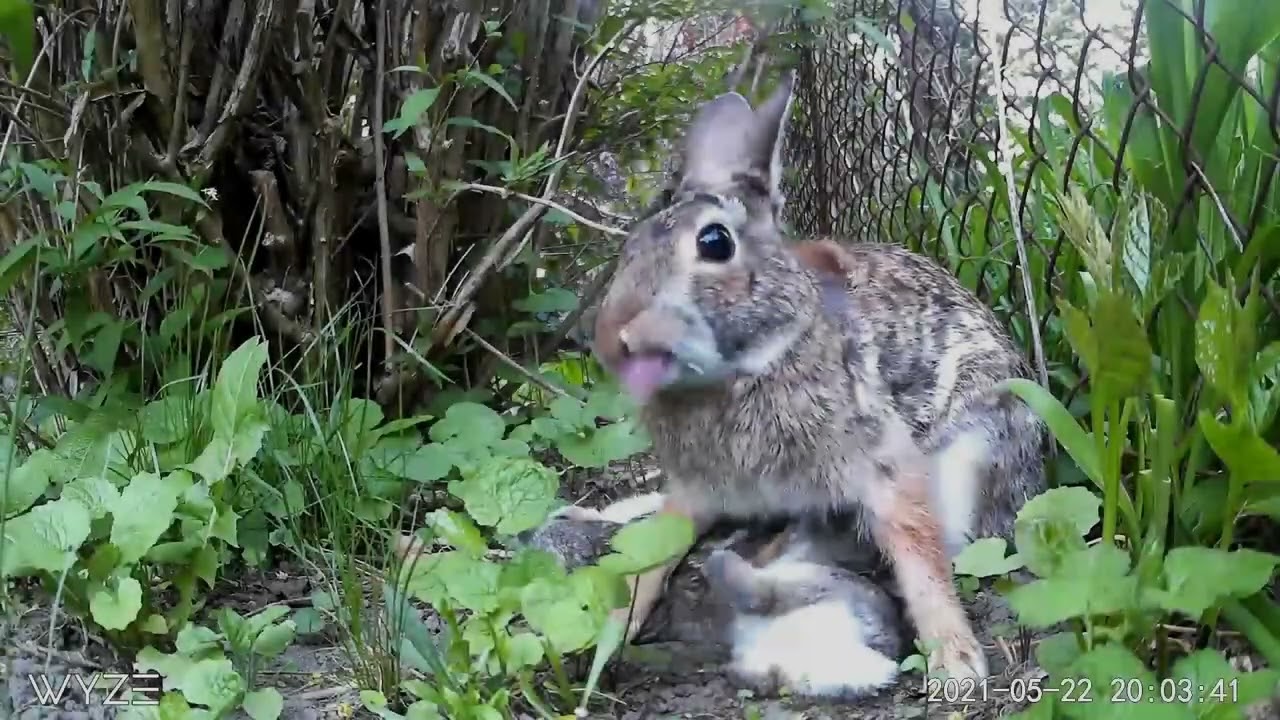
In the video below, you can see a cottontail and her kits in my own backyard, safely protected with a small fence. https://youtu.be/IFc-ayDMP2U
If you find a cottontail kit outside of a nest, with closed eyes and little or no fur, please contact Shades of Hope Wildlife Refuge at info@shadesofhope.ca or 1-705-437-4654, as they specialize in caring for neonatal bunnies.
Otherwise, it is best to simply observe rabbits, like all wild animals, from a distance and leave them undisturbed.


Comments (0)
There are no comments on this article.