Indigenous community’s links to Glen Stewart Ravine highlighted by local resident
By MATTHEW STEPHENS
As Toronto Council prepares to decide on the next steps for a development proposal at the north end of Glen Stewart Ravine, residents have come forward to highlight the ravine’s significance as a ceremonial site for the Indigenous community.
The development proposal for 847-855 Kingston Rd., west of Beech Avenue, calls for an 11-storey residential building on the site located on top of the ravine’s north bank.
During the meeting on Nov. 13, Toronto Council was expected to provide city legal staff with “further directions” regarding the proposal in advance of an Ontario Land Tribunal hearing set for April of next year.
Beaches-East York Councillor Brad Bradford was made aware of “new information” about Glen Stewart Ravine’s potential use as a ceremonial site by Indigenous community members, and called for the item to be deferred until the upcoming Toronto City Council meeting starting Dec. 16.
Due to the fact that council are expected to discuss parts of a Confidential Agreement between city representatives, city legal staff , the Toronto and Region Conservation Authority (TRCA) and the developer, councillors are limited in what they can say publicly.
Bradford said in a Nov. 14 newsletter that “On the advice of city legal staff, I moved to defer the item to the December Council meeting so staff would have more time to look into this.” He has provided no further comment or information regarding Indigenous community links to the ravine.
According to the City of Toronto’s media relations team, the city’s Indigenous Affairs Office received an email pertaining to the proposed development from a member of the Indigenous community.
“The City’s Indigenous Affairs Office (IAO) received an email from an Indigenous community member regarding the proposed development at 847–855 Kingston Road,” said the city’s media relations team. “The IAO did not prepare or deliver a separate letter to Council, nor did staff have direct contact with Councillors on this matter.”
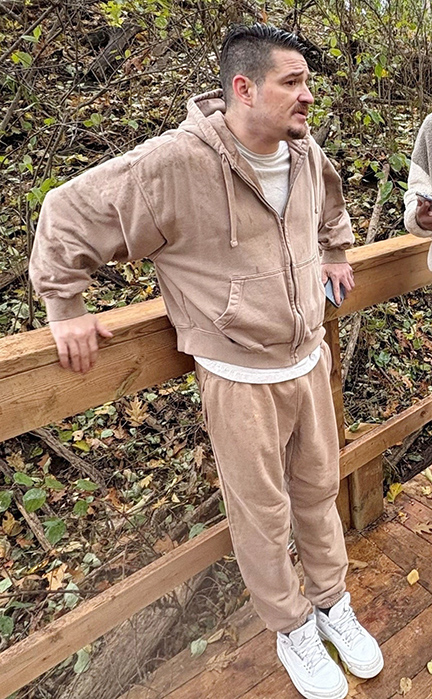
For local resident and Indigenous community member Edward Cyr, encroaching on the ravine goes against his spiritual beliefs to honour the lands that were once cherished by his ancestors.
Beach Metro Community News was able to meet with Cyr and talk about the Indigenous community’s links to the Glen Stewart Ravine in an interview arranged with the help of the Friends of the Glen Stewart Ravine (FGSR) advocacy group.
“We all belong to this earth, and it’s our responsibility to honour our relationship with this earth. Not to exploit it and take advantage of it for our own financial gain,” said Cyr, a local social worker and member of support group 2-Spirited People of the 1st Nations’ crisis response team.
Cyr is part of the Kebaowek First Nation (also known as the Kebaowek community), an Algonquin (Anishinaabe) First Nation. As an East Toronto resident, Cyr said he uses Glen Stewart Ravine as a place to conduct ceremonies deeply connected to his ancestors’ traditions.
“I come down here once a month. I have a small fire; put my tobacco down. We pray, we cry, we connect. It is the teaching from our Elders,” said Cyr. “Sometimes, what I’ll do is cook some food and bring down what’s called a spirit plate to honour lost family.”
Cyr is among many community members who fear what kind of impact the proposed building’s 0-metre setback will have on the ravine’s north slope, which goes against the TRCA’s requirement of a 10-metre setback from the top of a ravine’s bank.
In the latest iteration of their petition calling on Toronto councillors to prioritize the protection of the ravine, FGSR referenced the “spiritual significance” the ravine has among the local Indigenous community.
“The Glen Stewart Ravine—known to parts of the urban Indigenous community as ‘Secret Ravine’ —is not just a green space. It is a ceremonial place, tended for generations by Fire Keepers, including members of Turtle Island Carers of Fire (TICOF), and it remains a site of grief, healing, and continuity for Indigenous families in Tkaronto,” reads the petition.
The Indigenous community’s use of the Beach area for hunting, fishing, healing, and ceremony can be traced back hundreds of years, long before the first European colonization of the Toronto region through the establishment of French fur trading posts.
In local author Richard White’s book, The Beaches; Creation of a Toronto Neighbourhood, he mentions that lands on the north shore of Lake Ontario have been widely recognized by Canadian historians as significant spaces for Indigenous communities.
“For centuries before any colonial lands where grants were issued, Indigenous North American people had been living on and using the land along the north shore of Lake Ontario,” wrote White. “There can be no doubt that the roughly two kilometres of shoreland, from the sandpit enclosing Ashbridge’s marsh in the west to the towering Scarborough Bluffs in the east, has long been travelled through, gathered from, hunted on, fished along, and probably at times settled upon by Indigenous inhabitants. Evidence of this undoubtedly exists beneath the houses and streets.”
East Toronto historian and Indigenous community member (with Mi-k Maq heritage) Joanne Doucette also said she’s aware that the few remaining springs and rivers in the area were likely used as healing spaces for Indigenous ancestors. And that many of the area’s natural spaces that once existed have been overtaken by development.
“I have heard that the springs were used for healing purpose by Anishinaabe and other First Nations,” Doucette told Beach Metro Community News.
“I do know that Dawes Road was an Indigenous trail that until the railways were built extended south of the Danforth and probably as far as the lakeshore trail which is now Kingston Road. Another trail extended from the lakeshore at Woodbine Avenue along the old sandbar to what is now Toronto Island.”
Cyr said that his Indigenous ancestors never considered Canadian lands to be owned by anyone. Rather, they always believed the land belonged to anyone who lived on it.
“That’s the saddest part. They never felt like it was their land,” said Cyr. “We’ve always felt like the land belonged to everyone. My ancestors didn’t like the idea of taking dominion over the land. When the Europeans came here, we welcomed them with open arms, taught them how to survive their first winters here, gave them hides to keep them warm, showed them how to live here.”
Although he now conducts much of his outreach work in the city’s west end, Cyr said it is common for him to meet with at-risk members of the Indigenous community in green spaces similar to Glen Stewart Ravine.
“In the west end, a lot of our Indigenous people ask us to meet at places much like Glen Stewart because it’s rural, it’s in a place where they can go in and not have to be seen and heard by the busy streets of downtown Toronto – where it’s full of people who are often judgmental of their addictions and issues,” said Cyr.
He said the city has not done any work with the developer to leverage support for the Indigenous community, or even those in need during the process to secure the development project.
“It’s just another step in disrespecting the Indigenous people’s rights and integrity. They love to do a land acknowledgement, but they don’t want to honour the land,” said Cyr.
“Let’s be clear about this, these condo developers aren’t building affordable housing for Indigenous people, or even for people that are disadvantaged. They’re building condos for people who have wealth and abundance.”
Despite what he sees as a lack of support from the city, Cyr said he is thankful for the community’s continued strength in fighting for the protection of the Glen Stewart Ravine.
“We will continue to fight, and there’s a lot of our community members who feel the same way,” said Cyr.
“I’m grateful because I can’t think of a better community to have Indigenous allies than we do in the Beaches. We really do have a lot of great allies who are woke, who speak up on our behalf, who actually show up at our events, who give more than they take.”
Beach Metro Community News reached out to the developer’s representatives for comment on this story but has not yet received a response.