Beacher helps others as driver for Canadian Cancer Society’s Wheels of Hope program, encourages others to volunteer
By JULIA SAWICKI
When a cancer patient has no support system, their treatment becomes that much harder. For many reasons, cancer patients often find themselves in that position, and for people who sometimes need up to six weeks of radiation treatment, a lack of reliable transportation can be an impossible challenge.
This is why the Canadian Cancer Society started the Wheels of Hope program more than 70 years ago, out of the knowledge that people should not have to worry about missing appointments, or forfeiting treatments that keep them alive.
However, the program has been facing a shortage of volunteer drivers recently.
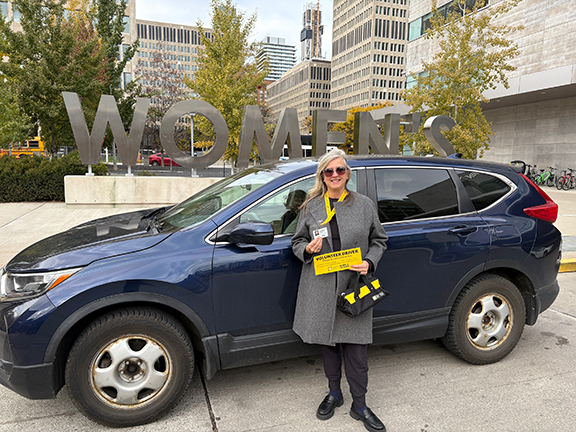
Patricia Doane is one of the individuals that volunteers time as a driver. A Beach resident, retired teacher and cancer survivor herself, Doane wanted to become involved however she could, and was looking to give back to her community.
She became one of the volunteer drivers in July, and has since begun to be heavily involved in the recruiting process. The decision came after a conversation with one of her clients, where she revealed that a doctor asked her why she had been missing her treatments. The client replied that she had no way of getting there. The conversation horrified Doane who realized that if nobody was picking up the patient, they would miss their treatments.
“There’s a lot of elderly people and even younger people who are on their own and they don’t have family and friends that are close by or who are capable of getting them there.” said Doane.
“This just seems so unfair. It’s just a little shocking that this is…We have great health care in Canada and Ontario, we’re so fortunate. But there’s this little disconnect with getting the patients to where they need to go. And if it’s a financial thing, it can cost a lot of money, to have to get to your appointment for some of them. So it’s an absolutely necessary service.”
It’s satisfying for Doane that she is able to give people the support they need, no matter what it is. Some of the people she drives open up to her, especially when learning about her previous diagnosis. Others just need a quiet drive to relax before appointments.
Doane said the most important requirement for the job is to, “have a heart and be willing to listen if they want to talk.”
Doane usually has set passengers that she picks up, and has even been able to forge relationships and connections through her work. “There’s this one particular client, they call me Teacher Patricia. I definitely have a bond with all of them,” she said.
Doane believes that apart from a lack of drivers, it’s been difficult to get the word out that this program is available. She doesn’t think it’s being promoted the way it should be. Many people that she has spoken to in her personal life, had never even heard of it.
Doane said she thinks there is a disconnect between the service and the people that need it. The service is open to anybody that has a cancer diagnosis, is undergoing cancer treatment at a hospital or cancer centre, or has received treatment in the last 12 months and is attending follow-up appointments, with a referral from a healthcare provider. The program requires a $100 registration fee, but offers programs that assist with payment. It is available on weekdays from 9 a.m. to 5 p.m.
As a volunteer, it is important that you are available for at least a half day a week, or a few days a month. Volunteers are also able to say what borders of the city they are comfortable driving. A valid driver’s license with three or less demerits is needed, and you may be required to undergo a criminal background check. Of course, drivers are also expected to undergo training, and to follow all Canadian Cancer Society policies and procedures. Mileage reimbursement is given to drivers.
According to Doane, the thorough interview process is there to create the best experience for both drivers and passengers.
“It’s a lengthy process because they want to interview you with different people, explain the program and make sure that you’re the right fit,” she said.
Doane said she was lucky she had a support system. But she knows how difficult it can be when you’re alone and dealing with cancer treatments as she sees it in her volunteer work with Wheels of Hope.
She said the program is a way to give back to the community, to be there for others, and to offer support during a time that can often be lonely and draining for those going to the treatments. Doane said the volunteer work is rewarding and it brings her joy to help the community, and to see the impact of the program first-hand.
However, she does want to get the word out to community members about Wheels of Hope, and urge others to get involved and volunteer, even if just for a couple of hours a week.
To become a volunteer driver, please register at cancervolunteer.ca or email volunteer@cancer.ca
To learn more about the Wheels of Hope program and its assistance for patients, please visit https://csl.cancer.ca/en/Detail/db51b318-81fe-e811-a98d-000d3a36f968