East Toronto parks and waterways among those being impacted by invasive phragmites
By KAT BERGERON
Toronto’s waterways are being taken over by invasive phragmites that are outcompeting native plants and blocking animals from the species they depend on.
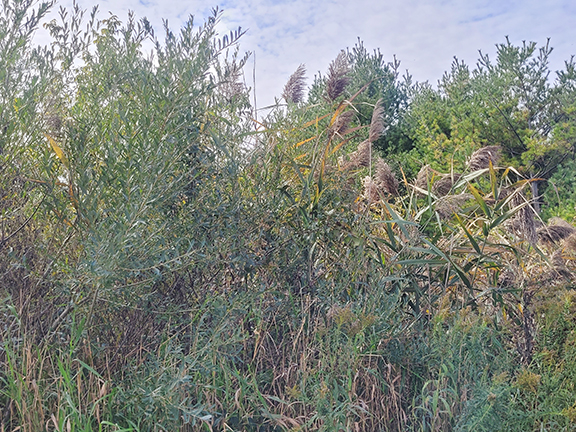
Invasive phragmites (alternately: phragmites australis, European common reed) is an aggressive perennial plant native to Eurasia, affecting wetlands and beaches. The plant is considered aggressive and invasive because it spreads over large distances in infestations, outcompetes native phragmites, and releases toxins into soil which can impact the growth of other plant life.
“Phragmites damage more than just water flora, affecting the surrounding ecosystem. They cause changes in hydrology, being dense and large, with really high evapotranspiration through their leaves, drying wetlands, and nutrient cycling changes by decomposing slowly, helping them to absorb and send nutrients to their rhizome in their time of dormancy,” said Karen McDonald, Senior Manager, Ecosystem Management -Restoration and Resource Management with the Toronto and Region Conservation Authority (TRCA).
As a perennial grass, they can grow back every year and are difficult to completely remove as they spread seeds over a large area from the fluffy seedheads at the top. The seeds can also be tracked into new areas on clothing, tire treads, and other moving objects that can unintentionally transport them.
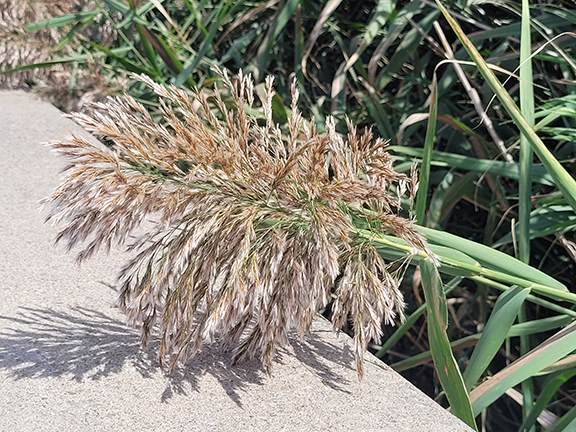
As a measure to mitigate the risks of new infestations, invasive phragmites is on Ontario’s list of invasive species. Classified by their characteristics, effect on native biodiversity, and their origins, invasive plants and animals are illegal to possess, import, plant or breed, deposit, release, transport, distribute, buy, lease, sell, or trade, in Ontario.
Experts recommend a minimum of three years monitoring and managing an infestation site, as the deep roots may still be holding a seedbank, or have already spread seeds which wouldn’t be noticed before the next growth season.
When The Toronto and Region Conservation Authority (TRCA) manages an area, it begins with data collection and mapping out geological features, invasive phragmites density, access and elevation, to understand the site before planning a course of action. Next, based on the site information collected, multiple pest-control strategies (interactive pest-management) are often applied.
In large infestations, a combination of pesticide use and machines to cut and remove them, is most effective. The two types of chemicals are called glyphosate or Imazapyre, but glyphosate can’t be used in water, so it is applied when grown on land.
In deeper water, mechanical amphibious machines can often be used to cut down the stalks below water levels, filling with water and suffocating the plant. In shallow water, water-safe pesticides are more effective by damaging the plant’s ability to regrow seeds, as they can grow a new rhizome above water to get air.
In smaller, or new infestations, manual spading can be used to cut off the plant from its root, but only in soft earth areas. As invasive phragmites can grow through rock and asphalt, it would be an obstacle to manually dig through.
Manual spading is the technique used by Ashbridge’s Bay Nature Stewards, who are volunteers who meet once per week to contain the spread of invasive plants.
Bob Kortright, of the Toronto Field Naturalists organization, said that in Ashbridges Bay Park all of the phragmite growth has taken place since 2017.
“This park is manageable, and we don’t want to use pesticides with all of the native foliage that is also here, so we manage the phragmites by removing the seedheads from the top so they can’t spread as easily. Now they just look like dense stalks of tall grass, but they flower again and grow more seeds.”
The two-pronged approach is on average 80 to 90 per cent effective within the first year, in large infestations, while it isn’t always required in new infestations. Still, teams need to follow the plan exactly, including getting all permits in place, following clean equipment protocol and setting up a communication plan about the project site, to achieve the best possible outcomes each year.
“We have a new bio-control program in Ontario, using stem-boring moths; the larvae burrow into stems, reducing height and density, like how the purple loosestrife beetle manages the fields of invasive purple flowers by eating their stems,” said McDonald, “We are optimistic based on results we have seen so far.”
Invasive phragmites may be in many Toronto parks and beaches, but there are programs in place to monitor and contain them, with the goal to restore native biodiversity to outdoor spaces.
The Toronto and Regional Conservation Authority works with parks, water, forestry, and volunteer stewardship programs, Toronto Nature Stewards and Toronto Field Naturalists to protect our native species from the threat.
For more information on local programs, please visit:
https://www.protect-our-ravines.ca
https://torontonaturestewards.org/sites/ashbridges-bay-park/ ,
https://nativeplants.evergreen.ca/ ,
https://friendsofthespit.ca/ ,
and https://trca.ca/