On The Wild Side: What does a wildlife helper keep in her car?
By ANN AND ERIK BROKELMAN
As much as I enjoy photographing wildlife, what I’ve come to enjoy even more is the world of animal rescue.
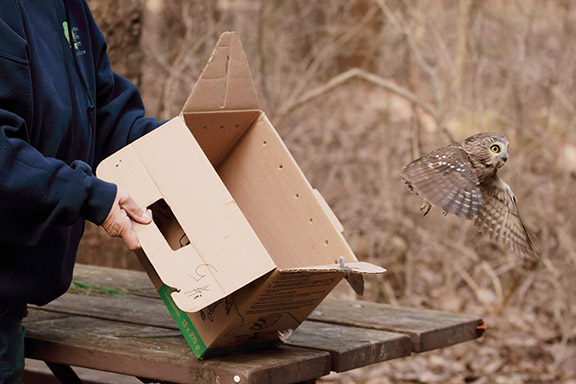
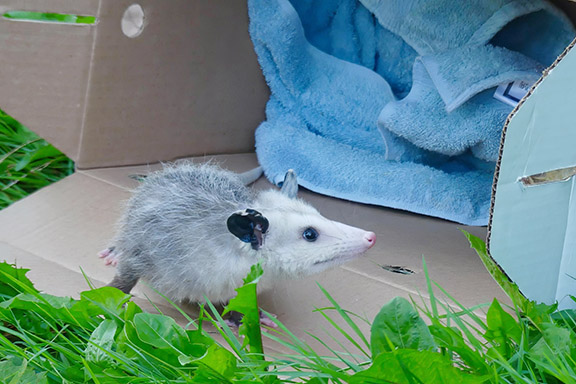
Over the years, I’ve stopped, more times than I can count now, to help wildlife in distress: foxes with mange, turtles hit by cars, injured red-tailed hawks, birds that have flown into windows, and baby squirrels scrambling across the ground to give just a few examples.
I was lucky, many years ago, to meet a volunteer with the Toronto Wildlife Centre during an owl-watching walk. She took me along on several rescues and introduced me to the Centre; that experience changed everything.
Before that, I wouldn’t have known what to do if I saw a swan tangled in fishing line or a hurt opossum on the sidewalk. Now, I’ve become the person that friends and neighbours call when they find an animal in need.
So, what does a wildlife helper like me keep in her car?
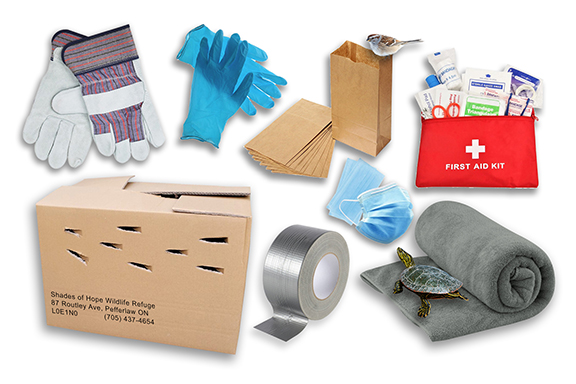
Nothing too elaborate, really: duct tape, rope, scissors, pliers, a hammer, cable ties, two large nets, tarps, gloves (both latex and heavy-duty), a flashlight, ice cleats, boxes, towels, hiking boots, and a few garbage bags.
It may sound like a strange list, but after years of volunteering, I can tell you — each of those items can be essential when trying to help an injured animal safely.
On a side note, message me if you’d like to hear the fun story of the time a police officer was looking through my trunk and asked if I was actually a serial killer…
To help you feel prepared to help an animal that is injured or in distress, here is a handy visual guide (in the image above at the top of this story) to help you prepare a box to leave in your car. Maybe you’ll be the one to save the life of an injured turtle, raccoon, squirrel, songbird or rogue Bigfoot. Thanks Dianne for the image graphic of the items shown on this page.
Now, for a very important question. Who do you contact if you find an animal in distress?
Toronto Wildlife Centre (TWC) — 416-631-0662.
TWC has the only dedicated wildlife ‘rescue team’ in Ontario, and they are an incredible group!
They accept all injured wildlife with eyes open; they don’t take in baby birds, baby squirrels, or cottontail rabbits if their eyes are still closed. I’m sure they wish they could, but even the best rescue squads have a limit to their resources.
If you come across a sick, injured, or orphaned wild animal, or one clearly in distress, the best way to get help is by filling out the Request for Assistance Form on their website. You can even upload photos, which helps the team quickly assess the situation.
If you can’t access the form, call them at 416-631-0662 and leave a message.
They will get back to you as soon as they can.
Website: https://www.torontowildlifecentre.com/contact/
Shades of Hope Wildlife Refuge (SOH) — 705-437-4654.
Located about an hour north of the city, Shades of Hope is a wildlife rehabilitation centre that accepts a wide variety of animals, including those that many other centres are unable to take.
They are willing to take many eyes-closed animals, which means they’re equipped to help the tiniest and most vulnerable wildlife. If you find a very young animal and aren’t sure what to do, SOH is a fantastic resource with amazing staff who know how to give these little ones a fighting chance.
They also treat coyotes, foxes, hawks, owls, groundhogs, skunks, mink, fishers, and more.
Website: https://www.shadesofhope.ca/
Ontario Wildlife Rescue — 416-436-9892.
Ontario Wildlife Rescue isn’t a single centre but rather a province-wide network of wildlife rehabilitators and organizations.
Their main goal is to connect the people who find injured or orphaned wild animals with the right help as quickly and efficiently as possible. Regardless of the animal, they’ll do their best to help you figure out your next steps and to find someone in your area who is able to provide help.
You can call them directly or visit their website to search by animal type and location. It’s a great first step if you’re not sure who to contact.
Helping wildlife has been one of the most rewarding parts of my life.
Every animal I’ve helped, from tiny baby birds to deer and coyotes, has created a memory I hope to never forget.
It’s something I’ve been lucky to share with my kids, and now my grandkids, and I truly believe it’s made us all more compassionate and connected to the natural world.
You don’t have to be an expert or carry a trunk full of rescue gear to make a difference. Sometimes, just knowing who to call is enough to save a life.