East Yorker raises awareness of naturopathy for those seeking health care options
By AMARACHI AMADIKE
A healthy lifestyle is priceless. Those who have had unfortunate run-ins with poor health often emphasize the peace of mind that accompanies news of improved medical status.
Unfortunately, due to a lack of access or trust in conventional medicine, many people wait too long to seek help.
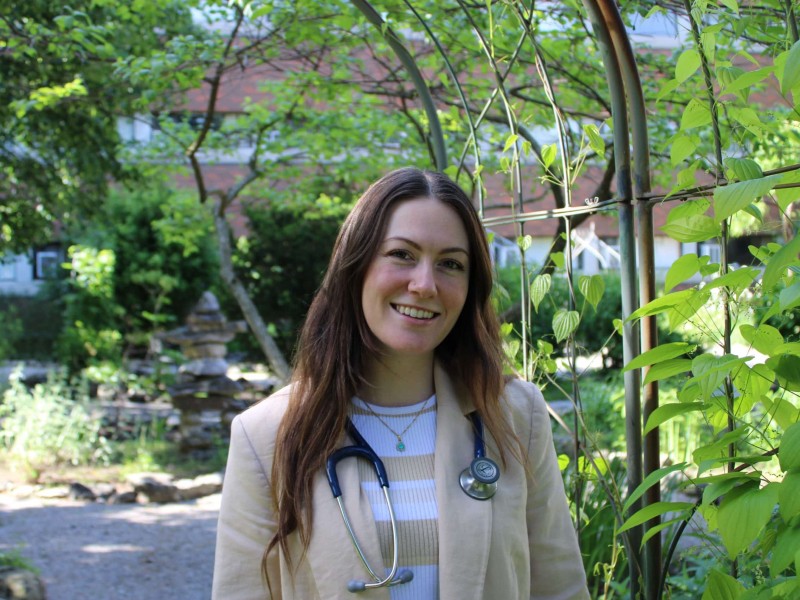
Shayla Lyons, an East York resident and clinical intern at Schad Naturopathic Clinic in North York, is encouraging the community to consider naturopathy, an often-overlooked alternative medicine.
“Unfortunately, in many cases, naturopaths are the last resort which makes the path to healing harder for sure,” said Lyons. “People usually tend to go to medical doctors first and then if they’re not getting answers or, like in many cases, if the doctor doesn’t know what’s wrong with them, then they come to us.”
Over the past few years, Lyons said that there has been a shift in medicine with an increasing number of Canadians seeking naturopathic assistance due to Canada’s insufficient number of family doctors and nurse practitioners. Although the cost of alternative medicine is not covered by the Ontario Health Insurance Plan (OHIP), some private insurance providers offer coverage.
According to the Primary Care Needs survey by OurCare, about 6.5 million Canadian residents don’t have a family doctor or nurse practitioner that they can rely on for regular visits. In Ontario, this number is as much as 2.2 million people living without access to a family doctor.
“I’m very passionate about this practice, because my main goal is to end suffering for people and to help them have a better quality of life,” said Lyons. “The naturopathic philosophy focuses on putting the power of their health back in each patient’s hands.”
Lyons told Beach Metro Community News that she found her vocation in naturopathic medicine as early as the age of 15.
“My mom always had an inclination to use natural remedies and herbs to treat various issues we had growing up,” said Lyons.
Although this passion for natural medicine was nourished through years of observing her mother, Lyons’ eight-year journey towards gaining a master’s degree in the growing field began during a career day event in which her high school class discovered the world of naturopathic medicine.
“I really fell in love with the concept of preventive medicine and a more holistic approach to healing,” she said.
Lyons’ belief in naturopathic medicine was first tested during her undergrad at the University of Alberta, where she earned a Bachelor of Science in Immunology and Infection. Struggling with severe acne, she turned to a naturopath — a decision she considers pivotal in her professional journey.
Lyons chose to avoid Accutane, a drug with potential side effects. Instead, she adopted a holistic approach focused on a cleaner diet, herbs, and vitamins.
“It made me realize that this was in fact the right path for me,” said Lyons. “I’m a firm believer in (naturopathic medicine) because of my own experiences.”
Lyons acknowledges the important role of conventional (allopathic) medicine but emphasizes that naturopaths serve as complementary providers, addressing gaps in traditional care, particularly in prevention.
“Allopathic doctors adhere to preventing patients from dying; but I want to promote living,” she said. “I want to promote prevention strategies so that people don’t needlessly suffer. At the end of the day, it’s all about nutrition, diet, and lifestyle which sounds easier than it is, but it is fundamental to good health.”
With training in a variety of practices such as acupuncture, chiropractic manipulation, traditional Chinese medicine, botanical medicine, homeopathy, hydrotherapy, phlebotomy, as well as B-12 injections, naturopaths can also provide diet, lifestyle, and nutritional counselling.
“So, we’re seeing a huge shift because now (naturopaths) are becoming more primary care physicians,” said Lyons.
She believes this is because naturopaths excel at providing individualized care.
“We look at the full body picture to fully understand how to treat that particular individual,” said Lyons. “We don’t do population medicine. With bloodwork, for example, we look at what’s normal for this (particular) patient, rather than what the average person’s levels should look like.”
In Canada, naturopathic doctors are licensed to prescribe certain medications, though this varies by jurisdiction. They receive extensive pharmaceutical training to ensure patient safety.
“Lots of patients who come to see us are already on various pharmaceutical prescriptions,” said Lyons. “But we’ve been trained to know what these medications are, what they do, and their physiological and kinetic pathways. We understand the interactions with herbal supplementation or anything that a naturopath would prescribe.”
According to Lyons, many naturopaths also work in collaboration with nurse practitioners who, when necessary, prescribe pharmaceuticals on their behalf.
Lyons hopes Canadians will seek naturopathic care earlier in their health journey.
“There are patients I’ve encountered who were in and out of medical clinics for years and found a cure after just weeks with a naturopath. But when you decide to go the holistic route, it can also be a long-term journey,” she said. “Long-term, our goal is to find the root cause of medical issues.”
For more information, please contact Lyons at shaylaly008@gmail.com.