Permit parking rule changes divide Beach residents
Beaches-East York city councillor Mary-Margaret McMahon is defending a decision to implement on-street permit parking on all of Ward 32 residential streets, saying it is an issue of fairness.
“Some residents have asked why they don’t have permit parking in their area and they’ve been ticketed and they wondered about that,” said McMahon. “I’ve heard this off and on over the years, so we thought we’d take a closer look at it.”
According to a letter sent to the Toronto & East York Community Council from McMahon dated April 4, 2017, 90 per cent of the local roads in Ward 32 are designated under the city’s residential on-street permit parking program. That leaves 10 per cent that have been omitted.
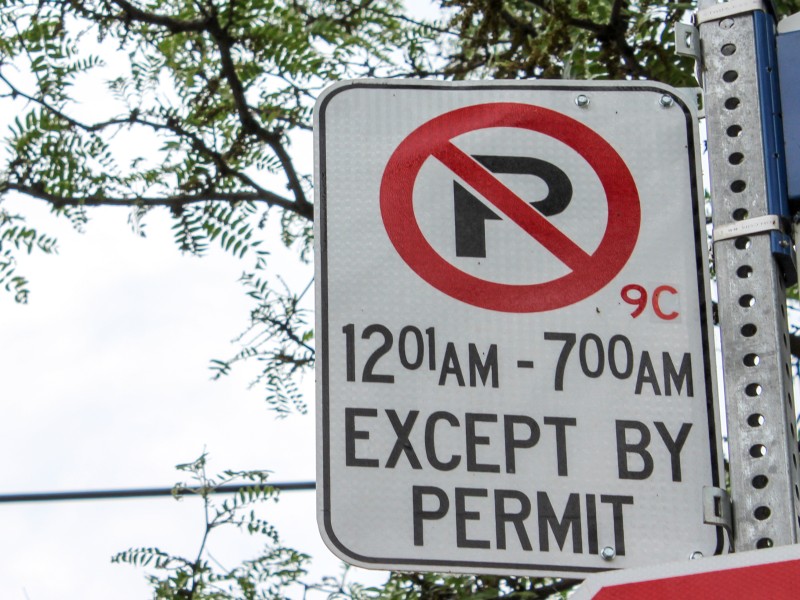
The on-street permit parking program allows permit holders to park their car in a specified area during permit parking hours for a fee.
“From an equity point of view how am I justifying that some residents pay to park on their street and others do not,” asked McMahon. “I can’t look some residents in the eye and tell them, well you live on such and such a street and you don’t have to pay, you live on this street and you do.”
The new parking permit law affects more than 20 streets in the Beach including Glen Oaks Drive, Northern Dancer Boulevard, Long Crescent, and Glen Ames among others, and came to light in early June, which is when a number of residents on the affected streets began collecting names and submitting letters and petitions to McMahon as well as the city’s transportation services division.
Correspondence sharing the Glen Oaks petition — which calls for a poll to be done — listed the fact that residents and their guests would no longer be able to park for free on the street, residents could be forced to pay around $600 per year to park on the street, and cited the possibility that an increased number of cars from neighbouring condo dwellers could potentially park on the street for extended periods of time as ramifications of the permit program.
The petitioners say they should have been consulted before these changes were implemented on their streets.
“Nobody knew about it,” said Beach resident Sousie Weston. “The due process that was supposed to be in place wasn’t actually followed or enacted in our right… if there was a need [for new parking laws], it should’ve triggered a poll of the residents of the street. The bylaws are in place to protect citizens against moves like this that impact an entire community.”
According to subsection 925-4B of City of Toronto Municipal Code Chapter 925, on streets where permit parking is not currently in place, a poll is to be conducted to determine whether or not residents of the area would choose to have it or not.
Earlier this year, McMahon requested a motion to exempt more than 20 streets from the requirement of this subsection and following city council meetings on April 26, 27 and 28, the item was adopted without amendments and passed with a majority vote.
While one petition is citing a lack of “procedural fairness” due to the lack of consultation from the councillor, McMahon said that while “the city does poll residents on some issues, we don’t do it on everything. I pride myself that I do extensive consultation on many issues, but I’m not consulting on every single issue on city hall. I feel that people elected me because they trust my judgment.”
She explained further that it was seen as an issue of maintaining consistency throughout ward 32.
Ainsley Moore, a Beach resident who has lived on a street with permit parking her entire life agrees with this sentiment.
“All residential roads in the Beach should have permit parking,” she said. “It has never made sense to me that some were exempt when there has always been a parking problem. Not all homes here have garages or driveways and more and more households have more than one car. Every street needs to be made available for residents to park overnight without being worried about getting a ticket.”
But the current petitions argue that regardless of the reasoning, residents had a right to voice their opinions before a decision was made.
“Nobody was made aware even after it was passed,” said Weston. “We found out through a series of accidents… and that is one thing that has outraged people on the street. We as a community have an expectation that the laws that are in place will be followed and that our democratic right to vote on a matter that will absolutely impact everybody in the community were not followed here.”
This article has been updated to clarify the formal wording of the Glen Oaks petition.
Where do you stand on this issue? Should permit parking be in place on all of Ward 32 streets? Why or why not? Leave a comment on this story or send an email to editor@beachmetro.com.