BIA’s Fall for The Beach initiative invites residents and visitors to rediscover the neighbourhood and learn more about its biodiversity
This fall, The Beach BIA is inviting residents to take the long way home, wander through a local park they may have passed hundreds of times, look a little more closely at the trees overhead—and perhaps even watch for a Monarch butterfly making its remarkable fall journey south.
As part of its Fall for The Beach campaign, the BIA has launched a new Biodiversity Dashboard and 10 self-guided routes through the neighbourhood, now available on the BIA’s website.
The project grew out of the BIA’s Smart Parks initiative and was developed with the collaboration of University of Toronto interns, using City of Toronto Open Data and observationsfrom iNaturalist to bring some of the neighbourhood’s natural environment to life online.
For visitors, the Beach is often synonymous with Lake Ontario and the Boardwalk. Those who live here know there’s another landscape woven throughout the neighbourhood.
Kew Gardens, Ivan Forrest Gardens, Glen Stewart Ravine and Woodbine Park are all within easy reach of Queen Street East. Add the area’s mature residential trees and lush Queen Street tree canopy, gardens and planted streetscape, and the neighbourhood has an extraordinary network of green spaces sitting alongside its main street.
The new Biodiversity Dashboard provides a way to explore some of that natural environment digitally—and then encourages people to head outside and experience it for themselves.
What species have been observed nearby? What’s growing around us? What happens when we stop looking straight ahead and start looking up into the canopy, down into the gardens and around the parks and ravines we travel through every day?
There’s another reason September is an especially interesting time to pay attention to nature in the Beach: pollinator and butterfly activity.
Toronto is home to more than 360 species of bees and more than 100 species of butterflies, and the City of Toronto’s Pollinator Protection Strategy recognizes the importance of connecting parks, ravines, gardens and smaller planted spaces to create habitat that allows pollinators to move through the urban landscape.
The Beach BIA has made pollinator-friendly planting and biodiversity an important part of its streetscape approach. Our planters and green spaces aren’t only about beautifying Queen Street East—they can also contribute small pieces to a much larger urban habitat.
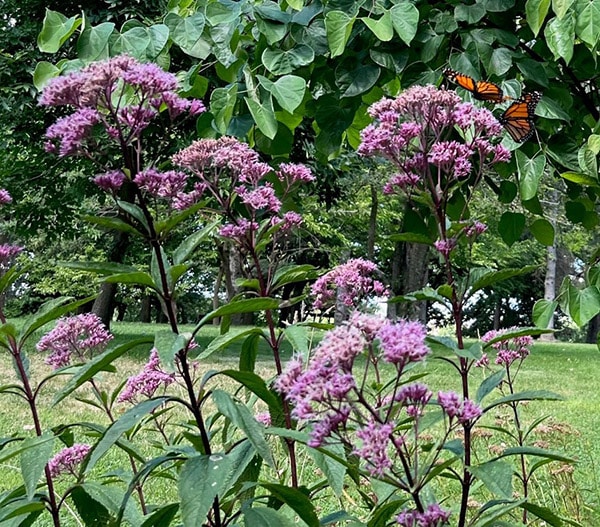
And then there are the Monarch butterflies. Each fall, these butterflies undertake their extraordinary migration south toward Mexico. In Toronto, their southward movement becomes particularly noticeable from late August into September, with the Lake Ontario waterfront providing an important route through the city.
That makes fall a wonderful time to look a little more closely while exploring the neighbourhood. Watch the flowers. Look for bees and butterflies. Notice the late-season blooms that provide nectar for migrating pollinators. See what you can identify—and consider adding your own observations to the iNaturalist website.
The same community-generated observations can help build our understanding of the biodiversity that exists around us.
Alongside the dashboard, the BIA has introduced 10 self-guided routes designed to help people explore different parts of the Beach at their own pace.
There are no scheduled start times and no tour guides. Choose a route on your phone and head out. The routes connect local paths, streets, parks, natural spaces and points of interest, offering residents and visitors another way to experience a neighbourhood they may think they already know.
And getting from one place to another isn’t really the point. The wandering is.
Stop for a coffee. Sit beneath a tree. Explore a side street. Notice a garden. Watch for a butterfly. Meet a friend. Discover a shop you’ve never been inside. Find a sunny patio and make an afternoon of it.
The initiative is also part of the BIA’s broader approach to placemaking.
The waterfront, parks, ravines and Queen Street East don’t have to be separate destinations. Together, they create the experience of this neighbourhood.
For the BIA, encouraging people to explore our natural assets also creates an opportunity to strengthen their connection with the local commercial corridor.
Someone enjoying Woodbine Park can continue west along Queen Street. A trip through Kew Gardens can end with lunch or shopping. A Glen Stewart Ravine outing can become an afternoon exploring the east end of the BIA.
And for the many people who arrive specifically for the waterfront, there’s a simple invitation: Come up from the Boardwalk. There’s more to discover.
Over the coming weeks, the tree canopy will begin its annual fall transformation, migrating butterflies will pass through, patios will enjoy their final warm afternoons and the parks and ravines of the Beach will take on an entirely different character.
The BIA’s Fall for The Beach campaign encourages residents and visitors to experience those changing seasons while spending a little more time in the neighbourhood.
For more information on The Beach BIA’s Biodiversity Dashboard and the 10 self-guided routes, please go to https://thebeachbia.com/attractions-1
For more information on iNaturalist, please go to https://www.inaturalist.org/places/toronto
The Beach BIA represents local businesses along Queen Street East between Coxwell Avenue and Neville Park Boulevard.