
On The Wild Side: Winter’s whites and wildlife’s reds combine for a lucky day
By ANN BROKELMAN
I had an incredibly lucky day in early January. I went down to the lake to watch the swans, ducks, and the frozen shoreline, hoping to enjoy the quiet and take far too many photos. It was on my way home, though, that nature surprised me.
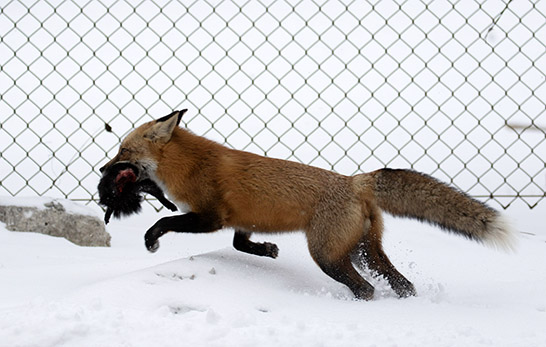
A honk from the car behind me (thanks, Shona) made me look around and spot a beautiful red fox, with food in his mouth, getting ready to cross the road. I pulled over, checking that it was safe to do so, and got my camera ready.
He was a gorgeous male fox, and I was thrilled to see him, as it had been a long time since I’d spotted one anywhere other than on my trail cameras. I watched as he crossed the road and slipped through to a backyard a few houses away.
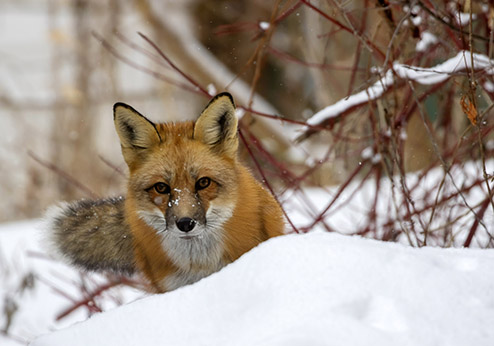
I thought my lucky moment was already over, but when I drove away and turned onto the next street, the fox crossed the road again just as I arrived.
This is where things got really unique. While I’ve seen many foxes over the years, this next behaviour is far less common: From the car, I watched him move into another yard and begin caching his food in the deep snow. He worked carefully, using his nose to push snow over the hidden meal until it was completely covered, before running off behind another house and out of sight. Did you know that foxes do this?
When thinking of hiding food, most people probably picture squirrels or chipmunks burying nuts and seeds. When I first learned about foxes doing it, saving food for leaner times, I found out that hundreds of other animals, primarily birds and mammals, do it too.
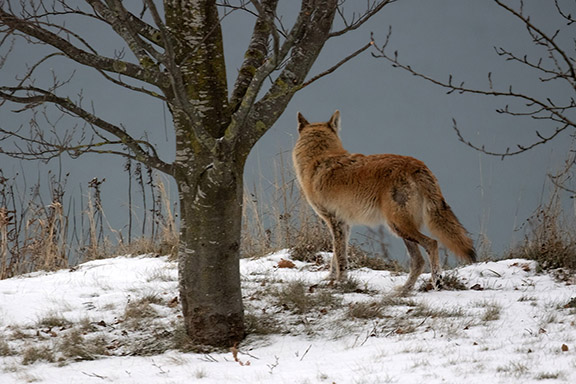
I drove home thinking the day couldn’t possibly offer anything more, until I later learned about a red coyote sighting along the bluffs.
Thanks to the call from my friend Lesley, I arrived in time to see the rare, coloured animal for myself. I have only ever seen one other red coyote, many years ago, and that sighting happened during a snowstorm.
Both encounters were brief, just a matter of seconds before the animal vanished, and, to this day, I haven’t managed to take a picture of one that I’m really happy with.
Beautiful as this one was, I could tell right away that he was developing skin issues, likely mange, so I contacted the Toronto Wildlife Centre to report the sighting and my concerns. But love the lighting and his staring into the bluffs.
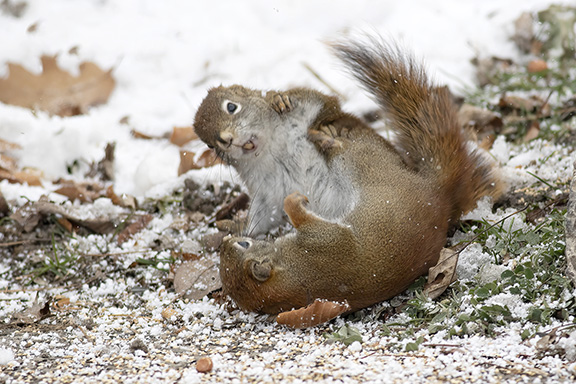
The theme of red followed me all the way home. In the tree out front sat a beautiful male cardinal, his colour impossible to miss. Below him, two red squirrels were locked in a noisy argument over a single peanut, darting back and forth at the base of the tree.
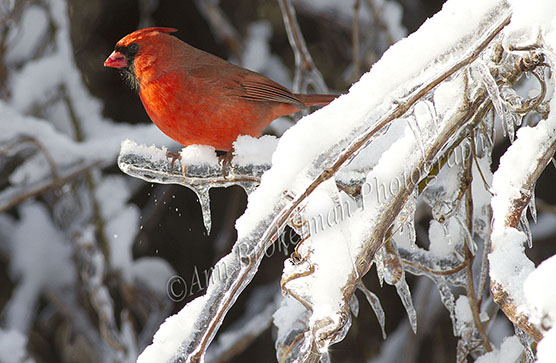
It felt fitting that even in my own yard, the day’s pattern of unexpected wildlife moments continued. There is something especially striking about red in winter. Against snow, ice, and bare trees, those warm colours seem brighter and more alive, drawing the eye and holding our attention. In a season often seen as quiet or colourless, these flashes of red remind us just how much beauty is still present.
As I write this, a screech owl is peering out from its nesting box in my backyard, quietly watching the world below. While many people retreat indoors during snowfall, I tend to venture outside.
Living near the bluffs, ravines, tree lots, and waterfront offers endless opportunities to notice snow covered trees, frozen lakes, and wildlife going about their daily routines, even in the heart of winter.
Please share your recent sightings with me. I would love to hear about your own outdoor adventures.


Comments (0)
There are no comments on this article.