Letters to the Editor: Important environmental information missing from development plan for building at north end of Glen Stewart Ravine
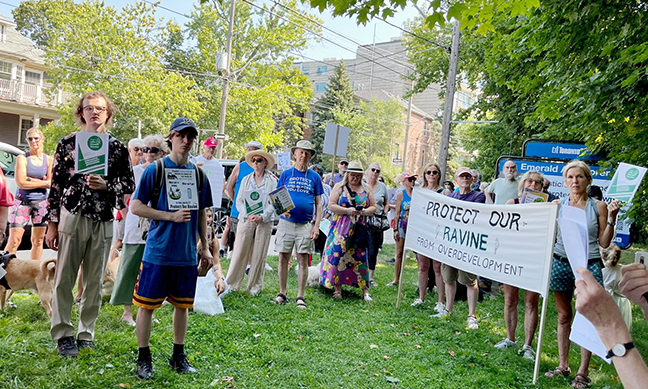
My name is John Hillis and I grew up on Glen Manor Drive East, from 1967 to 1981 across from the park. I am entirely familiar with Glen Stewart Ravine, having played there as a Williamson Road Public School student and regularly traversing it on the way to/from Malvern Collegiate.
I am following with morbid fascination this all-to-familiar story of civic misappropriation and offer the following comments based on report omissions.
Environmental Health
Hydrology: The footprint of the proposed development is bisected by the historical headwaters of the Ames Creek watershed. This should necessitate an independent Riparian impact assessment by a qualified biologist and be included in the supporting documentation of the application.
Water table levels in/around the site requires monitoring throughout the year, particularly in the spring when groundwater levels are elevated. This appears to have been omitted from the 2022-23 supporting documentation and undisclosed in the amended 2025 proposal.
Stormwater Management: Boreholes used to monitor groundwater levels were only conducted during arguably the driest time of the year — Sept. 6 to Nov. 1 of 2022 – and were confined to the development site and not downside in the ravine area.
Stormwater collection and building perimeter drainage not returning subsurface to the ground and directed to the city sewer system should be expected to greatly impact the current surface water flows to Ames Creek.
Regardless, manufactured treatment of collected stormwater and groundwater is necessary to reduce total suspended solids [TSS] and contaminants prior to discharge. This information was omitted from the report.
Public Health
The determinants of public health are defined by the World Health Organization [WHO] as “a state of complete physical, mental and social well-being and not merely the absence of disease or infirmity”.
The Glen Stewart Ravine is regarded by many as a “jewel in the crown” of city amenities.
The recreational and spiritual health benefits afforded by the many who use the ravine in its current unadulterated state surely out-weigh the fiscal gain of the few (developer and Toronto tax collector).
John Hillis, from Vancouver Island