On The Wild Side: Have you ever wondered where bees sleep?
By ANN and ERIK BROKELMAN
A few weeks ago, I went up to Algonquin, planning to enjoy and photograph the stunning fall colours, the soft glow of sunset, and the ever beautiful harvest moon.
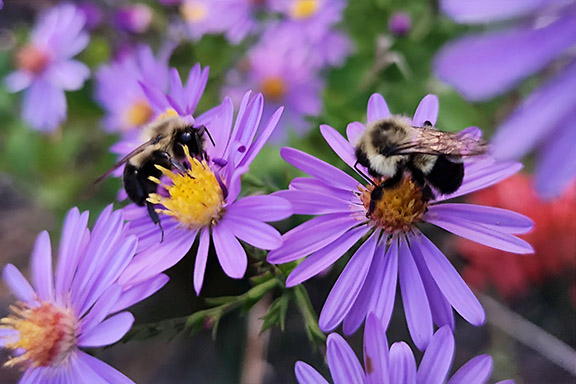
While waiting for the moon one evening, I noticed some lovely flowers in front of me. When I walked closer to take a better look, I was surprised to see several bees resting motionless inside the petals. They were nestled deep within the flowers, and there weren’t just one or two. There were nearly two dozen of them, each tucked into their own petal bed!
What was going on?
I messaged my friend Shona, who’s a beekeeper, to find out what was happening. She replied that they were simply sleeping!
They curl up inside the flowers for warmth, rest, and protection from both the elements and predators.
I was amazed. I’d never heard of this before, let alone seen it. The idea of flowers serving as tiny shelters for bees made the scene feel like something out of a children’s fairy tale.
I’d never really pondered on where bees sleep. I assumed they went back to their hive, but now that I’m thinking about it: a lot of bees are solitary and don’t have hives at all. Of course, they’d need to find somewhere to sleep out in the wild.
After doing some reading, I learned that, when they are part of a colony, female bees return to their nests for warmth and safety, but the males prefer to spend the night on flowers like coneflowers, asters, and sunflowers.
After all this reading, I drove back to the same spot the next morning, and sure enough, every one of the bees was awake and buzzing busily among the blossoms. So darn cool.
I also learned that bumblebees do have hives, but only for a single year. When winter arrives, the main colony dies off, and only a new queen survives by hibernating until spring.
Many bumblebees will die within their hive, while others curl up inside a flower to rest and never wake again. It’s sad, of course, but there’s something beautiful in that; it is a far more peaceful ending than most wild creatures receive.
What I also learned was to observe them quietly and never try to wake them by touching the flowers.
So long as it’s still warm out, the bees aren’t sick or dying; they’re simply resting. It’s best to let them sleep peacefully until the sun warms them in the morning.
I always love learning something new and unexpected in nature!
On a side note, the fall colours were breathtaking, and the reflections on the water were incredible.
We spotted two moose, three foxes, and even a bear dashing across the road. Two Canada jays also stopped by; a bird sighting that always make me smile.
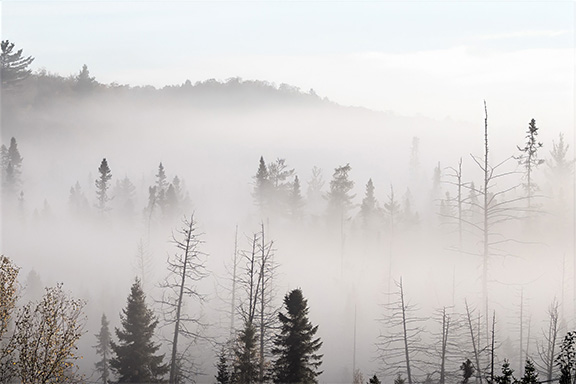
But the true highlight was the mist drifting over the lake in the early morning: quiet, calm, eerie and unforgettable.