East York students reflect on impact of residential school system during National Day for Truth and Reconciliation ceremony
By MATTHEW STEPHENS
The National Day for Truth and Reconciliation brings Canadians together to reflect on the harsh realities of residential schools and the children who never returned home from them.
On Tuesday, Sept. 30, people across the country attended events and ceremonies designed to educate, reflect, and honour the children who were subjected to trauma and abuse as a result of the residential school system.
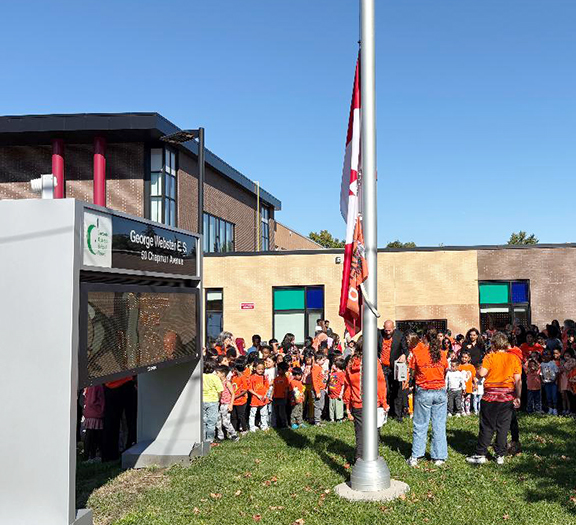
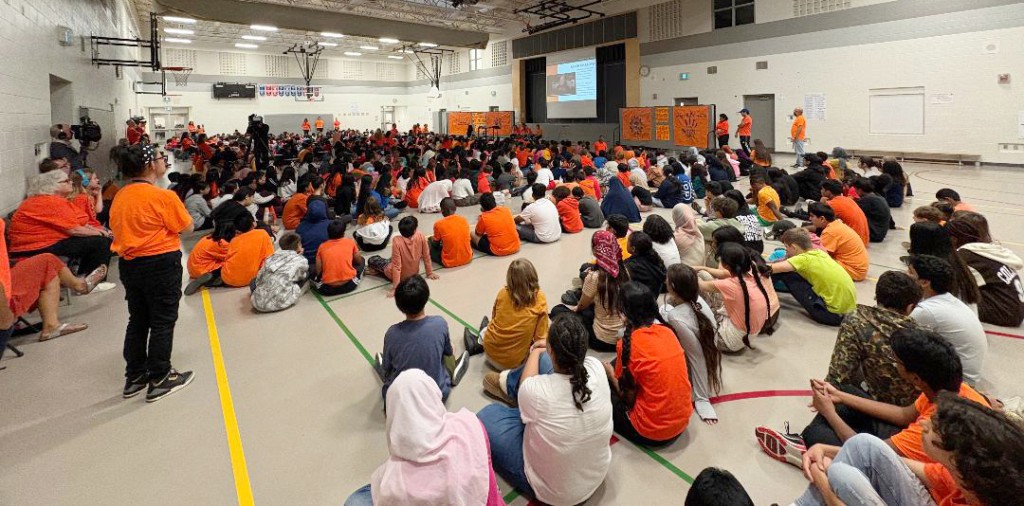
At East York’s George Webster Elementary School, children gathered this morning for a special educational assembly presented by Indigenous students, and an honorary Every Child Matters flag raising ceremony.
“On this day, we come together to learn and acknowledge the truth about the residential school system – a system that caused deep harm and lasting impacts on Indigenous children, families, and communities across Turtle Island,” said Cody, an Indigenous-identifying student during the school assembly.
Turtle Island is an Indigenous people’s term used to describe North America.
The school assembly also featured video speeches from residential school survivors Karen Chaboyer and Phyllis Webstad, who briefly described their experiences and explained what truth and reconciliation meant to them.
For more than 160 years, federally funded, church-run residential schools operated across Canada; with the exception of Prince Edward Island, Newfoundland and New Brunswick.
During their operation, more than 150,000 Indigenous children were forced into the residential school system, with the intent to strip them of their traditions, cultural practices and languages.
For Webster’s vice principal Stavros Tsirlis, educating students about residential schools goes beyond Truth and Reconciliation Day.
“Indigenous education at our school is something that we weave into our curriculum throughout the year. It’s not one day, it’s not a one-off. Our students talk and learn about Indigenous education,” said Tsirlis. “We try to make connections, and we want our students to know that this isn’t just a story in a book. These are real people; these are real lives.”