Lack of consultation still an issue for local residents as plan for new homeless shelters goes to Toronto Council this week
By MATTHEW STEPHENS
Councillors on Toronto’s Housing and Planning Committee engaged in a lively exchange at a meeting last week to discuss proposed zoning bylaw amendments needed to increase the size of six municipal homeless shelters being planned across the city.
Councillors debated with committee chair and Parkdale-High Park Councillor Gord Perks over whether members of the public making deputations should be permitted to mention unhoused people during their presentations at the July 15 meeting.
City councillors on the Planning and Housing Committee include Beaches-East York Councillor Brad Bradford, Etobicoke North Councillor Vincent Crisanti, Toronto-St. Paul’s Councillor Josh Matlow, Scarborough North Councillor Jamaal Myers, York South-Weston Councillor Frances Nunziata, and Perks.
At the meeting, councillors met with Toronto Shelter and Support Services (TSSS) and city staff to discuss a proposed amendment to the Toronto’s Official Plan regarding maximum density, and six proposed amendments to the zoning bylaws involving changes to the height, massing, floor area, parking, and performance standards amongst the shelter sites.
The zoning bylaw amendments for the six shelter sites included:
1615 Dufferin St. – An amendment for a 15-metre (two-storey) building.
2204-2212 Eglinton Ave. W. and 601 Caledonia Rd. – An amendment for a 27-metre (six-storey) building.
2535 Gerrard St. E. – An amendment for a 10-metre (one-storey) building.
68 Sheppard Ave. W. – An Official Plan and bylaw amendment for a 30-metre (six-storey) building.
66-66Y Third St.– An amendment for a 20-metre (four-storey) building.
1220-1222 Wilson Ave.– An amendment for a 30-metre (six-storey) building.
Part of the Homelessness Services Capital Infrastructure Strategy (HSCIS), the six new shelters are part of the city’s efforts to tackle the homelessness crisis with approximately 420 new shelter beds across Toronto. The city plans to implement 1,600 new long-term and permanent shelters spaces in the base shelter system by 2033, to ensure a gradual transition out of temporary shelter hotels operating since the COVID pandemic.
Before opening the discussion to the 69 deputants in attendance at the July 15 meeting, Perks wanted to ensure members of the public were aware that it was explicitly prohibited to speak about the individuals who will be living within the shelter sites. He also mentioned that, due to time constraints, deputation times would be shortened from five to three minutes.
“We require deputants speak only about the subject on which the committee invited them to make a public presentation. The subject before us today concerns whether the proposed buildings are appropriate for these sites, said Perks during his opening remarks,” said Perks.
“This is not about who will live in these buildings. It is not about whether a municipal shelter is an appropriate use for the site, as the use is already permitted in the zoning bylaw. So, in keeping with council’s procedures, I welcome everyone’s thoughts on the zoning proposals, but I will stop any presentation that does not focus on the topic at hand.”
Support for the proposed zoning amendments was split evenly amongst deputants, with some feeling that upzoning shelter spaces is critical in light of the homelessness crisis – and others expressing concerns regarding public safety, congestion, noise disruptions, inadequate public consultation during the procurement process, lack of access to essential services, and overall disapproval of locations selected for shelter sites.
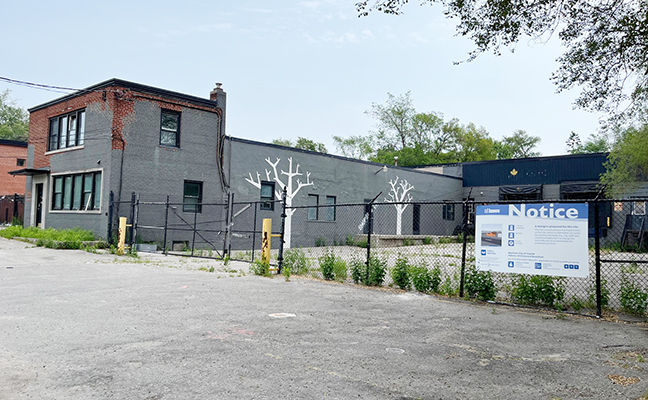
Speaking about the shelter at 2535 Gerrard St. E. shelter in southwest Scarborough, Stephen Farr, a member of the Blantyre/Hunt Club Residents Association, said the site does not require any zoning changes and that they strongly object to proposed changes to the parking lot space at the site, which is slated to increase with the new amendments.
“Increasing the lot coverage will reduce the outdoor space available for shelter residents and staff. Outdoor space restrictions, according to the city’s plan for the shelter, pushes outdoor meeting areas, including a smoking area, and an outdoor picnic barbecue area, immediately against the neighbouring single-family resident properties,” said Farr.
In a statement to Beach Metro Community News after the meeting, Scarborough Southwest Councillor Parthi Kandavel said the July 15 meeting highlighted the underlying disappointment amongst area residents who still feel that their concerns have not been adequately addressed by city staff.
“The Planning and Housing Committee meeting on July 15 was another important opportunity for residents to directly flag their concerns with city staff,” said Kandavel.
“While the committee meeting was focused on questions of zoning, the message seems to be clear: resident concerns are not being adequately addressed. There is still a long way to go before shovels are in the ground, and I’ll be looking for ways to support residents to ensure their concerns are addressed.”
Whether for or against the proposed amendments, deputants collectively expressed frustration towards the committee as Perks repeatedly stopped speakers to request they refrain from mentioning unhoused individuals and shelter use.
Ongoing exasperation amongst deputants prompted councillors Bradford and Myers to question the fairness of enforcing such strict regulations during the deputation portion of the meeting.
“The report mentions shelters multiple times. And it seems like the report is mentioning shelters, but the deputants aren’t allowed to talk about shelters, so I think that’s where a lot of the confusion is happening,” said Myers to Perks.
Bradford doubled down on Myers’ sentiments, saying the committe needed to reflect on its decision to restrict deputants’ presentations.
“I think Councillor Myers point ought to be received by staff and this committee,” said Bradford to Perks.
“It’s something that this committee and you as the chair and the staff who have delegated authority to do this, ought to reflect on. Because I think it’s going to be a very frustrating conversation for the 80 people who have signed up to depute on this, probably not because they want to talk about setbacks.”
Bradford went on to underscore his disappointment in how the meeting was facilitated.
“I think it’s reflective of where we are as a city. How we choose to engage, or not engage with Torontonians on difficult discussions,” he said. “I think everyone here would agree that we need more shelter and housing capacity; how we do it as a city matters. And I don’t feel like that work has been done…. I’m not impressed with this process, and we need to find a better way.”
Councillor Matlow also fired back at Perks, suggesting the committee was inflicting harm on its public image by limiting the discussion to details regarding zoning.
“The comments that my colleagues made about this report to us is covered throughout, woven in about the use of these sites. I think that we do ourselves harm by looking like we are telling people what they’re allowed to express,” said Matlow. “I think it actually hurts this body and the confidence in our decision making when people walk away feeling as though we are not even allowing positions being expressed that we may disagree with.”
According to Toronto Shelter & Support Services General Manager Gord Tanner, members of the public can address “non-zoning concerns” to the city’s Economic and Community Development Committee (ECDC).
In an email statement to Beach Metro Community News following the meeting, Bradford called out what he saw as Councillor Perks’ “one-sided” position towards those supporting the shelter sites compared to those who were not.
“This was an issue with a lot of public interest. That’s why we had nearly 80 deputants sign up to speak on both sides of the issue,” said Bradford. “Many of those with concerns found themselves interrupted and shut down by Chair Gord Perks, who chose to rule with a heavy-handed, one-sided fist to prevent them from sharing their perspective. Because of course, he did not direct any of those speaking in support of shelters to focus solely on technical zoning issues.”
In the next steps following the meeting, the zoning bylaw amendments report for the six shelter sites will now be forwarded to Toronto Council for discussion at its meeting this week.
It is still unclear whether there will be more opportunity for community consultation to discuss the shelter sites. However, Bradford believes that more community engagement is necessary before development begins.
“This report now goes to City Council, and it’s my understanding that no further consultation is required before these shelters would be built. But let’s be clear: more consultation is clearly needed and warranted here, even if it isn’t required,” said Bradford.