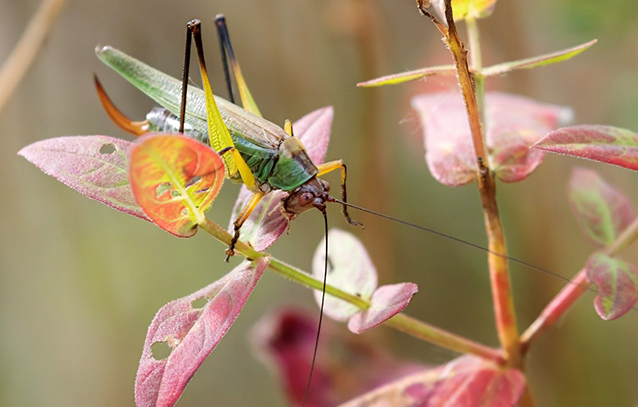
On The Wild Side: Discovering the world of katydids and treehoppers

By ANN BROKELMAN
This year I stumbled down a rabbit hole of learning about, and taking pictures of, small arachnids, insects, and other bugs.
Though I felt like Alice, exploring a wonderland of new creatures, I’m sure my husband and kids would have likened me more to the Mad Hatter! Today I thought I’d share a few of my findings with you all, starting with the fascinating buffalo treehopper.
I thought that spotting a buffalo treehopper would be like finding a needle in a haystack, given their tiny size. Maybe it was just beginner’s luck, but I actually managed to find two, recently, in a single day.
If you’ve never heard of this bug before, I suspect you’re in the majority. These vibrant green insects get their buffalo name from their hump-backed shape, and certainly not from their size. Can you believe the big ones are only two centimetres long, and the little ones can be just two millimetres?
They belong in the Hemiptera (half winged) order and Membracidae family of bugs that includes close relatives like cicadas, aphids, and leafhoppers, as well as some more distant cousins such as bed bugs.
Treehoppers feed on the sap of various plants, such as goldenrod, willow, and clover, and they produce honeydew in the process.
They transition through three main life stages: egg, nymph, and adult. What I thought was also neat is that, like moths, they go through five molts (called instars), growing larger each time until they finally form their wings.
While they are considered pests by many gardeners, are on the menu of many of our local birds and other insectivores, playing an important part in the local food web.
Moving on to my next six-legged sighting: katydids! Did you know that there are around 8,000 types of these bugs?
Ontario has a few types of katydids, though it’ll take you a bit of practice to differentiate them from their grasshopper and cricket cousins.
How do you find them? I’d suggest you do what I did: take your kids or grandkids outside, and let their ears track them down. I’m being serious! They can make a true cacophony. Check out this video link to hear them at https://youtu.be/Y7yXlA0k-tQ?feature=shared
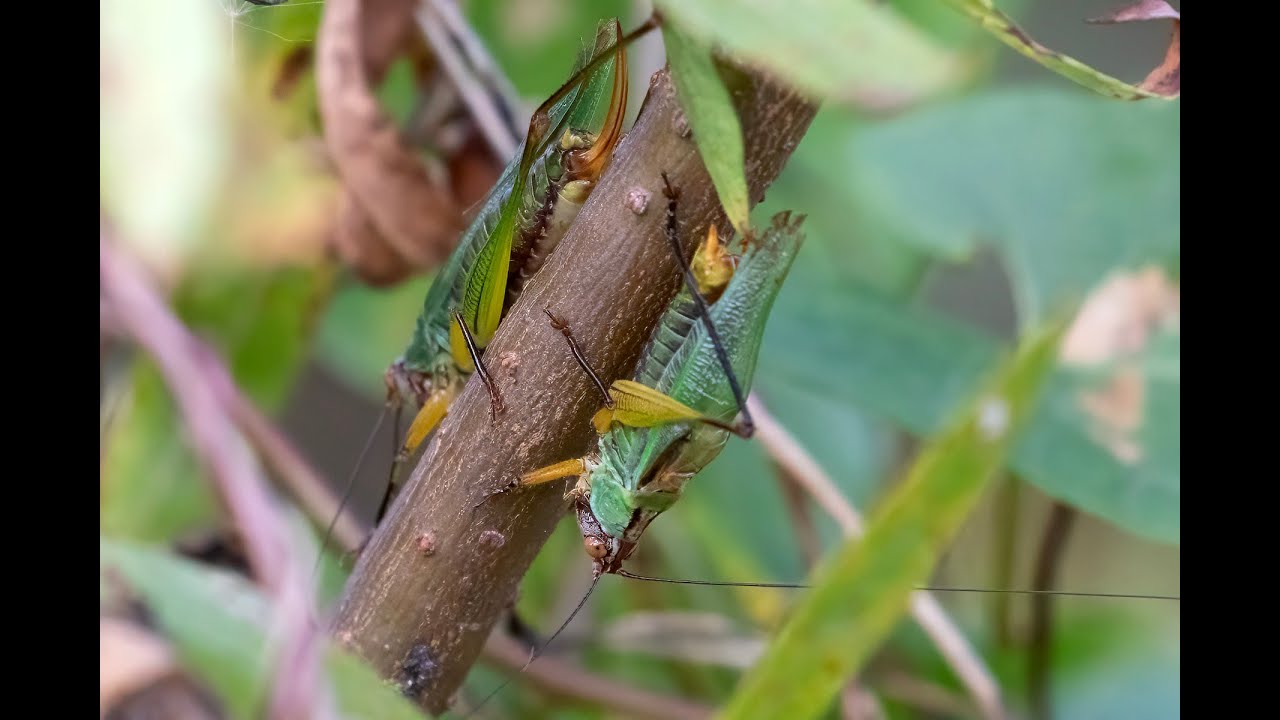
The photo with this column (at bottom of a story) is of a black legged meadow katydid. The sound they make is a very high-pitched vibrato. From mid-September to the end of October, I hear them constantly in the various wetland areas around Lake Ontario.
They like to eat flowers, goldenrod, and even cattails, so if you know where to find those plants, you now know where to find katydids. They aren’t big, though four times larger than the treehoppers, but if you follow your ears, I’m sure you’ll find a few.
Spiders are one of their main predators, and the last time I went out with my granddaughters, we saw a spider wrapping one up in a web. It was a little sad and gross for them, but the girls understood that spiders have to eat too.
The world of tiny creatures is full of surprises, and there’s always more to discover. Keep your eyes open, don’t forget to listen closely, and who knows what little wonders you can find in your own backyard.
Happy hunting and let me know what you see.