Toronto Beaches Lions Club to host mushroom-themed dinner and presentation at The Kingston House on Oct. 22
By ALAN SHACKLETON
They are everywhere. Mushrooms.
And the good, the bad and the ugly of them will be the topic of a lecture and dinner being presented by the Toronto Beaches Lions Club on the evening of Tuesday, Oct. 22, at The Kingston House restaurant.
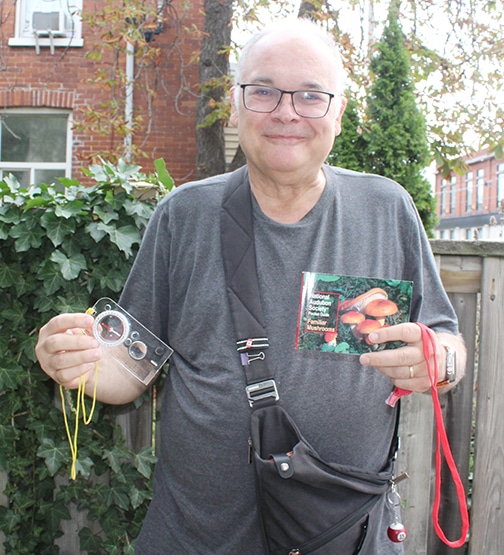
The evening will feature a talk on mushrooms by Lions club member Nick Trainos and a mushroom-themed meal at the restaurant.
Cost to attend is $15. Prior to the dinner, there will be social time starting at 6:30 p.m. at The Kingston House, 676 Kingston Rd., for people to learn more about the local Lions club.
In a recent interview with Beach Metro Community News, Trainos said there are opportunities to forage for mushrooms all through the East Toronto area from parks, to ravines to the backyards of homes.
“They are everywhere. They’re in your grass, in your backyard, on the stump of a tree,” he said.
And many of those mushrooms found in the wild are not only edible, but delicious.
“It’s going to be a lot of fun and an interesting evening,” said Trainos of the Oct. 22 dinner and lecture.
However, the absolutely key rule to foraging mushrooms is to never eat anything that you cannot 100 per cent positively identify as being edible.
“Some will kill you,” warned Trainos of the different types of mushrooms.
How to know the difference between deadly and edible mushrooms will be part of his presentation on Oct. 22.
A lifelong East Toronto resident, Trainos has been interested in mushrooms for more than 40 years. Those who forage mushrooms and become experts in identifying the different types of fungi species are called mycologists.
Trainos has been a member of the Mycological Society of Toronto for more than 20 years.
Further to his point about correctly identifying mushrooms, Trainos said accurate identification as to whether they are edible or not is the guiding principle of staying safe when foraging them for food.
“Don’t bet your life on it,” he said of the importance of proper identification. “They say there are old mycologists and bold mycologists but there are no old, bold mycologists. Don’t take your chances.”
That being said, mushrooms do offer a wide variety of edible species that can be found locally.
Trainos said looking for them is a fun way to connect with nature. One of the rules, though, is to always be respectful of the environment one is in.
“It’s a treasure hunt in the woods is what it is. You’re going out with purpose. You’re going out on a hiking trail and you’re looking for things that you’re trying to find,” he said.
“Half of the joy is just finding them. You find them and then start developing the vocabulary of what you call them.”
Trainos said mushrooms and fungui have traditional or common names and also Latin names to identify them. But one doesn’t have to be a Latin expert or certified mycologist to enjoy looking for and identifying mushrooms.
“Within southern Ontario there’s thousands of species of mushrooms that pop up,” he said. “So it’s hard to be an expert in all of them.”
His The Good, The Bad and The Ugly of Mushrooms lecture at The Kingston House will include a Power Point presentation with photos of different species.
“They’re going to learn something about mushrooms. How to identify them,” he said of what those attending the presentation can expect.
“The Good: I’m going to identify some of the most common edible species and the time of year they can expect to find them as some are spring but fall is probably the best time of year to look for mushrooms. So we’ll look at common edible varieties in southern Ontario. The Bad: You’ll find out the ones that will kill you that look very innocuous…Some of the most poisonous mushrooms appear very innocuous, even attractive.”
And The Ugly: “Some are deceptively ugly but are edible and quite tasty,” said Trainos.
While some people do forage the mushrooms they find locally in order to eat them, Trainos said his presentation will not focus specifically on that aspect of the fungui.
“This isn’t about supplanting your food from the supermarket, this is more about interest and education,” he said.
Trainos pointed out that “wild” mushrooms are also becoming more available at some grocery stores. Even some large grocery chains are now carrying harvested wild mushrooms including types such as chanterelles and cultivated mushrooms such as maitake (also known as Hen-of-the-wood).
“Even within the supermarket realm, there’s literally dozens of choices in terms of mushroom varieties,” he said.
For more information on wild mushrooms in the Toronto area, visit the Toronto Mycological Society at https://www.myctor.org/
For information on how to attend the Oct. 22 dinner and lecture at The Kingston, House, please call the Toronto Beaches Lions Club at 416-693-5466.