Beach Memories: Historic walk through St. John’s Norway Cemetery to take place on Saturday, Aug. 31
By GENE DOMAGALA
I will be leading an historic walk through St. John’s Norway Cemetery on Saturday, Aug. 31.
The walk begins at 1 p.m. and we will meet at the northwest corner of Kingston Road and Woodbine Avenue.
I have been doing this walk for some 40-plus years, and I always I see and hear something new about the St. John’s cemetery.
When I walked through it recently I thought to myself: This is history and what history is all about.
You might say what do I mean? Well, this is what I mean. St. John’s cemetery personifies what an historical place is to a certain geographical and political area.
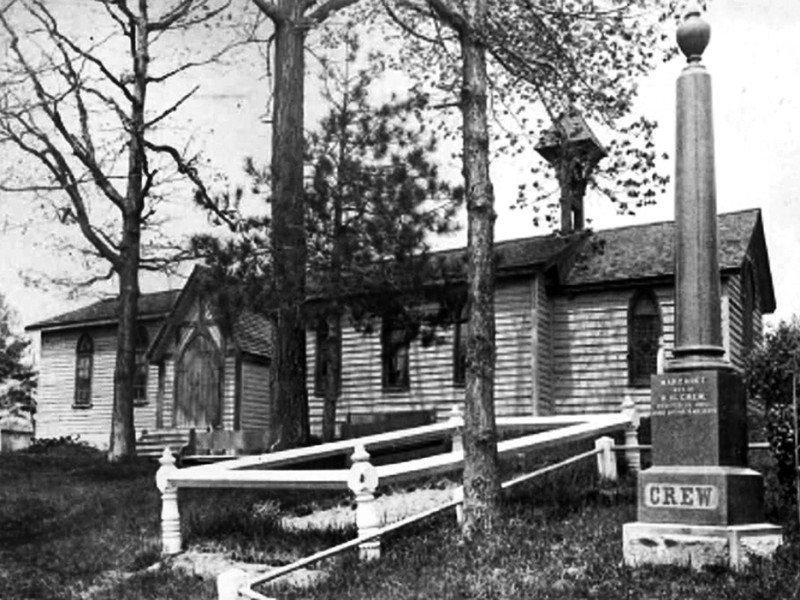
St. John’s Norway Cemetery and St. John the Baptist Norway Anglican Church was originally called St. John’s Berkely. Yes, it was called St. John’s Berkely.
The original land on which is the church and cemetery is situated belonged to a pioneer name J. Small who was a large landowner who worked for the colonial government a couple of hundred years ago. Mr. Small donated some three-and-a-half acres to the Anglican diocese for a church and cemetery around 1853.
The name of his land and residence was called Berkely, hence the name St. John’s Berkely.
In later years in that area around Kingston and Woodbine was a small hamlet called Norway. People started calling the church and cemetery St. John’s Norway and that has continued until this day.
When I write that St. John’s is an historic place, that’s because it is. There are dozens and dozens of reasons I can point out and write about regarding the history of the cemetery.
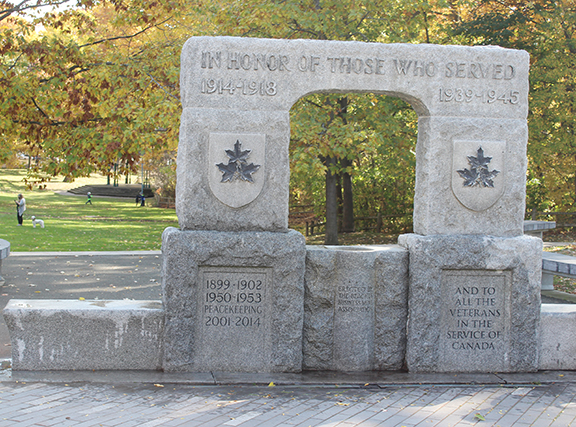
There’s so much history in the original site of the church, which was a school house on Kingston Road that was brought to that site by settlers. There are hundreds of graves in the cemetery in memory of soldiers from many wars.
In total there are some 80,000 people buried there. Some are the pioneers who built up the area of the Beach and East Toronto. Those buried in St. John’s include politicians, ministers and civil servants, but most of all they are the ordinary people who lived and worked in the area for the past 170 years.
History is when a family or an ordinary person walks through the gates of the cemetery and visits the gravesite of a relative or friend. They remember the fallen, the sick, the good times and the bad times. This is what history is all about.
There are many gravesites and monuments, some of them in relation to terrible tragedies, and that is history. Also, to be remembered in history is the impact of Hurricane Hazel in 1954 and the impact it had on St. John’s cemetery.
When I was remembering my previous walks in St. John’s cemetery, I always remember some of the people on them telling me about their friends and relatives buried there. They always looked at the soldiers’ site and talked in a sombre way.
This I thought is what history’s about. On the walk we will see the graves and we will see monuments, and we will note the St. John’s church and cemetery office buildings.
But then I thought it’s not the graves and it’s not the buildings – it is the people and the memories that they convey that are the true history and a tribute to those who are buried and resting in the St. John’s cemetery.