Neighbourhood Stops and Shops: Aetna Pest Control on Danforth Avenue takes on termites and more
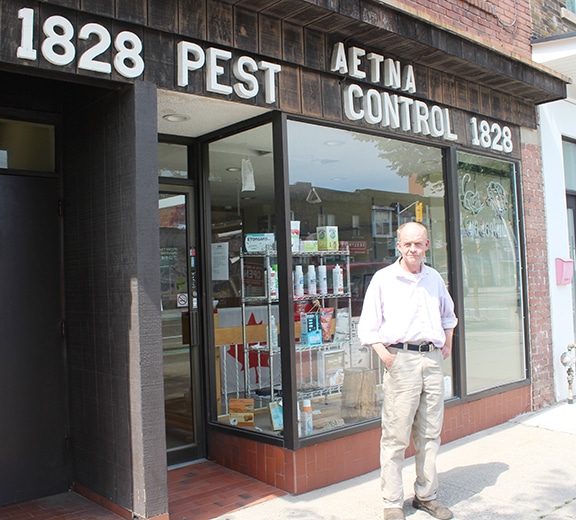
Located on Danforth Avenue, Aetna Pest Control Ltd has been serving the community for 50 years.
The business, at 1828 Danforth Ave., was first started in 1974 by Dick and Betty Murphy and is now run by their son and daughter, Richard and Liz Murphy.
The company deals with all kinds of pest control issues from rodents to cockroaches to ants, but the bulk of what they do and have always done is take on Toronto’s termite problem.
Richard said the problem of termites is one that has been familiar to many East York residents for decades, and Aetna is also seeing infestations in other parts of the city including pockets of the Beach area.
“For whatever reason East York was full of termites. It was bad,” he said of the situation in the past.
Richard said the battle against termites, which have been around for millions of years, is one that will never be completely won but it will be “contained”.
“We can put a lid on it property by property, but we’ll never be able to fully eradicate them,” said Richard of the existence of termites. The key is to make sure your home and property is protected from them.
One of the most recent and most effective tools in that battle with termites is a product called Sentricon®, he said.
Richard said the Sentricon® AlwaysActive system is a game-changer when it comes to termite control and elimination. “The nice thing about the Sentricon® product is we’re always protecting the house on a yearly basis,” he said.
Approved for use by Health Canada, Sentricon® AlwaysActive is a bait station termite control system made by Corteva Agriscience in the United States and used in 22 countries around the world. It’s expansion into Canada was led by the Corteva Canada division of the company.
Aetna Pest Control and a national pest company are the only two companies in Canada presently licenced to use Sentricon® AlwaysActive in the fight against termite infestations.
Richard is literally an expert in termites and is a member of the Canadian Pest Management Association. He represents the organization on the Canadian Pest Management Regulatory Agency’s Pest Management Advisory Council. For years he has been attending conferences around North America focused on how to control termites and stop them spreading into buildings and causing structural damage.
He said Canada was late to the party to start using Sentricon® for termite control. It has been used for more than 25 years in the United States. It has only been used in Canada by Aetna Pest Control since late 2023.
“I was screaming for us to get it for years,” he said of the Sentricon® system’s arrival in Canada.
Health Canada actually approved Sentricon® use in 2016, but it has taken so long to arrive here because of the fact that as the termite extermination business goes, the Canadian market is not considered to be a large one so it was not a top priority to expand the availability of the product here.
Richard said Sentricon® works by treating the termite colonies from the outside of a house by drilling bore holes approximately every 10 feet around the property and inserting a cylinder that contains bait in it that kills the termites. The cap of the cylinder is sealed by the pest control company, and baits should be replaced in the cylinder (bait station) once a year. “Once a year you replenish each station and it will be active and you will always have that protection,” said Richard.
The termite colonies are killed by the bait, but the reality is other termite colonies can replace them so the replenishing of the baits is needed to deal with them on a consistent basis. The Sentricon® system is highly effective, said Richard.
He spoke about a client with a large property in north Toronto who Aetna Pest Control worked with to tackle an extremely serious termite infestation. Richard said the Sentricon® made an enormous difference and the home-owner is now a “happy guy”.
For Aetna’s first real test for Sentricon®, “We put it in and went back six months later” and based on the number of bait stations placed and the amount of the bait cartridge consumed it was estimated by the maker of Sentricon® that 60 to 70 million termites had been killed on that one property, said Richard.
He said once the termites find the bait station cartridge “look out”. Termites are nine times more likely to eat what’s in the bait station than they are to eat wood. For ongoing protection, the bait cylinders need to be replenished once a year and it takes about three months for the impact of the first treatment to take effect against the termite colonies.
“I would say use Sentricon® because if we put these bait stations every 10 feet around your house we’re just going to eliminate the colonies around your house,” he said.
Aetna Pest Control began using Sentricon® as of October of last year. “We got it Oct. 3 and we did our first install on Oct. 4,” said Richard.
The other defence used by Aetna Pest Control against termites is a liquid called Altriset Termiticide, which is used mostly to treat infestations inside the house.
Richard’s key advice when it comes to termites is if you think you might have them in your house or near your house, you need to take action. He recommends getting started on the Sentricon® bait stations as soon as possible, but that takes time for the termites to find the bait and start eating it so he also recommends immediate spot treatments inside the home to knock down the termites quickly.
That involves drilling holes in the floors and other areas as needed and injecting the liquid such as Altriset. That type of treatment is “invasive” given how it has to be done and is stressful for many homeowners. Discovering you have termites in your home is extremely upsetting for people and Richard said he sees many stressed clients who are desperately looking for help. “It’s hard to hear you have termites in your house and you have damage because of it,” he said.
Richard said homeowners can take steps to help prevent termites getting established on their properties and near their homes. “We see them in all types of soils. Certainly the way you maintain your home can make it much more conducive for a bad infestation,” he said. “Wood in contact with soil or reverse draining. Finished basements nailing wood right to brick walls” are all factors in making a home attractive to termites.
Certain building foundations, in particular field stone and double-brick which is found in many older homes (as opposed to concrete block or poured concrete) are also preferred by termites, said Richard. These foundations can result in damper basements which is something termites like.
Termites like moist soil especially. Moist wood and soil are prime breeding grounds for termites to get started in and Richard advises people to be aware of the conditions around their houses and to not be leaving tree stumps, fallen wood or chipped wood mulch on their property.
For more information on Aetna Pest Control, please visit the website at http://www.aetnapest.com/ or call them at 416-469-4111.
– BMN Sponsored Content–