Toronto-Danforth school trustee calls out province for its “Swiss cheese” funding of education in latest budget
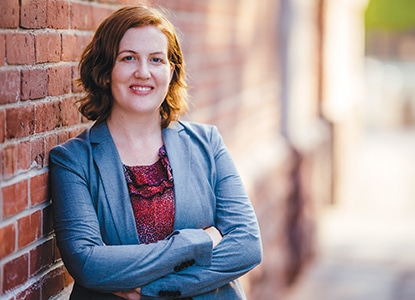
By AMARACHI AMADIKE, Local Journalism Initiative Reporter
Toronto District School Board (TDSB) Toronto-Danforth Trustee Sara Ehrhardt is calling out the Ontario government’s recent budget for its continued “Swiss cheesing” of the education sector, saying that funding is steadily being sliced thinner each passing year.
She told Beach Metro Community News there is concern the province’s “back to basics” approach has led to “bare bones funding” for school boards across Ontario.
“We need a generational investment to secure a future for our children,” said Ehrhardt, in response the Ontario budget delivered by the Progressive Conservative government of Premier Doug Ford on March 26.
According to Ehrhardt, the funding provided to TDSB schools doesn’t cover many of the important aspects associated with operating schools such as hiring vice principals.
This lack of operational funding has resulted in Ontario secondary schools placing last out of all provinces in per pupil funding, she said. Currently, 35 per cent of secondary schools in Ontario report daily shortages of teaching staff while 46 per cent face daily education worker shortages.
“There will be long term impacts to this,” said Ehrhardt. “There needs to be support for training; support for more staffing; support for more skilled workers.”
The province announced that the Ontario budget for this year, totaling a record of $214.5 billion in spending, will run a deficit of $9.8 billion. Last year, in the 2023 provincial budget, the government was projecting a surplus of $200 million for the 2024-2025 budget year.
This year’s budget spending package is described by the province as one with historic investments in Ontario’s education system. However, there is projected to be only a 2.7 per cent increase to the education budget from last year’s figures.
Similar to the rumbles that accompanied last year’s budget spending on education, critics are saying this year’s budget does not keep up with the inflated costs and needs of many of Ontario’s schools.
Ehrhardt’s concerns and suggestions on where the province should be spending its education dollars are echoed by the Ontario Secondary School Teachers’ Federation (OSSTF), the union representing approximately 60,000 high school teachers across Ontario.
OSSTF was critical of the provincial budget in a March 26 news release, stating that their 33 pre-budget recommendations, which included calls to “address the staffing crisis in education”, were ignored by the Ford government.
With the province providing operational funding for fixed items as well as “flexible money” to take care of other needs, public schools in Toronto have been forced to dip into the reserves in order to manage aspects of school operations that the province does not consider essential, said Ehrhardt.
“When that list (of essentials) is too small and they’re not meeting the inflation costs of even the things on that list, operations become skeletal,” she said.
Although there are many calls for additional education funding, a report by the Council of Ontario Universities revealed that the average Grade 12 marks of students enrolling in first-year programs at Ontario universities have steadily risen over the years. Furthermore, the rate of high school graduates throughout the province is about 89 per cent according to data collected by the Ontario Ministry of Education between 2017 and August 31, 2022. By comparison, only 79 per cent of high school students across Ontario received diplomas within the five-year period in 2014.
However, according to a local teacher, those numbers doesn’t reveal the dire state of some of Ontario’s secondary schools.
The teacher who works at an East Toronto high school said staff and students there are experiencing the results of Ontario’s “underfunding” of education with a “massive” increase in “gifty 50” grades – the act of passing students simply to move them along to the next grade.
“Standards all around are a lot lower,” said the teacher (who Beach Metro Community News has given anonymity to due to concerns about repercussions for speaking out).
“Grade Niners are coming in missing skills that they should’ve gained in Grade 5 or 6.”
One major factor contributing to the reduced standards experienced at the local school, and other Ontario schools, is the shortage of teachers. “We currently have a Grade 9 English class as well as a Grade 9 tech class that haven’t had a teacher since February. Mid-terms are in two weeks and they’ve had no teachers.”
The local teacher said the school has found difficulty in getting supply teachers as shortages increase due to a high number of teachers becoming dejected and leaving the profession. This has led to consolidation and overpopulation of classes.
“At the beginning of this year, nine classes at our school had 50 people in it,” said the teacher. “I had a month of kids standing at the back of the class because I didn’t have enough chairs and desks.”
The impacts in schools due to the lack of funding isn’t an isolated incident, according to an East Toronto MPP.
Over the years, Scarborough Southwest NDP MPP Doly Begum has been advocating for increased funding to local schools.
She told Beach Metro Community News that she is “profoundly disappointed” by the current provincial budget’s inadequacies.
“Once again, we see the Ford government failing to address the pressing needs of our schools and students,” said Begum, who is also Deputy Leader of the Ontario NDP – the Official Opposition party at Queen’s Park.
“The budget is missing meaningful investments into special education (and) the proposed $18 million does not even cover the deficit for certain school boards,” she said. “There is no mention of support for additional staff which is required to address the needs of students with special needs.”
Coupled with insufficient funding for school repairs, Begum said the future of Ontario’s publicly funded schools is looking “grim”.
Ehrhardt, like Begum, also highlighted the need for additional capital funding from the province to administer much needed repairs and modernization of schools including climate adaptation, cooling systems, and elevators to meet accessibility requirements.
“We need, on the capital side, 21st century buildings,” said Ehrhardt. “A key challenge in that area is that (the provincial government) is not changing what they’re funding.”
Ontario’s 2024 budget, though, proposes $1.3 billion in funding for building and expanding schools across the province. This, according to government officials, will create 27,093 new student spaces and 1,759 child-care spots.
— Amarachi Amadike is a Local Journalism Initiative Reporter for Beach Metro Community News. His reporting is funded by the Government of Canada through its Local Journalism Initiative.