Gerrard Street East apartment building purchased through city program helps secure 20 permanently affordable homes
By AMARACHI AMADIKE, Local Journalism Initiative Reporter
The City of Toronto has officially partnered with St. Jude Community Homes (SJCH) following the acquisition of 20 permanently affordable homes through the Multi-Unit Residential Acquisition (MURA) program.
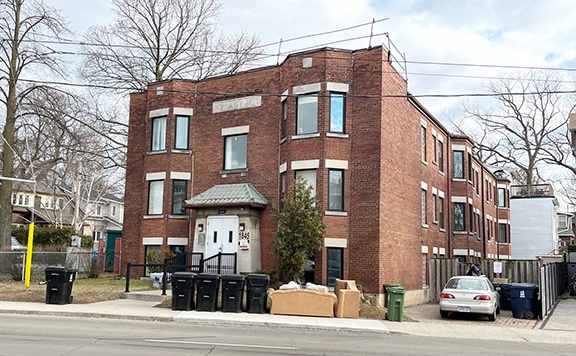
On Thursday, Feb. 8, Mayor Olivia Chow announced that the $4 million that was granted to SJCH in 2022 was utilized in securing a residential building located at 1845 Gerrard St. E. (between Woodbine and Coxwell avenues in the Normandy Apartments building) last September.
“I am thrilled that St. Jude Community Homes has acquired this building and that the people who live here can rest knowing that their homes are protected,” said Chow in a City of Toronto news release.
“This is another great example of how the Multi-Unit Residential Acquisition program can help not-for-profit organizations create and preserve affordable housing in our city.”
In a mission to safeguard the city’s current stock of affordable homes as experts report a steady decline of low-income rentals, Toronto introduced MURA in 2021. Since then, it has provided $55.5 million to nonprofit organizations that, in turn, have secured “more than 300 permanently affordable homes in neighbourhoods across Toronto”, according to the city.
The latest acquisition by SJCH aims to ensure the protection of tenants as rent is set at a maximum average of 80 per cent of Average Market Rent. There is also a guarantee for tenants that their homes will stay at these affordable prices for at least 99 years.
“As we went from renter to owner, a collective sigh of relief was felt as worry and anxieties from the uncertainties of knowing the landlord wanted to sell the 20-unit building faded,” said SJCH Board Director/Resident Wayne March and SJCH Executive Director Carol Zoulalian in a joint statement.
“With ownership, tenants can continue to live long term in their homes now that the building is safe, well taken care of, and affordable in perpetuity.”
Although St. Jude Community Homes is the most recent recipient of MURA funding, various other non-profit organizations across the city have capitalized on this injection of money into Toronto’s affordability crisis.
These include Ecuhome; Houselink and Mainstay Community Housing; Parkdale Neighbourhood Land Trust; Raising the Roof; and Wigwamen, an Aboriginal housing provider capitalizing on the mandate that at least 20 per cent of MURA funding be dedicated to housing acquisitions by Indigenous housing organizations for Indigenous peoples.
However, even with these acquisitions, Toronto still finds itself in a hole. A 2021 census revealed that the city is missing 210,000 apartment units that are priced below $1,700 a month.
Statistics like this have prompted an expansion to MURA, a program that currently appears to be playing catch-up, and that is being reflected in Toronto’s proposed budget for this year.
“In my 2024 budget, I’ve committed to expanding the MURA program to $100 million over three years to secure more affordable homes for people,” said Chow. “Everyone needs to feel safe in their home and have confidence that they will not be unfairly evicted.”
The program has a wide range of support form city councillors including Beaches-East York’s Brad Bradford (Vice Chair of Toronto’s Planning and Housing Committee) who described it as a “common-sense” way to ensure that Toronto remains affordable.
“The Multi-United Residential Acquistion program is an important part of Toronto’s plan to tackle the housing crisis,” said Bradford in the city’s news release.
“This program helps not-for-profit housing providers preserve existing affordable homes and gives tenants more security and stability for the long term. The MURA program is one of the common-sense ways we are working to ensure that Toronto remains a city where everyone can afford to live.”

– Amarachi Amadike is a Local Journalism Initiative Reporter for Beach Metro Community News. His reporting is funded by the Government of Canada through its Local Journalism Initiative.