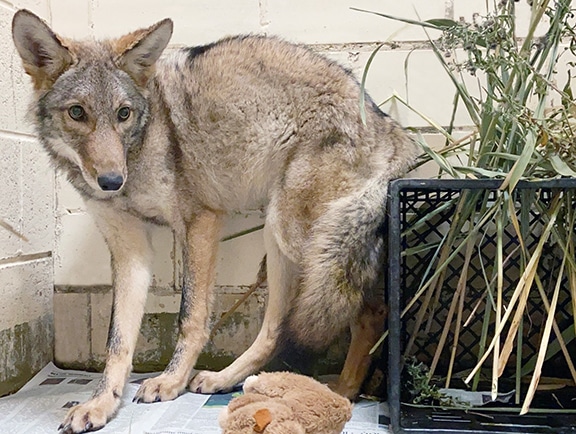
Coyote sightings tend to increase during winter months, says Toronto Wildlife Centre
By ERIN HORROCKS-POPE
With winter’s arrival last week, East Toronto residents might notice an uptick in coyote sightings, sparking concern and a variety of misconceptions about these wild creatures.
While the colder months might seem to draw these animals out searching for food and exploration, Nathalie Karvonen, the Executive Director of Toronto Wildlife Centre, dispels some common myths.
According to Karvonen, coyotes maintain consistency in their activity throughout the year, and it’s the visibility that changes due to lush vegetation during warmer months.
“The difference is simply visibility. You could go for a walk in summer, and a coyote could be 20 feet from you, hidden by the cover of foliage,” she said.
Despite heightened visibility, actual encounters or attacks by coyotes are exceedingly rare. However, Karvonen urges caution, especially when walking with small pets or children.
“Coyotes are natural predators. They don’t differentiate between a small dog, a squirrel, or a rabbit,” she said.
Karvonen noted that dog attacks on humans are far more prevalent than coyote encounters in Toronto. When a dog crosses paths with a coyote, it’s often the dog that initiates any confrontation, she pointed out.
Coyotes are generally wary of humans, except in cases where people feed them, altering their behaviour.
Feeding wildlife, including coyotes, is a growing concern and Karvonen emphasized that this seemingly compassionate act can pose serious risks.
“People have an innate drive to help animals, but feeding wildlife of any sort can drastically change their behaviour and health,” she said.
For instance, if a coyote associates humans with food due to feeding, they may become bolder in approaching people, increasing the risk of dangerous encounters.
Furthermore, misconceptions about mange, a disease in canines caused by parasites, lead to false assumptions about coyote behaviour, said Karvonen.
“Mange is a disease that slowly weakens and kills animals, but sick coyotes are hard to treat as they’re quick, smart, and cautious around humans,” she said.
Karvonen urged members of the public to report any wildlife feeding incidents to the City of Toronto or to the Toronto Wildlife Centre.
“Feeding wildlife, from pigeons to coyotes, may stem from good intentions, but it poses risks to both the animals and public safety,” she said, underlining that understanding and respecting wild animals’ natural behaviour is critical to coexisting safely.
To contact the Toronto Wildlife Centre, please visit https://www.torontowildlifecentre.com/ or call 416-631-0662.
For more information on coyotes in the City of Toronto, please visit the city’s website at https://www.toronto.ca/community-people/animals-pets/wildlife-in-the-city/coyotes/