Update: East End veterinarian found guilty of professional misconduct and serious neglect
A College of Veterinarians discipline tribunal had serious misgivings about the conduct of a popular East End veterinarian, according to the full text of a hearing which ultimately ended in the veterinarian being found guilty of professional misconduct and serious neglect.
Dr. Jonathan Mitelman, owner of VetsToronto and the Kingston Road Animal Hospital, has had his licence suspended for at least three months, down from five if he completes required education courses, particularly centred on animal pain management, according to a decision signed by the college discipline panel May 13, 2016. He must pay the college $85,000 in costs and, once his practice resumes, will be subject to spot checks by the college to ensure his record keeping and practice is up to standard.
“General and specific deterrence was provided by publication of the facts of the case (including publication of the member’s name) and by the licence and financial penalties imposed. Specific deterrence was provided by the reprimand that served to impress upon Dr. Mitelman the seriousness of his misconduct and the disappointment that it brought to the profession,” the tribunal panel wrote in its decision.
The case involves a police officer and her 13-year-old German shepherd cross named Dakota, who was misdiagnosed and whose pain was improperly managed, according to the full text of the hearing that took place throughout 2015.
The case also involves another veterinarian, Dr. Morris Samson, the original owner of the clinic, who was found guilty of professional misconduct for the same incident. Samson continues to appeal that decision, while Mitelman abandoned his appeal earlier this month and, as part of the college’s decision, has waived his right to further appeal.
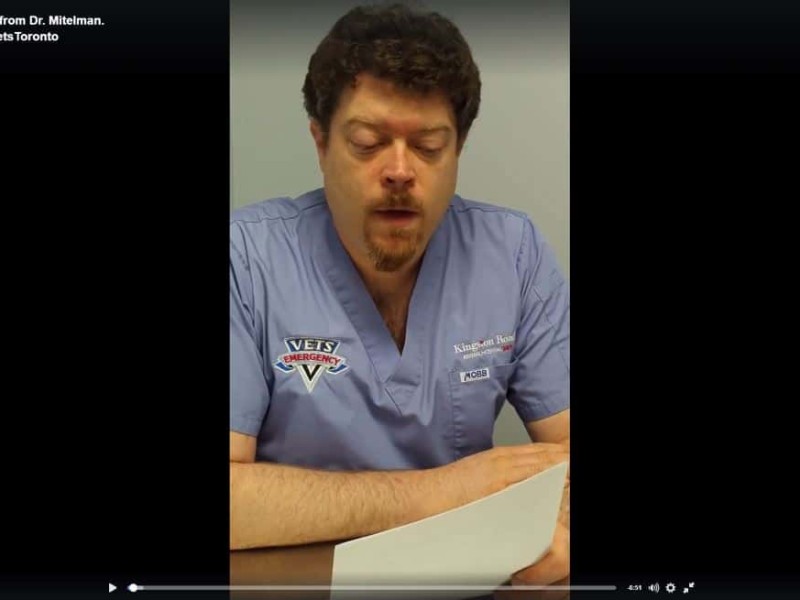
In a statement posted to the clinic’s website and Facebook page last week, Mitelman spoke of the college’s findings and detailed his version of the events leading up to the hearing and decision. He apologized for his actions and said that the last five years have been a learning experience for him and his staff.
“This case is not a straightforward one,” said Mitelman in the video statement. “Since 2011, I have lived and breathed this case and my heart hurts for the owner who lost her beloved pet. This case slipped through my fingers and I will never live it down. I regret having missed the fracture. I regret having overlooked the possibility of bone cancer. I regret that the dog’s pain management could have been better. I regret that documentation could have been more thorough. Put simply, I could have done better.”
In 2011, the clinic took on Dakota’s emergency case – the dog was unable to walk after being jumped on by another dog hours earlier. Seven veterinarians were eventually involved in the various diagnoses and treatment options, Mitelman said.
Mitelman said he failed to initially recognize the dog had a fractured leg, instead diagnosing the dog as suffering from a herniated disc. Because he was treating the dog as paralyzed, he did not administer the correct amount of pain medication for a dog with a fractured leg, he said.
After the fracture was discovered, said Mitelman, another specialist attended to the dog and believed the fracture was due to trauma. Over the course of several months, specialists, and surgeries, it was eventually discovered that the dog had bone cancer. Mitelman said that the client continued to opt for surgeries despite being told repeatedly that the elderly dog might not walk again.
The dog was eventually euthanized in October, nearly four months after the initial emergency vet visit.
The findings of serious misconduct and serious neglect stem from the nine days the dog was in the vet’s care in June, as well as the conduct of the veterinarian afterwards. The hearing text details incidences of failing to adequately diagnose the dog’s injuries, inaccurate and insufficient record keeping and falsifying records in order to intentionally mislead. It also details several instances where Mitelman attempted to shift blame to other veterinarians at the clinic and questions communication standards between the veterinarian and the client.
The panel’s harshest criticism, which is reflected in the finding of serious neglect and attention given to rehabilitation through pain management courses in the penalty decision, involves Mitelmen’s assessment and treatment of the dog’s pain.
“It was the opinion of the panel that Dr. Mitelman displayed either a lack of knowledge regarding drug selection, dosage, frequency and onset of action or elected to ignore this knowledge when selecting treatments for Dakota,” reads the decision. “The panel felt that during Dr. Mitelman’s testimony he seemed to display little sympathy for the amount of discomfort that Dakota had endured and he expressed little remorse for his part in allowing that discomfort to continue. He testified that it was the job of other doctors and/or technicians to assess pain and provide medications. However, Dr. Mitelman was Dakota’s primary caregiver and the panel agreed that it was his responsibility to supervise and manage her care. This lack of remorse, along with his blatant lack of knowledge and judgement, demonstrated to the panel a clear disregard for the welfare of his patient.”
The panel felt that the lack of knowledge could be rehabilitated, but particularly concerning was the apparent lack of remorse. They wrote in their decision that the panel was considering submissions as to whether Mitelman is “unfit to engage in the practice of veterinary medicine, or whether he is fit to engage in the practice of veterinary medicine only subject to certain conditions and limitations.”
Ultimately, the panel’s decision favoured the latter, with the panel opting to add on certain conditions beyond what was initially recommended in the discipline decision – namely, a longer and mentored pain management course and the requirement that Mitelman submit a 3,500 word paper at the end of the course to show what he has learned.
A series of follow-up on-site reviews by the college when his practice resumes will focus on record keeping, as well as “special attention to pain management, radiograph technique, labelling, and interpretation.”
In his statement and video apology, Mitelman said that over the last few years, the clinic has “revamped and updated procedures for record keeping, pain management and client communications.” The clinic will remain open throughout his suspension.